.svg)

%20(1).png)
The excitement around wearable technology is well deserved. For the first time, maternal physiology can be observed continuously rather than intermittently, offering unprecedented insight into how pregnancy evolves between prenatal visits. What was once limited to a handful of measurements collected in a clinic can now be supplemented with longitudinal data that reflects how a woman's body is adapting every day.
Yet despite this progress, one important question remains.
If wearables can generate millions of physiological data points, why haven't they dramatically improved maternal outcomes on their own? The answer is surprisingly simple.
Data is only valuable when it leads to action.
A wearable can identify changes in resting heart rate, declining sleep quality, reduced activity, or shifts in heart rate variability. It cannot determine whether those changes represent a normal stage of pregnancy, an emerging clinical concern, or simply the result of a stressful week. It cannot interpret those signals within the context of a woman's medical history, pregnancy stage, nutritional status, mental wellbeing, previous pregnancies, or existing risk factors.
Pregnancy has never been defined by isolated measurements. It is a complex biological journey where every physiological change is connected to countless others. Without that context, even the most sophisticated wearable remains a monitoring device rather than a clinical tool.
This is why the conversation around maternal health is beginning to shift. The future is no longer about collecting more information. It is about transforming continuous data into personalized, timely, and meaningful care.
The Missing Layer Is Clinical Intelligence
Maternal healthcare generates an extraordinary amount of information.
Blood pressure measurements, laboratory results, ultrasound findings, symptoms, medications, nutrition, physical activity, sleep quality, stress levels, social determinants of health, mental wellbeing, and increasingly, wearable-derived physiological signals all contribute to understanding how a pregnancy is progressing.
Individually, each of these data points tells only part of the story. Collectively, they create a far more accurate picture of maternal health. This is where artificial intelligence is beginning to reshape the future of obstetric care.
Contrary to popular perception, the greatest value of AI in healthcare is not replacing clinicians or making autonomous decisions. Its greatest strength lies in identifying patterns that would be difficult, if not impossible, for humans to detect across thousands of continuously changing variables.
Recent advances in machine learning have demonstrated the ability to integrate wearable data with electronic health records, patient-reported outcomes, laboratory values, and clinical history to generate more accurate predictions of maternal risk. Researchers are exploring AI models capable of identifying early signals associated with hypertensive disorders of pregnancy, gestational diabetes, preterm birth, and postpartum complications by recognizing subtle deviations from an individual's baseline rather than relying solely on population averages.
This shift from population-based thresholds to individualized trajectories represents one of the most significant advances in digital maternal health.
Rather than asking whether a woman's heart rate falls within a "normal" range, intelligent systems can begin asking a more clinically meaningful question: Is this change normal for her?
Personalized Care Begins With Personalized Context
Every pregnancy is unique, not simply because every woman is different, but because every pregnancy unfolds differently.
A woman managing gestational diabetes requires different guidance than someone recovering from hyperemesis gravidarum. A first-time mother preparing for birth has different educational needs than someone navigating pregnancy after a previous preterm delivery. Mental health, nutrition, physical activity, sleep, social support, and chronic conditions all influence the course of pregnancy in ways that cannot be addressed through standardized care plans alone.
This is one of the greatest limitations of traditional maternal care models.
Although clinical guidelines are evidence based, they are necessarily designed around broad populations. They cannot account for the thousands of variables that shape an individual pregnancy between scheduled appointments.
Continuous monitoring creates an opportunity to move beyond standardized care and toward personalized care pathways that evolve alongside each mother's journey. Instead of responding only when complications become clinically apparent, care can increasingly become proactive, adapting to changing physiology, symptoms, and risk profiles throughout pregnancy and postpartum.
A Woman's Journey Is Never Static. Why Should Her Care Be?
Pregnancy is often described in trimesters, but women do not experience pregnancy in neatly defined chapters. Needs evolve from week to week. Risk changes over time. Questions become more complex as birth approaches. Recovery after delivery brings an entirely new set of physical and emotional challenges.
Yet many digital health solutions remain surprisingly static. They deliver the same educational content, the same reminders, and the same recommendations to every woman at the same stage of pregnancy, regardless of her health status or changing circumstances.
That approach overlooks one of the most important realities of maternal health.
Care should evolve just as pregnancy evolves. It should respond to emerging symptoms, changing risks, lifestyle factors, clinical history, and the goals of each individual woman. It should prepare mothers for what lies ahead rather than simply documenting what has already happened.
Technology finally makes that possible. The challenge is delivering care that adapts because of it.
How Myri Is Building the Next Generation of Maternal Care?
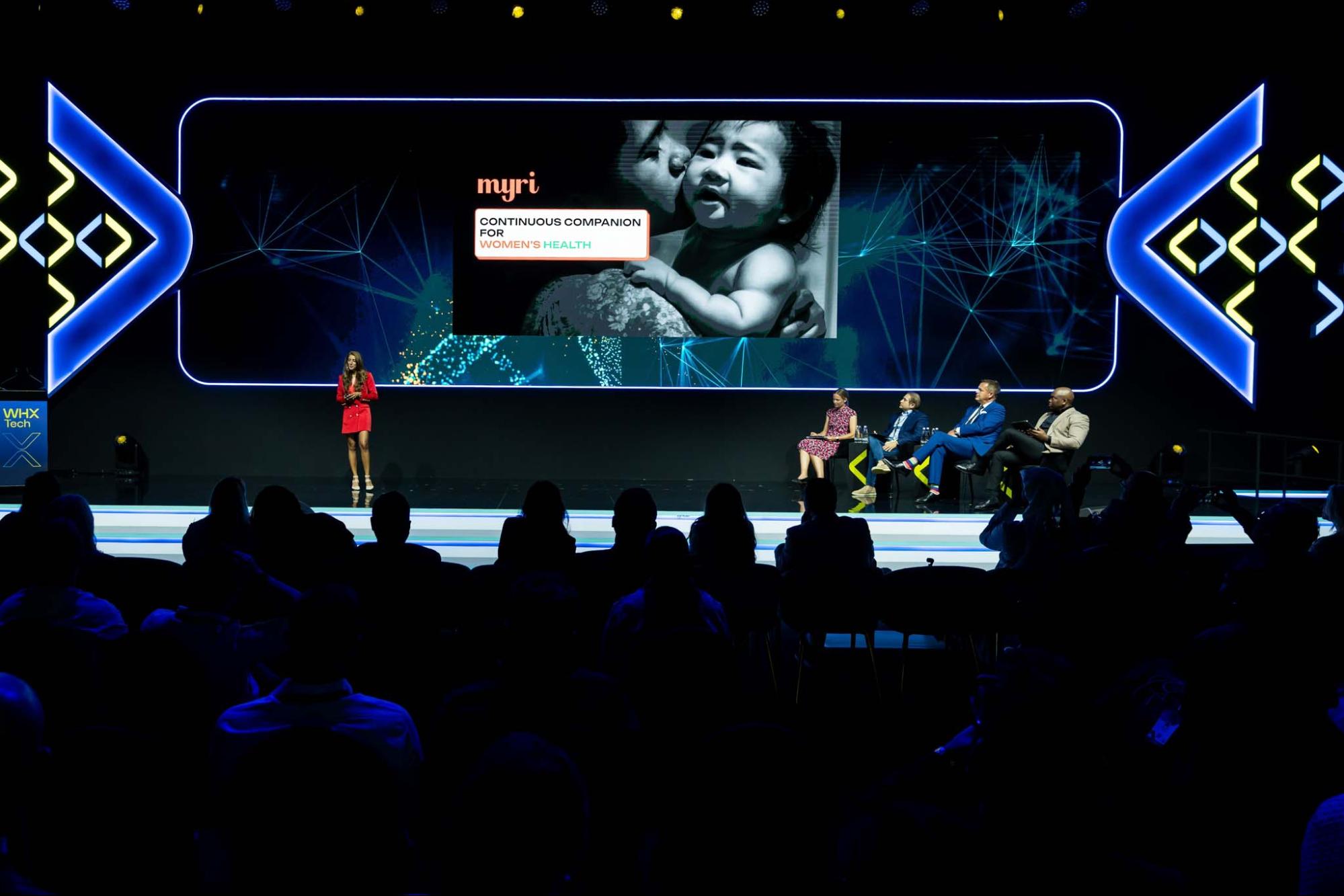
At Myri, we believe wearable technology is an important piece of the maternal health ecosystem, but it is only one piece.
The real opportunity lies in connecting fragmented health information and transforming it into personalized care that evolves continuously throughout pregnancy and postpartum.
Myri was designed around a simple but powerful belief: a woman's journey is never static, and neither should her care be.
Rather than functioning as a passive tracking application, Myri acts as an intelligent maternal health platform that continuously brings together multiple dimensions of maternal wellbeing. Wearable integrations, patient-reported symptoms, AI-powered health screenings, nutrition, mental wellbeing, pregnancy milestones, clinical history, and evidence-based guidelines work together to create a comprehensive picture of maternal health rather than a collection of disconnected data points.
The result is a care experience that adapts as the pregnancy progresses.
As new information becomes available, whether through a wearable device, a symptom assessment, a nutrition log, or a change in medical history, Myri can personalize educational content, recommend appropriate care programs, surface clinically relevant insights, and support timely conversations with healthcare providers.
Instead of expecting mothers to navigate pregnancy alone between appointments, the platform helps prepare them for what comes next while keeping care teams connected to meaningful changes in health over time.
For providers and health systems, this creates greater visibility into the periods that have traditionally remained invisible. For employers and health plans, it enables scalable, proactive maternal health programs that support prevention, engagement, and continuity of care. Most importantly, for mothers, it creates confidence that care is evolving alongside them rather than waiting for the next scheduled visit.
The Future of Maternal Health Is Connected, Continuous, and Personalized
Wearable technology has fundamentally changed what is possible in maternal healthcare by making continuous physiological monitoring accessible at an unprecedented scale.
The next chapter, however, is not about building smarter devices or collecting more data.
It is about creating healthcare systems that can transform that data into timely interventions, personalized care pathways, coordinated support, and better maternal and neonatal outcomes.
The organizations that will lead the future of maternal healthcare will not be those that collect the most information. They will be the ones that make information meaningful by connecting technology, clinical evidence, and compassionate care into a single, continuous experience.
Pregnancy is never static. And the care that supports it shouldn't be either.
%20(1).png)
.png)
.svg)


