
Closing maternal health gaps with AI and data
Insights, Stories and News That Matters
%20(1).png)
Content warning: This article discusses maternal mental health, postpartum psychosis, suicide, and the deaths of children. Some details may be distressing or triggering for readers.
.png)
The ongoing trial of Lindsay Clancy has brought an extremely difficult conversation about maternal mental health into public view. In January 2023, Clancy was accused of killing her three young children in Massachusetts before attempting to take her own life. Her defense has argued that she was experiencing severe postpartum mental illness, including postpartum psychosis, while prosecutors dispute the defense's account and maintain that she is criminally responsible. As the trial continues, testimony and evidence are still being presented, and the court has yet to determine the outcome.
There is no simple way to talk about the deaths of three children, and there should not be. The grief and devastation experienced by their family deserve to remain at the center of what happened. At the same time, the attention surrounding this case has opened a wider conversation that extends beyond one mother, one family, or one courtroom: what happens when maternal mental health is misunderstood, overlooked, minimized, or treated as something a woman should simply be able to manage?
That question matters because maternal mental health is not an occasional complication of motherhood. It is part of maternal health, and the evidence tells us that it is far more common than the attention it receives would suggest.
Maternal mental health is still too easy to overlook.
Pregnancy and childbirth are routinely monitored for physical complications, with care teams tracking blood pressure, blood sugar, fetal growth, bleeding, infection and other indicators that can signal risk. Mental health, however, has historically received less consistent attention, despite the fact that perinatal mental health conditions are among the most common complications associated with pregnancy and the first year after birth.
ACOG describes these conditions as frequently underdiagnosed and undertreated, while recommending routine screening and systems that connect screening with assessment, treatment and follow-up.
The scale of the issue is significant. The CDC reports that approximately 1 in 8 women with a recent live birth experience symptoms of postpartum depression, while its research has also identified missed opportunities in care, with about 1 in 5 women reporting that they were not asked about depression during a prenatal visit and about 1 in 8 reporting that they were not asked during a postpartum visit.
These numbers are not simply statistics about screening. They reflect how easily a mother's emotional and psychological health can become secondary to everything else happening around pregnancy and birth.
There is also a cultural layer to this problem. New mothers are often surrounded by expectations that they should feel grateful, capable, protective and happy, even while recovering physically, navigating major hormonal changes, sleeping poorly and adjusting to a completely different identity and routine. When distress is met with phrases such as "everyone feels this way" or "you're just exhausted," an experience that deserves attention can become something a mother learns to hide.
Normalizing the challenges of motherhood is important, but normalizing symptoms that require care is not.
Postpartum Depression, Anxiety, and Psychosis are not the same.
One reason conversations about cases such as Clancy's can become confusing is that postpartum depression, anxiety and psychosis are sometimes discussed as though they are variations of the same condition. They are not.
Postpartum depression is common and can involve persistent sadness, hopelessness, anxiety, anger, loss of interest, exhaustion, difficulty bonding with the baby and feelings of inadequacy. It is different from the temporary "baby blues," and it is treatable with appropriate support and clinical care.
Postpartum psychosis is a very different and much more severe condition. It occurs in approximately 1 to 2 out of every 1,000 deliveries and can involve hallucinations, delusions, paranoia, severe confusion, agitation and a loss of connection with reality. ACOG and Postpartum Support International both emphasize that suspected postpartum psychosis requires immediate medical attention. Postpartum psychosis often develops abruptly, most commonly within the first days or weeks after birth, and is strongly associated with bipolar-spectrum illness in the psychiatric literature. Its presentation can include manic symptoms, rapidly changing mood, disorganized thinking, markedly decreased need for sleep, delusions, hallucinations, or impaired insight.
Understanding that distinction is important not only for clinicians, but for families and communities as well. A mother experiencing depression is not inherently dangerous, and having intrusive thoughts does not mean someone has postpartum psychosis. At the same time, significant changes in behavior, severe sleep disruption, paranoia, hallucinations, delusions or thoughts of suicide should never be dismissed as simply part of becoming a parent. Unwanted intrusive thoughts can occur in postpartum anxiety and obsessive-compulsive presentations and are not the same as wanting, intending, or planning to harm a baby. The overwhelming majority of people experiencing perinatal mental-health conditions do not harm themselves or their children.
The danger of waiting until something looks like a crisis.
Perhaps the most important lesson from the wider conversation is that maternal mental healthcare cannot depend on a crisis becoming obvious to everyone around a mother.
ACOG recommends screening for depression and anxiety during pregnancy and postpartum, along with appropriate assessment for bipolar disorder, suicidality and postpartum psychosis. Importantly, ACOG also recommends that screening be accompanied by systems that provide timely access to assessment, treatment and ongoing monitoring.
That last part is critical. Screening is not care by itself.
The gap is not whether we have a screening questionnaire. It is what happens between screening, clinical evaluation, referral, treatment and follow-up, and whether changes are noticed when a mother is no longer sitting inside a clinic. Maternal mental health requires continuity, not a single score collected at a single point in time.
Asking a mother whether she is struggling matters, but the answer needs somewhere to go. A positive screening result needs clinical assessment, and a mother who requires treatment needs access to that treatment. Someone experiencing a psychiatric emergency needs a clear and immediate pathway to appropriate care.
This is where maternal mental health often becomes difficult in practice. The traditional postpartum model can create a gap between appointments, while a mother's needs do not necessarily follow an appointment schedule. A concern can emerge in the middle of the night, anxiety can intensify over several days, sleep can deteriorate gradually, or a partner may notice a change that the mother herself cannot fully recognize.
The healthcare system cannot be present every minute, but it can be designed to make it easier for concerns to be noticed and acted upon before they become emergencies.
We need to make asking for help feel less like an admission of failure.
There is another part of the problem that cannot be solved through clinical screening alone.
Mothers need to feel safe telling someone that they are not okay.
That can be difficult when motherhood is surrounded by judgment, particularly for women who fear being seen as incapable, unstable or unfit to care for their children. A mother may worry about what her partner will think, what her family will say, whether her provider will judge her, or whether admitting that she is struggling will change how people see her as a parent.
Those fears can become barriers to care even when services technically exist.
This is why maternal mental health needs to become part of ordinary maternal care rather than something that appears only when a woman reaches a breaking point. Conversations about mood, anxiety, sleep, intrusive thoughts, safety and emotional wellbeing should feel as routine as conversations about blood pressure or physical recovery.
Partners and families also have an important role because they may notice changes before a mother is able to describe them herself. Knowing what symptoms can look like, understanding that postpartum psychosis is a medical emergency, and knowing where to seek professional help can make a meaningful difference when someone's condition begins to change.
Technology has a role, but it cannot replace care.
There is a place for technology in making maternal mental health more visible, particularly in the spaces between clinical appointments, but that role needs to be understood carefully.
An app cannot diagnose postpartum psychosis, replace a psychiatrist, provide emergency treatment or substitute for human connection. What digital tools can do is create additional opportunities for mothers to check in with themselves, recognize changes, find reliable information, track symptoms and know when a concern deserves professional attention.
The goal should not be to put the responsibility for mental healthcare back on the mother through another app or another checklist. It should be to build a more connected layer of support around her, where information can move with her and concerns have a better chance of being recognized early.
That is particularly important in a healthcare system where the traditional postpartum visit is only one point in a much longer period of physical and psychological recovery.
The conversation should be bigger than one courtroom.
The Lindsay Clancy trial will ultimately be decided through the legal process and the evidence presented in court. It would be neither responsible nor fair to use an ongoing trial to make definitive claims about what happened medically, what individual clinicians should have done, or what the final legal outcome should be.
But we can still ask difficult questions about maternal mental health without prejudging that case.
Are mothers being asked often enough about how they are really doing? Are healthcare professionals equipped to recognize the difference between ordinary postpartum adjustment and symptoms that require intervention? Do families know what severe postpartum mental illness can look like? When a screening identifies a concern, is there actually a clear pathway to care? And perhaps most importantly, can a mother say "I am scared by what is happening to me" without immediately feeling that she has failed at motherhood?
These are questions worth asking before another headline gives us a reason to ask them.
Maternal mental health should not have to become visible through tragedy before it becomes worthy of attention. It should be part of the care that surrounds a woman throughout pregnancy and postpartum, with repeated opportunities to check in, recognize changes, access support and escalate care when necessary.
Because the goal of maternal healthcare should not simply be to respond when a crisis becomes impossible to miss.
It should be to build a system in which mothers are seen early enough that fewer crises have the chance to become invisible in the first place.
If you or someone you know is struggling
Maternal mental health conditions are treatable, and asking for help does not require waiting for symptoms to become severe. If someone is experiencing hallucinations, delusions, severe confusion, paranoia, extreme agitation, suicidal thoughts or other signs of possible postpartum psychosis, immediate professional medical assessment is necessary because postpartum psychosis is a psychiatric emergency.
For ongoing concerns about depression, anxiety, intrusive thoughts or emotional wellbeing during pregnancy or after birth, speaking with an obstetric, primary care or mental health professional can be an important first step. Support should begin with being heard, not with having to prove that something is wrong.
Myri can help mothers access evidence-based information, recognize changes in how they are feeling, and understand when professional care may be needed. Myri is not an emergency or crisis service and does not diagnose postpartum psychosis. Whether you have questions about something you are experiencing during pregnancy or postpartum, need help understanding what you are feeling, or are looking for evidence-based information to help you decide what to do next, you do not have to navigate it alone.
Reaching out is not a sign that you are struggling as a mother; it is a way of taking care of yourself, too. <3
If someone may be in immediate danger or is experiencing suicidal intent, hallucinations, delusions, severe confusion, or other signs of a psychiatric emergency, seek emergency medical care immediately.
Written by Myri Health | Clinically reviewed by Dr. Pinkey Patel, Pharm.D, NASM-CPT
Sources & References
- Centers for Disease Control and Prevention (CDC). Depression Among Women.
CDC – Depression Among Women - Centers for Disease Control and Prevention (CDC). Vital Signs: Postpartum Depressive Symptoms and Provider Discussions About Perinatal Depression — United States, 2018. Morbidity and Mortality Weekly Report (MMWR), 2020.
CDC MMWR – Postpartum Depressive Symptoms - American College of Obstetricians and Gynecologists (ACOG). Clinical Practice Guideline: Screening and Diagnosis of Mental Health Conditions During Pregnancy and Postpartum.
ACOG – Perinatal Mental Health Screening - Centers for Disease Control and Prevention (CDC). Timing of Postpartum Depressive Symptoms. Preventing Chronic Disease, 2023.
CDC – Timing of Postpartum Depressive Symptoms - Postpartum Support International (PSI). Postpartum Psychosis.
Postpartum Support International – Postpartum Psychosis
.png)
Breastfeeding is one of those parts of motherhood that comes with an extraordinary amount of advice, expectation and, often, judgment. Mothers are told about the benefits of breastfeeding, encouraged to breastfeed exclusively for the first six months and reminded that breast milk provides important protection for babies, but far less attention is given to what happens between those recommendations and real life, when a mother is recovering from birth, feeding around the clock, trying to understand whether her baby is getting enough milk and wondering why something that is supposed to be “natural” can feel so difficult.
The evidence is clear that breastfeeding and human milk offer important health benefits for both babies and mothers. The World Health Organization and American Academy of Pediatrics recommend exclusive breastfeeding for approximately the first six months, followed by complementary foods alongside continued breastfeeding for up to two years or beyond, as mutually desired by mother and child. Human milk provides essential nutrients and contains antibodies and other biologically active components that support an infant’s immune system, while breastfeeding is associated with a lower risk of several childhood infections and important maternal health benefits, including a reduced risk of breast and ovarian cancers. [1][2]
Knowing the benefits, however, should never mean turning breastfeeding into a measure of whether a mother is doing motherhood “right.”
Breastfeeding is natural, but that does not mean it is easy.
Breastfeeding is a biological process, but learning how to breastfeed is still a new skill a woman learns after childbirth. A newborn may struggle with attachment or milk transfer, while a mother may experience nipple pain, engorgement, concerns about milk supply or simply exhaustion from feeding every few hours, including overnight.
The CDC reports that about 60% of mothers do not breastfeed for as long as they intended, with lactation and latching difficulties, concerns about infant nutrition or weight, pumping demands, medication concerns, lack of parental leave and inadequate support among the factors that can contribute to earlier-than-intended cessation. [3]
That statistic is worth paying attention to because it changes the question from Are mothers trying hard enough? to Are mothers getting the support they need?
What can actually help?
Breastfeeding support should be practical, accessible and available before a mother reaches the point of feeling overwhelmed.
Prepare before birth. Breastfeeding education during pregnancy can help mothers understand feeding cues, positioning, attachment, common early challenges and where to seek professional support. WHO evidence suggests that breastfeeding counselling and education can improve breastfeeding outcomes, making pregnancy an important time to prepare rather than waiting until after delivery. [4]
Do not ignore persistent pain. Some tenderness can occur as breastfeeding is established, but significant or ongoing pain, nipple damage or difficulty with feeding deserves attention. A lactation consultant can assess positioning, attachment and milk transfer and help identify what may be making feeding difficult. The AAP recommends that skilled lactation support be readily available to mothers who want to breastfeed. [2]
Look at the whole picture when assessing whether a baby is getting enough. It can be difficult to know how much milk a baby is consuming when breastfeeding, which is why mothers can become anxious about every feed. Diaper output, swallowing during feeds and appropriate weight gain provide more useful information than simply counting minutes at the breast. If there are concerns about weight, feeding or milk transfer, a pediatrician or qualified lactation professional can assess the situation rather than leaving a mother to guess. [5]
Follow feeding cues rather than chasing a perfect schedule. Newborns often feed frequently, and WHO recommends breastfeeding on demand during the day and night. Frequent and effective milk removal is also important in establishing and maintaining milk production. [1] Understanding this can help mothers recognize that frequent feeding, particularly in the early weeks, does not necessarily mean something is wrong.
Ask before stopping breastfeeding because of medication. Mothers sometimes receive conflicting advice about whether a medication is compatible with breastfeeding. The AAP notes that most maternal medications are compatible with breastfeeding, although individual medications and circumstances should always be assessed with an appropriate healthcare professional. [2] Rather than making assumptions, mothers should have access to someone who can help them understand their specific situation.
Build support around the mother, not just the feeding plan. Breastfeeding does not happen separately from postpartum recovery, sleep, mental wellbeing, nutrition, work or family circumstances. A mother returning to work without adequate pumping facilities is facing a very different set of challenges from someone with flexible time and support at home. WHO and UNICEF recognize counselling, skilled health services, community support and supportive workplace policies as important parts of creating an environment where breastfeeding can be initiated and continued. [6]
The judgment around breastfeeding needs to change.
Mothers can be judged from almost every direction when it comes to feeding their babies. They can be questioned for breastfeeding in public, for breastfeeding “too long,” for supplementing with formula, for pumping instead of nursing, for stopping earlier than planned or for choosing not to breastfeed at all.
The irony is that mothers are often told how important breastfeeding is without being given the practical support that can make breastfeeding possible.
The AAP emphasizes that parents should receive evidence-based information that allows them to make informed feeding decisions without pressure or guilt. [2] That principle matters well beyond the clinical setting.
A mother who wants to breastfeed deserves skilled support without being made to feel inadequate when she struggles. A mother who needs to supplement deserves guidance rather than shame. A mother who pumps exclusively deserves support for the demands that come with pumping. A mother who decides not to breastfeed deserves accurate information and respect, and a mother who stops earlier than she intended deserves compassion rather than assumptions about how hard she tried. Because feeding a baby is not a character assessment.
What mothers need is support that continues?
One of the biggest gaps in breastfeeding care is that support can disappear just when mothers need it most. Questions rarely arrive neatly during a scheduled appointment; they show up at 2 a.m. when a baby suddenly seems to want to feed constantly, when pumping output changes, when breastfeeding becomes painful, when a mother is unsure whether a medication is safe or when she simply needs to know whether what she is experiencing is normal.
That is why breastfeeding support should extend beyond the hospital and beyond a single postpartum visit.
The goal is not to create one perfect breastfeeding journey for every mother. It is to make sure mothers have access to trustworthy information, qualified support and appropriate clinical guidance as their circumstances change.
Breastfeeding has real and well-established benefits, and mothers deserve to understand those benefits without being made to feel guilty when their experience does not match the ideal. They deserve honest information about the challenges, practical strategies that can make feeding easier and support that recognizes the mother as a whole person rather than simply the person providing the milk.
Breastfeeding should be supported, not policed.
If you are pregnant, newly postpartum or somewhere in the middle of your breastfeeding journey and have questions about feeding, milk supply, nutrition, medications, postpartum recovery or whether something you are experiencing needs attention, Myri is here to help.
Open the Myri Health app to access evidence-based guidance and personalized support throughout pregnancy and postpartum, or ask Maya your questions anytime and get trusted, evidence-based information to help you feel more informed and supported in the moments when you need it most.
Sources
[1] World Health Organization. Breastfeeding and Infant and Young Child Feeding.
[2] American Academy of Pediatrics. Policy Statement: Breastfeeding and the Use of Human Milk, 2022.
[3] Centers for Disease Control and Prevention. About Breastfeeding Data.
[4] World Health Organization. Breastfeeding Education and Counselling.
[5] World Health Organization. Breastfeeding: Questions and Answers.
[6] World Health Organization and UNICEF. Infant and Young Child Feeding.
%20(1).png)
The excitement around wearable technology is well deserved. For the first time, maternal physiology can be observed continuously rather than intermittently, offering unprecedented insight into how pregnancy evolves between prenatal visits. What was once limited to a handful of measurements collected in a clinic can now be supplemented with longitudinal data that reflects how a woman's body is adapting every day.
Yet despite this progress, one important question remains.
If wearables can generate millions of physiological data points, why haven't they dramatically improved maternal outcomes on their own? The answer is surprisingly simple.
Data is only valuable when it leads to action.
A wearable can identify changes in resting heart rate, declining sleep quality, reduced activity, or shifts in heart rate variability. It cannot determine whether those changes represent a normal stage of pregnancy, an emerging clinical concern, or simply the result of a stressful week. It cannot interpret those signals within the context of a woman's medical history, pregnancy stage, nutritional status, mental wellbeing, previous pregnancies, or existing risk factors.
Pregnancy has never been defined by isolated measurements. It is a complex biological journey where every physiological change is connected to countless others. Without that context, even the most sophisticated wearable remains a monitoring device rather than a clinical tool.
This is why the conversation around maternal health is beginning to shift. The future is no longer about collecting more information. It is about transforming continuous data into personalized, timely, and meaningful care.
The Missing Layer Is Clinical Intelligence
Maternal healthcare generates an extraordinary amount of information.
Blood pressure measurements, laboratory results, ultrasound findings, symptoms, medications, nutrition, physical activity, sleep quality, stress levels, social determinants of health, mental wellbeing, and increasingly, wearable-derived physiological signals all contribute to understanding how a pregnancy is progressing.
Individually, each of these data points tells only part of the story. Collectively, they create a far more accurate picture of maternal health. This is where artificial intelligence is beginning to reshape the future of obstetric care.
Contrary to popular perception, the greatest value of AI in healthcare is not replacing clinicians or making autonomous decisions. Its greatest strength lies in identifying patterns that would be difficult, if not impossible, for humans to detect across thousands of continuously changing variables.
Recent advances in machine learning have demonstrated the ability to integrate wearable data with electronic health records, patient-reported outcomes, laboratory values, and clinical history to generate more accurate predictions of maternal risk. Researchers are exploring AI models capable of identifying early signals associated with hypertensive disorders of pregnancy, gestational diabetes, preterm birth, and postpartum complications by recognizing subtle deviations from an individual's baseline rather than relying solely on population averages.
This shift from population-based thresholds to individualized trajectories represents one of the most significant advances in digital maternal health.
Rather than asking whether a woman's heart rate falls within a "normal" range, intelligent systems can begin asking a more clinically meaningful question: Is this change normal for her?
Personalized Care Begins With Personalized Context
Every pregnancy is unique, not simply because every woman is different, but because every pregnancy unfolds differently.
A woman managing gestational diabetes requires different guidance than someone recovering from hyperemesis gravidarum. A first-time mother preparing for birth has different educational needs than someone navigating pregnancy after a previous preterm delivery. Mental health, nutrition, physical activity, sleep, social support, and chronic conditions all influence the course of pregnancy in ways that cannot be addressed through standardized care plans alone.
This is one of the greatest limitations of traditional maternal care models.
Although clinical guidelines are evidence based, they are necessarily designed around broad populations. They cannot account for the thousands of variables that shape an individual pregnancy between scheduled appointments.
Continuous monitoring creates an opportunity to move beyond standardized care and toward personalized care pathways that evolve alongside each mother's journey. Instead of responding only when complications become clinically apparent, care can increasingly become proactive, adapting to changing physiology, symptoms, and risk profiles throughout pregnancy and postpartum.
A Woman's Journey Is Never Static. Why Should Her Care Be?
Pregnancy is often described in trimesters, but women do not experience pregnancy in neatly defined chapters. Needs evolve from week to week. Risk changes over time. Questions become more complex as birth approaches. Recovery after delivery brings an entirely new set of physical and emotional challenges.
Yet many digital health solutions remain surprisingly static. They deliver the same educational content, the same reminders, and the same recommendations to every woman at the same stage of pregnancy, regardless of her health status or changing circumstances.
That approach overlooks one of the most important realities of maternal health.
Care should evolve just as pregnancy evolves. It should respond to emerging symptoms, changing risks, lifestyle factors, clinical history, and the goals of each individual woman. It should prepare mothers for what lies ahead rather than simply documenting what has already happened.
Technology finally makes that possible. The challenge is delivering care that adapts because of it.
How Myri Is Building the Next Generation of Maternal Care?
At Myri, we believe wearable technology is an important piece of the maternal health ecosystem, but it is only one piece.
The real opportunity lies in connecting fragmented health information and transforming it into personalized care that evolves continuously throughout pregnancy and postpartum.
Myri was designed around a simple but powerful belief: a woman's journey is never static, and neither should her care be.
Rather than functioning as a passive tracking application, Myri acts as an intelligent maternal health platform that continuously brings together multiple dimensions of maternal wellbeing. Wearable integrations, patient-reported symptoms, AI-powered health screenings, nutrition, mental wellbeing, pregnancy milestones, clinical history, and evidence-based guidelines work together to create a comprehensive picture of maternal health rather than a collection of disconnected data points.
The result is a care experience that adapts as the pregnancy progresses.
As new information becomes available, whether through a wearable device, a symptom assessment, a nutrition log, or a change in medical history, Myri can personalize educational content, recommend appropriate care programs, surface clinically relevant insights, and support timely conversations with healthcare providers.
Instead of expecting mothers to navigate pregnancy alone between appointments, the platform helps prepare them for what comes next while keeping care teams connected to meaningful changes in health over time.
For providers and health systems, this creates greater visibility into the periods that have traditionally remained invisible. For employers and health plans, it enables scalable, proactive maternal health programs that support prevention, engagement, and continuity of care. Most importantly, for mothers, it creates confidence that care is evolving alongside them rather than waiting for the next scheduled visit.
The Future of Maternal Health Is Connected, Continuous, and Personalized
Wearable technology has fundamentally changed what is possible in maternal healthcare by making continuous physiological monitoring accessible at an unprecedented scale.
The next chapter, however, is not about building smarter devices or collecting more data.
It is about creating healthcare systems that can transform that data into timely interventions, personalized care pathways, coordinated support, and better maternal and neonatal outcomes.
The organizations that will lead the future of maternal healthcare will not be those that collect the most information. They will be the ones that make information meaningful by connecting technology, clinical evidence, and compassionate care into a single, continuous experience.
Pregnancy is never static. And the care that supports it shouldn't be either.
.png)
For decades, maternal healthcare has relied on a model built around periodic clinical encounters. Blood pressure is measured during an appointment. Weight is recorded. Laboratory tests are ordered at specific milestones. Fetal growth is assessed. Between those visits, however, pregnancy continues uninterrupted, with physiological changes occurring every hour of every day.
This disconnect has become one of the greatest opportunities in modern maternal healthcare.
Pregnancy is not a series of isolated clinical events. It is a continuously evolving biological process shaped by changes in cardiovascular function, metabolism, sleep, physical activity, nutrition, mental wellbeing, and countless other factors that influence both maternal and neonatal outcomes. Yet most healthcare systems still evaluate this dynamic journey through episodic snapshots taken weeks apart.
As wearable technology becomes increasingly integrated into everyday life, researchers are beginning to ask an important question.
Can continuously collected physiological data help us understand pregnancy differently? More importantly, can it help improve maternal and neonatal outcomes through earlier risk identification, more personalized interventions, and better connected care?
The answer is becoming increasingly promising, but perhaps not for the reasons many expect. The true value of wearables is not that they collect more data. It is that they have the potential to transform how pregnancy is monitored, understood, and supported throughout the entire maternal journey.
Pregnancy Is Dynamic. Care Should Reflect That.
Every pregnancy follows its own physiological trajectory.
Although pregnancy is often discussed as though it progresses through predictable trimesters, the biological reality is far more complex. Two women at exactly the same gestational age may have entirely different cardiovascular responses, sleep patterns, nutritional needs, activity levels, or risk profiles, even when both pregnancies are considered healthy.
Throughout pregnancy, the maternal body undergoes remarkable adaptations to support fetal development.
Blood volume increases by as much as fifty percent. Cardiac output rises significantly. Resting heart rate gradually increases while vascular resistance changes to accommodate growing circulatory demands. Hormonal shifts alter metabolism, immune function, thermoregulation, respiratory patterns, and sleep architecture. Emotional wellbeing and stress responses continue to evolve alongside these physiological changes, creating a deeply interconnected system where one change often influences many others.
These adaptations are expected. What matters is how they change over time.
Traditionally, healthcare providers have assessed these physiological changes during scheduled prenatal appointments. While these visits remain essential for monitoring maternal and fetal health, they provide only brief snapshots within a journey that unfolds continuously.
The periods between appointments often represent the largest blind spot in maternal care. This is precisely where wearable technology is beginning to reshape the conversation.
From Fitness Trackers to Clinical Insights
Wearable devices have evolved far beyond counting steps.
Today's consumer wearables are capable of continuously monitoring resting heart rate, heart rate variability, respiratory rate, sleep duration and quality, physical activity, skin temperature, blood oxygen saturation, and other physiological signals with increasing accuracy.
While originally developed to support general wellness and fitness, these devices are increasingly being explored as tools for digital health, particularly in pregnancy where continuous physiological monitoring has historically been difficult outside clinical settings.
Instead of relying solely on measurements obtained during prenatal appointments, wearable devices provide longitudinal data that captures how maternal physiology changes from one day to the next.
This distinction is important.
A single heart rate measurement offers limited clinical value. A trend demonstrating gradual cardiovascular changes over several weeks may provide meaningful insight into how pregnancy is progressing.
Rather than replacing clinical care, wearables extend the visibility of maternal health beyond hospital walls, offering a richer understanding of pregnancy as it unfolds in real life.
The Science Behind Continuous Monitoring
Over the last several years, research into digital health technologies has accelerated rapidly, with pregnancy emerging as one of the most promising areas for continuous physiological monitoring. A growing body of evidence suggests that wearable devices can reliably capture physiological changes associated with normal pregnancy while also identifying patterns that may precede certain maternal complications.
Researchers have observed measurable changes in resting heart rate, heart rate variability, physical activity, sleep quality, respiratory rate, and skin temperature throughout pregnancy. Increasingly, these digital biomarkers are being studied alongside clinical data to better understand maternal health trajectories and identify women who may benefit from earlier intervention.
Several studies have demonstrated associations between wearable-derived physiological data and pregnancy complications such as hypertensive disorders, gestational diabetes, preterm birth, and maternal cardiovascular dysfunction. Other research has explored how changes in sleep quality and physical activity correlate with maternal mental health, metabolic disorders, and postpartum recovery.
While wearable devices are not diagnostic tools, they offer something traditional prenatal care has rarely been able to capture consistently: continuous observation.
Rather than relying solely on isolated clinical measurements, healthcare providers can begin to understand how physiology changes over days, weeks, and months.
This represents a fundamental shift from episodic assessment toward longitudinal maternal health monitoring.
Why Longitudinal Data Matters?
Healthcare has traditionally been built around isolated measurements.
Blood pressure is recorded during a clinic visit.
Weight is measured once every few weeks.
Laboratory values are reviewed after scheduled testing.
Each measurement provides valuable information, but none fully captures the complexity of pregnancy.
Continuous monitoring offers a different perspective.
Instead of asking whether a mother's resting heart rate is elevated on a particular day, clinicians can examine how cardiovascular function has changed throughout pregnancy. Rather than viewing sleep as a single night's experience, they can observe long-term patterns that may influence maternal wellbeing. Physical activity becomes more than a daily step count; it becomes an indicator of functional recovery, fatigue, mobility, and changing health status over time.
These longitudinal trends often provide richer clinical context than isolated measurements alone. In maternal healthcare, where many complications develop gradually before symptoms become clinically apparent, understanding change over time may prove just as valuable as measuring individual clinical parameters.
Digital Biomarkers: The Next Frontier in Maternal Health
One of the most exciting developments in maternal healthcare is the emergence of digital biomarkers.
Unlike traditional biomarkers obtained through blood tests or imaging, digital biomarkers are physiological and behavioral signals collected continuously through connected technologies.
Resting heart rate. Heart rate variability. Sleep efficiency. Respiratory rate. Daily movement. Recovery patterns. Taken individually, these measurements rarely indicate disease. Together, they begin to describe how a pregnancy is adapting.
Researchers are increasingly combining these digital biomarkers with artificial intelligence to identify subtle physiological deviations that may otherwise remain invisible until symptoms develop.
Rather than waiting for complications to become clinically obvious, future maternal care may increasingly focus on recognizing risk trajectories much earlier, creating opportunities for proactive rather than reactive intervention. This evolution represents one of the most promising applications of digital health in obstetrics.
Your Journey, Your Data
The shift toward continuous, data-driven maternal care is a fundamental change in how we nurture health throughout pregnancy and postpartum. Wearables and digital biomarkers have opened the door to a more proactive approach, but the true potential lies in how we translate that raw data into clear, actionable, and personalized support.
At Myri Health, we’re committed to closing the gap between raw data and meaningful action. Our platform bridges the time between your clinical visits, turning daily maternal signals into provider-endorsed guidance that helps you navigate this dynamic journey with confidence. Whether you’re looking for earlier risk identification, personalized postpartum support, or a digital partner that stays with you every step of the way, we are built to empower you.
Ready to transform your data into a healthier journey?
- Download the Myri Health App: Start your personalized health path today. Our AI-powered platform is designed to provide the proactive, evidence-based support you deserve.
- Collaborate with Your Care Team: Bring your wearable data and Myri insights to your next appointment. Using your Myri Health dashboard, you can have more informed, productive conversations with your OB/GYN or midwife about your specific health trajectory.
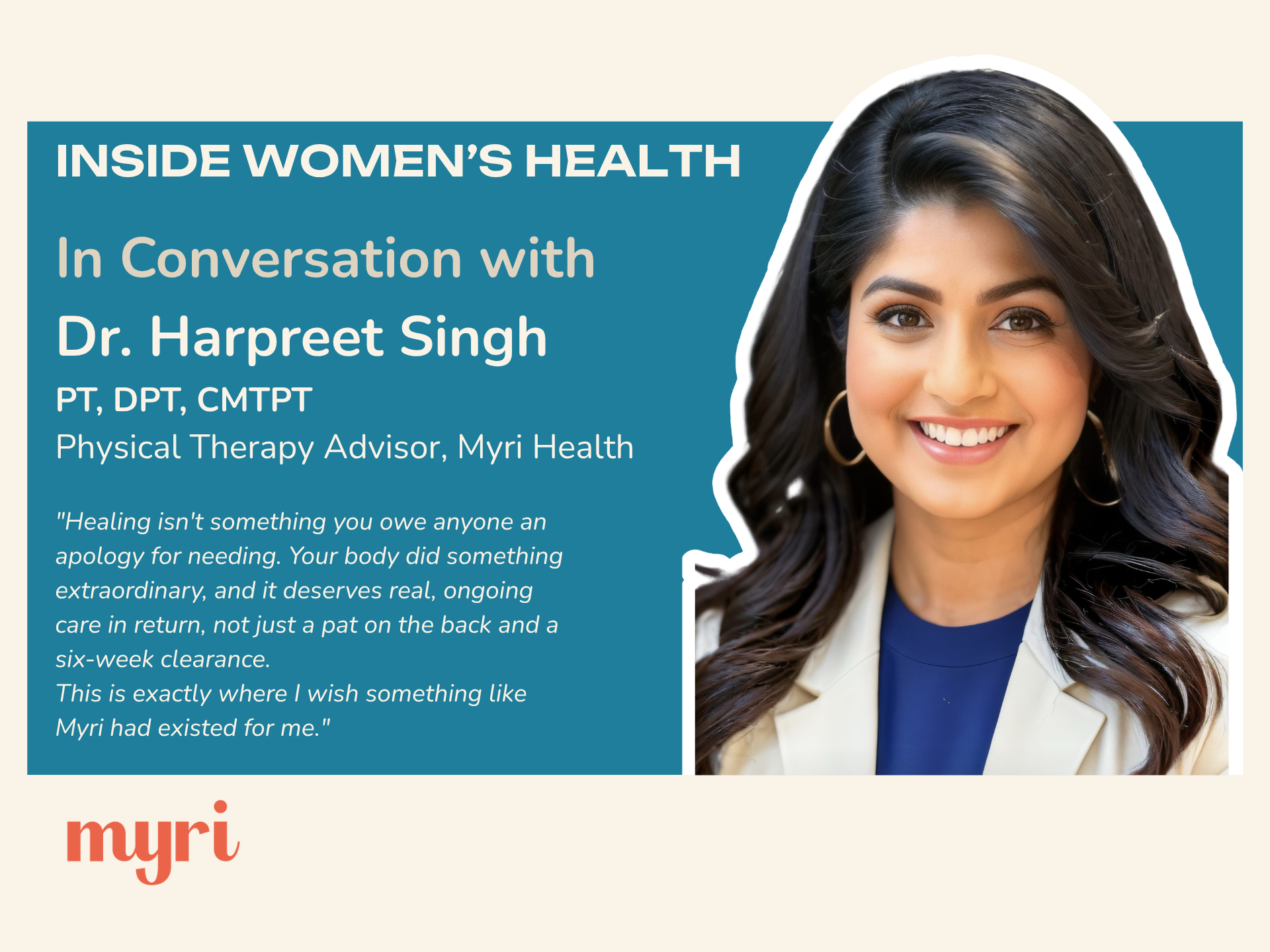
As healthcare professionals, clinicians often spend years understanding the human body, supporting patients, and recognizing symptoms early. But motherhood has a way of making even experts confront realities they didn’t fully expect personally.
In this conversation, we speak about navigating pregnancy and postpartum not just as a clinician, but as a mother herself. We are going to discuss Pelvic floor challenges, the normalization of postpartum discomfort, surprises in this journey of motherhood, what healthcare systems still miss, and why preventive maternal care needs to become the standard.
1. As someone with a deep understanding of women’s physiology and pelvic health, did pregnancy or postpartum still surprise you in ways you didn’t expect personally?
Honestly, yes. And that still humbles me. I had spent years treating patients, explaining perineal anatomy, coaching people through diastasis recti and prolapse. I thought I was as prepared as anyone could be. But knowing the anatomy on a whiteboard and treating a patient are completely different from actually living in a body that isn't healing the way the textbooks say it should.
What surprised me most wasn't just the pain itself (trust me, that was shocking in its own right); it was more so how isolating it felt. I kept waiting for my clinical knowledge to make the experience easier, and instead it sometimes made it lonelier, because I understood exactly what was going wrong and still couldn't fix it quickly for myself. Even advocating for myself as a healthcare practitioner, it felt at times like my voice fell on deaf ears. There's a real gap in our maternal care in this country, and the distance between knowing what "should" happen in a normal recovery and what happens when your body takes the harder road can feel even more defeating when you're fighting that fight on multiple fronts: at home, at work, and within your own head. At times, it's a daily struggle to keep trying and pushing forward.
2. Were there any physical symptoms or pelvic floor challenges you experienced yourself that made you realize how much mothers are expected to silently “push through”?
Multiple fissures, a surgery I didn't see coming, tailbone dysfunction that made sitting, just sitting, feel impossible for months. I was out of work for two years. Two years, as a pelvic floor specialist, unable to do the very job of helping other women heal, because my own body hadn't healed.
What struck me was how normal it felt to everyone around me, doctors and family members alike, for a mother to be in that much pain. People would deadpan or look fully alarmed when I started describing the nature of my postpartum pain. I remember taking 4–5 sitz baths for 20 minutes a day, for the first two years, contemplating how much I wanted to give up because the pain and debilitation were all too much. That's the moment it really landed for me; my experience alone would not be enough to carry me forward. We don't just push through pain; we're taught to hide that we're pushing through it, until we stop talking about it.
3.A lot of women normalize pain, leaking, pressure, or discomfort after childbirth. Why do you think so many mothers, even educated and informed women, delay seeking help for these issues?
A few reasons lay on top of each other. First, the cultural script, "leaking is just what happens after babies," "of course sex hurts, you just had a baby." These phrases get repeated so often they start to sound like medical fact instead of what they are: signs that something is not functioning well.
Second, the six-week check-up model fails us. One visit, a quick check, "everything looks fine," and you're discharged into the world with a newborn and a body you don't recognize. There's no ongoing relationship with a provider watching your recovery unfold over months, like you had previously during your pregnancy. So symptoms that would raise a flag in any other area of medicine get absorbed into "postpartum life."
And third, this is the one I feel most personally. Mothers are so depleted, physically and emotionally, that advocating for themselves takes a kind of energy they simply don't have, and even when they do speak up, they're often not heard. The village that existed even just one generation before us has become more difficult to find, and even more so to create. I had the clinical knowledge to know something was wrong, and it still took me a long time to learn how to prioritize my own care over everyone else's needs and create my village.
4. Did becoming a mother change the way you approach patients or think about postpartum recovery as a healthcare professional?
I feel I have always treated my patients and their diagnoses as part of a whole-person experience that includes grief, identity change, sleep deprivation, mental health, and a body that's telling a story the person may not have words for yet.
That said, I feel like I've developed a bit of a spidey sense now. When the pauses grow heavier, or her voice fades as she's speaking, I can sense that her inner voice is unsure whether it's safe to speak or ask a question. So I ask different questions now, not just "where does it hurt," but "what does a normal day look like for you," "who's helping you," "how are you sleeping," "how do you feel about your body right now." I give people permission to say things out loud that I wish someone had asked me. My own four-year recovery taught me that healing isn't linear, and that a good provider needs to be a steady presence through the non-linear parts, not just the milestones.
5. From your perspective, what are some of the biggest misconceptions women have about pelvic floor health during pregnancy and postpartum?
The biggest one is that pelvic floor issues are a "later in life" problem, or something that only happens after multiple births or a difficult delivery. I've treated everyone, from first-time mothers with significant dysfunction after seemingly straightforward births to women who have never had intercourse.
Second is the belief that leaking, pain with sex, or pelvic pressure are things you simply live with, that there's no real treatment, just management. In reality, pelvic floor physical therapy can meaningfully change these outcomes, often significantly, but too few women are ever told it exists as an option, let alone referred to it.
Third, and this one is close to home, is the idea that if you're "informed" or "prepared," you're somehow protected from a hard recovery. My own complications happened despite everything I knew. Preparation helps, but it isn't armor.
6. How closely do you think physical recovery and mental wellbeing are connected in motherhood, especially when mothers are struggling with unresolved pain or discomfort?
Inseparably connected. I don't think you can talk honestly about one without the other. Chronic pain changes how you move through your day, how you show up with your baby, how you feel about your own body, and eventually how you feel about yourself as a mother. My mental health challenges postpartum weren't separate from my physical ones, they were deeply tangled together. Pain that isn't taken seriously starts to feel like evidence that something is wrong with you, not just your body, and that's a heavy, quiet weight to carry.
I also think unresolved physical pain keeps the nervous system in a state of vigilance that makes it harder to feel calm, present, or bonded, not because a mother doesn't love her baby, but because her body is still in survival mode. Treating the physical piece is often part of what allows the mental and emotional healing to actually take hold. Top it off with unrealistic expectations like mothers "bouncing back," along with ongoing cultural and family pressures, and it can be extremely overwhelming.
7. At Myri, we believe preventive and continuous care can change maternal outcomes significantly. How can digital platforms help mothers identify concerns earlier and access support before issues become long term?
This is exactly where I wish something like Myri had existed for me. The biggest failure in the current system is the gap, long stretches of time between appointments where a mother is left to interpret her own symptoms with no guidance and no one checking in.
Having a digital platform that closes that gap by making it normal to report symptoms early and often (not just at the six-week visit) is invaluable. It can help mothers recognize that what they're experiencing isn't "just postpartum life" but something worth flagging, and connect them to the right specialist, a pelvic floor PT, a mental health provider, a lactation consultant, before a manageable issue becomes a years-long one. Continuous, low-friction check-ins also validate mothers in real time. Sometimes what changes an outcome isn't a new treatment, it's simply someone asking the right question at the right moment and taking the answer seriously.
8. If there’s one thing you wish every mother knew about her body after childbirth, what would you want her to hear?
That your pain is concrete, not a figment of your imagination. You are strong and resilient. You will get through this, but you need people in your corner.
If something feels wrong, it probably is wrong, and you don't need to wait for it to become unbearable, or wait for someone else to give you permission, before you ask for help. I spent years believing that pushing through quietly was part of being a good mother. It took surgery, two years away from a career I loved, and a four-year recovery to understand that healing isn't something you owe anyone an apology for needing. Your body did something extraordinary, and it deserves real, ongoing care in return, not just a pat on the back and a six-week clearance. You are allowed to take up space in your own recovery.
My dream is a world where women have in-home postpartum doula services to help offset care for themselves and baby, nutrition, activities of daily living, lactation, and general red-flag concerns. I would love for new mothers to have mandatory pelvic floor PT for 4–6 sessions postpartum to jumpstart recovery. I want them to have ongoing, safe, prescriptive exercise tailored to their bodies at appropriate times. I would love for them to be seen for mental health counseling and be integrated into new mother-baby networks for social support. Just a few of my ideas. We need our village back. I understand this isn't the reality for many of us, even when we have family close by. Myri takes a step closer to that reality, it holds space for safe exercise, red-flag reporting, and options for additional postpartum care.

A Grade That Reflects More Than Healthcare
The Least We Owe Mothers Is Better Than a C
"My body went through more than I knew it could."
— Beyoncé, Vogue, 2018
Before a mother ever holds her baby for the first time, she has already been through a transformation that few experiences in life can compare to.
Over the course of pregnancy, her body stretches and adapts to support new life. Her heart works harder to circulate blood for two people. Her hormones rise and fall in ways that influence everything from sleep and mood to memory and appetite. Scientists have even found that pregnancy can create lasting changes in areas of the brain associated with empathy, emotional processing, and nurturing behaviors, helping mothers prepare for the profound responsibility of caring for a child long before that child arrives in the world.¹
And yet, despite everything we know about how demanding motherhood is, one uncomfortable question remains.
How much value do we really place on mothers once they become mothers?
The question may seem dramatic until you look at the latest maternal health report card released in the United States. This year, the nation received a C grade for maternal mental health support and an F for parental support measures such as paid leave and childcare accessibility. No state earned an A.² ³
On paper, it is a disappointing result.
For mothers, it is again a confirmation of something they have known for a long long time, maybe generations.
The challenges that women face during pregnancy, childbirth and postpartum recovery are rarely limited to what happens inside the doctor's office. They show up in the moments when a new mother is awake at three in the morning wondering whether the anxiety she feels is normal. They show up when she dismisses symptoms because she is worried about being perceived as overreacting. They show up when she spends more time coordinating appointments, insurance claims, childcare arrangements, and health information than she does focusing on her own recovery.
Women (even in the 21st century) do not experience maternal healthcare as a seamless journey. They experience it as a collection of disconnected moments that they are somehow expected to stitch together on their own.
That expectation has become so normalized that many people no longer question it.
We should. It becomes a reflection of priorities.
Why Early Detection Matters?
If there is one thing the report card makes clear, it is that maternal health challenges are not rooted in a lack of medical knowledge. We know more about pregnancy, postpartum recovery, maternal mental health, and risk factors than ever before. We have decades of clinical evidence, advances in digital health, and growing awareness around the importance of maternal wellbeing.
The issue is not that we do not know enough.
The issue is that too many mothers still struggle to access the right support at the right time.
When a woman develops high blood pressure during pregnancy, there are often warning signs before the situation becomes dangerous. When postpartum depression develops, symptoms frequently emerge long before a formal diagnosis is made. When complications occur after delivery, they are rarely announced without warning. According to the CDC, most pregnancy related deaths in the United States are preventable.⁴
Preventable.
That word should stop all of us in our tracks because behind every preventable complication is a moment when intervention might have made a difference. A conversation that happened too late. A symptom that was overlooked. A risk factor that was never connected to a broader picture. A mother who did not know where to turn or who assumed what she was experiencing was simply part of the process.
The future of maternal healthcare will not be determined by how quickly we react to emergencies. It will be determined by how effectively we identify risk before an emergency occurs, and prevent such emergencies.
What Better Maternal Care Can Look Like?
Imagine a maternal healthcare experience where we do not stop looking at the mom between appointments.
Imagine a mother receiving guidance that reflects her unique health profile rather than generic information designed for everyone. Imagine concerns being identified earlier because health patterns are being monitored continuously. Imagine providers having a more complete picture of a mother's health journey rather than fragmented snapshots collected weeks apart.
Most importantly, imagine a system that recognizes pregnancy, postpartum recovery, and early motherhood as connected experiences (which can go back to the moment she starts planning to conceive) rather than isolated events.
The technology to support this future already exists. The clinical knowledge exists. The opportunity before us is not discovering what mothers need. Mothers have been telling us for years.
The opportunity is building systems capable of responding to those needs in a more connected, personalized, and proactive way.
That is the direction maternal healthcare must move if we hope to improve outcomes not only for mothers today but for generations of families to come.
Mothers Deserve More Than Survival.
Very often, maternal health conversations focus on avoiding the worst possible outcome. Reducing maternal mortality matters. Preventing severe complications matters. Expanding access to care matters.
Women deserve healthcare experiences that acknowledge the emotional, mental, and physical realities of motherhood rather than treating them as separate concerns.
Success in maternal healthcare should not be measured only by whether a mother survives delivery. It should be measured by whether she is given the tools, support, and care needed to thrive long after her baby arrives.
That is the standard mothers deserve.
And that is the standard we should be working toward.
Ready for a Better Maternal Health Experience?
Myri combines AI-powered risk identification, personalized health insights, care coordination, and continuous support to help mothers navigate pregnancy, postpartum recovery, and beyond with greater confidence. At the same time, Myri equips health systems, payers, employers, and care teams with actionable insights that enable earlier interventions, improved care coordination, better outcomes, and reduced healthcare costs across maternal populations.
Learn more about how Myri is helping shape the future of maternal healthcare.
References
This article draws on research and guidance from the Centers for Disease Control and Prevention (CDC), the Policy Center for Maternal Mental Health, the George Washington University Milken Institute School of Public Health, the American College of Obstetricians and Gynecologists (ACOG), March of Dimes, and peer reviewed studies published in Nature Neuroscience.
- Nature Neuroscience: https://www.nature.com/articles/nn.4458
- Policy Center for Maternal Mental Health: https://policycentermmh.org/state-report-cards/
- George Washington University Milken Institute School of Public Health: https://publichealth.gwu.edu/2026-maternal-mental-health-state-report-cards-released-us-receives-f-new-parental-support-measures
- CDC Maternal Mortality Review Committees: https://www.cdc.gov/maternal-mortality/php/data-research/mmrc
- ACOG Optimizing Postpartum Care: https://www.acog.org/clinical/clinical-guidance/committee-opinion/articles/2018/05/optimizing-postpartum-care
- March of Dimes Maternity Care Deserts Report: https://www.marchofdimes.org/peristats/reports/maternity-care-deserts-report
- Vogue: Beyoncé on FAME, the Twins, and Life After Coachella: https://www.vogue.com/article/beyonce-september-issue-2018
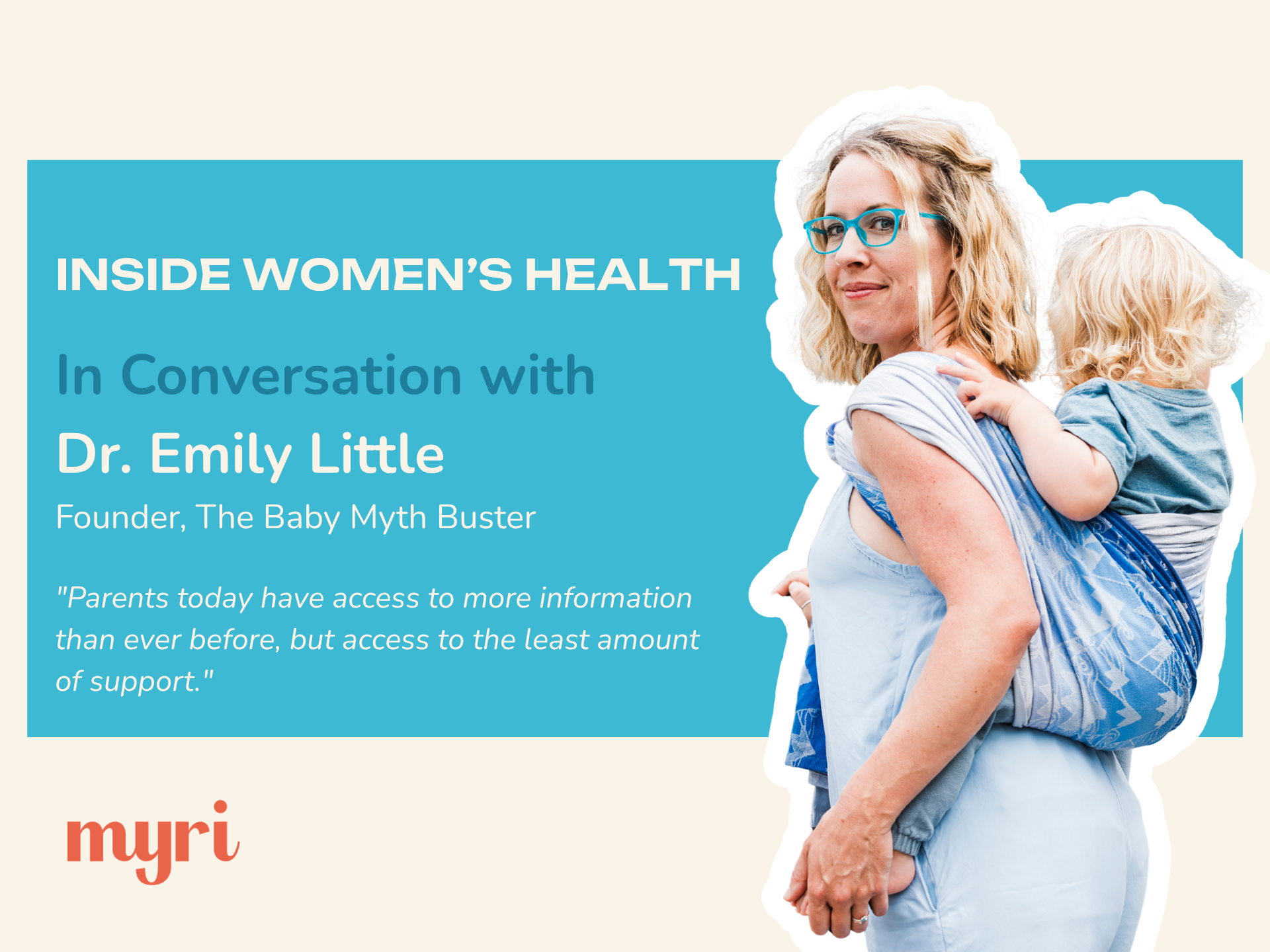
Today’s parents are surrounded by information, advice, opinions, and expectations: often all at once. But somewhere between social media, generational beliefs, and oversimplified parenting narratives, science can get lost.
Here we speak about translating maternal-infant research into real-world understanding, the myths shaping modern parenting culture, and how misinformation quietly impacts parental mental health, confidence, and wellbeing.
1. You created The Baby Myth Buster to bridge the gap between peer-reviewed research and public conversation. What made you feel that this gap needed urgent attention?
Bridging the gap between science and solutions has been my mission since starting my PhD program way back in 2012 at University of California, San Diego. It was a privilege to be in rooms with the world’s top scientists who were conducting research on infant development, human milk, and global health. Yet none of the information being shared in seminars and academic conferences was making its way out to the community. I went on to earn my PhD in developmental psychology and human origins, conducting research on parent-infant interactions around the world, and I was never satisfied by the major silos keeping scientific knowledge under wraps. Importantly, these silos also prevented information from flowing the other direction (from community to academia), so it was not just a problem of the science not being shared with the community, it was also a problem of scientists not always asking the right questions or being informed by lived experience and cultural knowledge.
I spent the past decade building a community-based organization to address this issue with local in-person programs for parents and perinatal health professionals. After scaling that organization from a group of volunteers to a seven figure high-impact institution, I shifted my focus to serving more organizations with a laser focus on my goal of translating research into real-world solutions. I just launched Nova “science for brighter beginnings” – a boutique science translation consulting studio where I work with companies, health systems, and public agencies to create science-backed solutions for infants and caregivers. The Baby Myth Buster is my passion project to ensure that I’m fulfilling my mission of reaching as many families as possible with culturally-informed research and preventative education.
2. A lot of parenting advice online is presented as universal truth, even when science says otherwise. What are some of the most common misconceptions about infant behavior or development that you find yourself constantly challenging?
The biggest misconception is that babies are supposed to be independent.
Much of modern parenting advice assumes that the developmental goal of infancy is to help babies separate from caregivers as quickly as possible. But from a biological and evolutionary perspective, human infants evolved to be highly dependent. They wake frequently, feed often, seek physical contact, and rely on caregivers to regulate their emotions and physiology.
Another misconception is that there is one "correct" way to raise a baby.
The more I've studied parenting around the world, the more obvious it has become that there are many pathways to healthy development. Babies thrive in a wide variety of cultural contexts. What matters most is not whether a baby sleeps in a particular location or follows a specific schedule. What matters is responsive caregiving and supportive relationships.
I also spend a lot of time challenging the idea that more products automatically lead to better outcomes. The baby industry is incredibly effective at convincing parents that babies are a problem that needs fixing, and the solution just happens to be in the form of a product.
3. You’ve spoken about translating research into narratives people can actually understand and apply. Why do you think evidence-based maternal and infant health information is still so inaccessible for many parents?
Part of the problem is that science was never designed for exhausted parents reading on their phones at 2 a.m.
Researchers are trained to write for other researchers. Scientific papers are dense, technical, and often hidden behind paywalls. Even when important findings emerge, it can take years, sometimes decades, before they influence public understanding.
Misinformation spreads extremely efficiently because it is emotionally compelling. And most often, highly relatable. A nuanced discussion of infant sleep biology cannot compete with an very relatable exhausted parent sharing their sleep-training success story.
I also think we underestimate how overwhelming the information environment has become. Parents today have access to more information than any generation in history, but more information does not automatically produce more confidence. In many cases, it creates more confusion.
That is why I focus so heavily on translation. The goal is to communicate research in a way that preserves nuance, respects parents, and helps them make sense of their own experiences.
4. In your work, how do unrealistic expectations around babies and parenting impact maternal mental health and parental wellbeing overall?
Unrealistic expectations are one of the most under appreciated drivers of parental distress.
Many parents are operating from a model of infancy that is fundamentally misaligned with biology. They expect babies to sleep independently, feed predictably, self-soothe quickly, and fit into adult schedules. When babies inevitably behave like babies, parents often conclude that they are failing.
That interpretation can be incredibly damaging.
I've met countless parents who felt anxious, inadequate, or overwhelmed not because their baby was doing anything objectively problematic, but because their expectations were based on societal ideals rather than developmental reality.
I see a similar pattern with mothers. Modern culture often tells women we should "bounce back" physically, professionally, and emotionally within weeks of giving birth. But the postpartum period is one of the most profound developmental transitions in adult life. Recovery, identity transformation, and adaptation take time.
The most powerful intervention is not another product or another strategy. It's helping parents prepare for what is actually normal.
When expectations become more aligned with biology, parents experience an immediate sense of relief. They stop asking, "What's wrong with my baby?" and start asking, "What is my baby communicating?"
That shift can transform not only parental confidence but family wellbeing as a whole.
5. There’s often pressure on parents to “optimize” every aspect of raising a child. From your perspective, how has modern parenting culture changed the emotional experience of motherhood and parenthood?
Parents today have access to more information than ever before, but access to the least amount of support. This creates a massive mismatch between burden of responsibility and what is actually achievable. Add the constant social media comparison of “perfect” parenthood and there’s a recipe for chronic emotional distress, feelings of failure, and burnout.
Part of tackling this emotional burnout requires busting the myth that parents need to “enrich” the lives of infants and children by making everything child-centered.
I love teaching baby carrying because it allows babies to have their needs met for closeness and responsiveness while also allowing parents to do what they need to do. This relieves so much of the pressure of parenting by giving parents permission to live their life as they want to and need to, and simply bring baby along.
6. You’ve worked across research, communications, and cultural analysis. Where do you think healthcare systems, media, or even wellness industries still misunderstand parents the most?
Many systems fundamentally misunderstand the difference between information and support.
When parents are struggling, our instinct is often to give them more information. Another article. Another app. Another educational program. Another product.
But parents are not suffering from an information deficit - they are suffering from a support deficit.
While working with families around the world, I observed that many cultures invest heavily in supporting caregivers rather than constantly instructing them. Postpartum traditions around the world often focus on rest, nourishment, practical help, and community care. By contrast, many Western systems place enormous responsibility on individual parents while offering relatively little structural support.
7. At Myri, we think a lot about proactive support instead of waiting until families are already overwhelmed. What role do you think science-backed education and early support play in improving outcomes for both parents and babies?
Prevention is one of the most underutilized tools in maternal and infant health.
The transition to parenthood is one of the most foundational periods in adult life, yet we often wait until families are already overwhelmed before offering meaningful support. We screen for postpartum depression and offer medication rather than encouraging universal prevention. We intervene when breastfeeding challenges become severe rather than equipping parents with the tools to face the challenges proactively. We respond when parents reach a crisis point.
But what if we prepared families earlier?
Science-backed education can help parents understand what is biologically normal before they encounter it. When parents know that newborns feed frequently, that sleep is highly variable, and that babies seek constant proximity, they are less likely to interpret those experiences as signs of failure. But the most effective prevention combines knowledge with practical support. Paid leave, mental health care, community programs, peer support, and accessible healthcare all help create the conditions under which families can thrive.
The future of maternal and infant health combines developmental science with systems that make caregiving easier rather than expecting parents to simply work harder.
8. If there’s one myth about babies, parenting, or maternal wellbeing you wish we could collectively let go of, what would it be, and what truth should replace it instead?
The myth I would most like us to let go of is the idea that babies can be "spoiled" by too much love, too much contact, or responding too quickly to their needs.
This belief is remarkably persistent, despite decades of developmental research suggesting the opposite. Human babies are born among the most dependent mammals on the planet. They arrive expecting close physical contact, frequent feeding, and responsive caregiving. From an evolutionary perspective, a baby who stopped signaling for a caregiver would have been far less likely to survive than one who signaled loudly and often, seeking contact.
Yet many parents still worry that holding their baby too much, responding too quickly, or comforting them when they cry will create dependency when in fact responsive caregiving helps build security. When babies learn that their needs will be met, they develop trust in both their caregivers and the world around them. This myth persists because our culture values independence very early in life. But development does not move from dependence to independence overnight. It moves from dependence to interdependence.
If we understood that infants need responsiveness and constant contact, then maybe we would build better systems to support the caregivers providing that constant love and contact. Maybe we would share the caregiving responsibilities more equitably. And maybe, we would build a society where people grow up confident and emotionally secure because their needs were met early on.
.png)
Motherhood has a way of making you rethink the basics. For many parents, sleep becomes the first thing lost and the last thing prioritized.
In this conversation, we speak with about the emotional toll of exhaustion, the pressure parents quietly carry, and why rest is often treated like a luxury instead of a health need.
From raising three children to helping families navigate sleep with more compassion and less guilt, Diana Martins shares the realities behind parenting, burnout, and what truly changes when parents are finally rested.
1. You often say that becoming a parent changed the way you think about sleep completely. What did that shift look like for you personally?
Becoming a parent completely redefined my understanding of sleep. Before having a newborn, I genuinely didn't know what true exhaustion was; my body had never experienced that level of sustained stress. What's often misunderstood by those without children is the relentless math of newborn sleep: if the baby wakes every two hours, the feeding, burping, and changing cycle takes 40 to 60 minutes. By the time you settle back down, you might only have an hour before the cycle begins again. The crucial shift for me was recognizing that even if the baby is resting, my brain and body were 'on' and actively working nearly every hour throughout the night.
2. So many mothers normalize exhaustion because it feels like “part of the job.” At what point did you realize sleep deprivation was affecting more than just your energy?
The realization that sleep deprivation was impacting more than just my energy came when I recognized I couldn't be the mother I truly wanted to be. I've always been a high-energy person who loves engaging and playing, but I was reduced to constantly chasing naps and feeling depleted. The pivotal moment, the “something needs to change” breaking point, was when I felt myself almost "snap" from sheer frustration and lack of rest during a difficult night with my infant.
3. There’s a lot of pressure on parents to keep pushing through, even when they’re running on empty. Why do you think maternal exhaustion is still so underestimated?
Maternal exhaustion remains deeply underestimated because there is a silent expectation for women to absorb the entire workload, just as previous generations did. Culturally, we’ve normalized exhaustion through “hustle culture,” the pressure to “wake up before the kids,” and the constant pressure of “stacking culture.” We need to actively reframe exhaustion in the parenting narrative, while it might be a common experience for mothers, it is certainly not one that should be considered normal or accepted.
4. As a mother of three, were there moments where lack of rest impacted your mental or emotional well-being in ways people around you may not have fully understood?
Absolutely. With my first child, the sheer exhaustion, tiredness, and frustration culminated in an overwhelming surge of rage. Thankfully, I was able to wake my husband up and pass our baby to him. That moment underscored how profoundly lack of rest can impact a mother’s mental and emotional well-being in ways others may not fully grasp, and it showed me the crucial need for immediate support in those dark moments.
5. A lot of mothers carry guilt around prioritizing themselves. How do you help parents reframe rest as something necessary rather than selfish?
Guilt is fundamentally the feeling of doing something wrong. I help parents reframe this by asserting a crucial truth: prioritizing your own care. Wanting sleep, rest, time for a hobby, or simply fun, is never wrong. Unfortunately, many women are subtly taught from a young age to "demand less" or "want less." When that mindset meets the intense demands of motherhood, we naturally feel immense guilt for wanting anything beyond just surviving the current situation. We must teach mothers that self-care is a necessary component of sustaining their energy, not a selfish luxury.
6. In your experience working with families, what are some of the biggest misconceptions people have about sleep, motherhood, and “coping”?
Over the years, the biggest misconceptions I’ve observed often revolve around the false assumption that every family unit is inherently 'sleep supportive.' For some families, rest isn't a core value; it’s viewed as being lazy or unproductive. Another common misconception is the idea that becoming a parent is purely “natural.” In reality, it’s a steep learning curve, and it may not feel natural or align with your expectations, especially if you’ve experienced trauma during the birth. Furthermore, people often forget that for the first few weeks, your baby doesn’t talk back or smile, which is why those early days and nights can feel incredibly lonely.
7. At Myri, we talk a lot about prevention over reaction when it comes to maternal health. Do you think conversations around sleep need to become a bigger part of how we support mothers earlier, not just when burnout hits?
Absolutely. We need to shift the conversation from crisis management to preventative care by establishing a clear “sleep support plan” well before the postpartum period begins. My most vital advice is to proactively arrange support, especially for nighttime recovery.
• Secure Nighttime Support: Try to line up reliable night support. In my personal experience, my mother-in-law would spend the night literally staying awake with the baby so that I could get restorative sleep. Even though I still had to wake up to nurse, she handled all the other 'work': the burping, changing, and settling them back to sleep, which was life-changing.
• Establish Designated Rest Time (DND): It’s essential to claim a non negotiable “Do Not Disturb” time. I personally made it a routine to take a nap around 2 p.m. to catch up on rest, and everyone around me knew that time was sacred and I was not to be disturbed.
• Communicate Specific Needs & Boundaries: Have open, honest discussions with family and close friends ahead of time about what kind of support you truly need. For instance, I realized I could not worry about cooking, so I specifically asked my mother only for food drop-offs. I had to set the boundary that I couldn't fully rest if she was inside the house because hearing any “pitter-patter” would make me wonder what was going on, and I'd miss my precious nap. We must utilize our support system by clearly defining roles and setting expectations before burnout hits.
8. If there’s one thing you wish every exhausted mother could hear today, what would it be?
If I could speak directly to every mother running on empty right now, I would tell them to release the pressure and the guilt they carry. You are deserving of rest. Protecting your peace is protecting your baby. There are people like myself, willing and ready to help.
.png)
Maternal mental health struggles are often invisible. Many women continue showing up every day while quietly battling anxiety, intrusive thoughts, burnout, grief, loneliness, or postpartum depression; often believing they should be able to “handle it” on their own.
As a licensed clinical psychologist, certified perinatal mental health provider, and founder of Phoenix Health Therapy, brings both clinical expertise and personal experience to the conversation around motherhood and mental health.
After experiencing challenges of motherhood, Dr. Guarnotta went on to build a practice focused on helping parents navigate the emotional realities of infertility, pregnancy loss, postpartum struggles, and early parenthood.
In this conversation, we talk about the shame and silence many mothers carry, why maternal mental health is still misunderstood, and what real support for mothers should actually look like.
1. You’ve shared openly about your own experience with postpartum depression and anxiety. Even as a mental health professional, what made it difficult to seek help in those early years?
For me, the hardest part about seeking help was getting past the stigma that seeking help meant I was failing as a mother. Everyone tells you that you should instinctually know how to be a mother, but when you're struggling with your mental health, you feel like something is wrong with you.
On top of that, when I was going through postpartum depression, it was in 2018 when telehealth was not readily accessible. I really had trouble finding a therapist who took my insurance and whose schedule aligned with mine as a working mother. Between the stigma and the very real barriers of not having access to an available provider who took my insurance and was affordable, I delayed seeking help for far too long.
2. Many mothers struggle silently because they feel shame around what they’re experiencing. Why do you think maternal mental health is still so hard for people to talk about openly?
I think maternal mental health is hard for people to talk about openly because it still feels very taboo. We're doing a better job of having open conversations and normalizing that you can struggle with your mental health, still be a great mother, be grateful for being a mother, and also get to the point of recovery. But there is still this nagging cultural belief that mothers should only be grateful and should never struggle with their mental health. As long as women fear that they'll be judged and stigmatized, they will remain silent.
3. A lot of women are told to expect exhaustion after having a baby, which can make it hard to recognize when something deeper is happening emotionally. What are some signs families and mothers themselves often miss?
One of the signs that families and mothers often miss is when the exhaustion is related to an emotional experience. Yes, it's very normal to feel physically exhausted, as you're typically running on little to no sleep and your body is recovering from pregnancy and birth. But when this exhaustion feels heavy all the time and starts impacting the way you're thinking and the way you're feeling throughout the day, or becomes a breeding ground for scary intrusive thoughts, then this is a sign that you need support.
4. You work with families navigating infertility, pregnancy loss, postpartum depression, and anxiety. What emotional experiences do you think are most minimized or misunderstood in the maternal journey?
I think what is most minimized is that this journey is not always smooth for people. For many women, it's marked by infertility, losses, sometimes multiple losses, anxiety, sadness, and scary thoughts throughout pregnancy or postpartum.
I think we have a cultural belief that assumes the journey is very linear. That a woman wants to become a mother, conceives, goes through pregnancy, and is grateful and excited. Then she has a baby and continues to remain grateful and in pure bliss. When this isn't the case for people, it leads to a profound sense of failure.
5. From your experience, how does untreated maternal mental health impact not just mothers, but relationships, parenting, and overall family wellbeing long term?
Untreated mental health affects the entire family. We know that having a partner with a postpartum mental health condition increases the likelihood that the other partner will also experience one. A family is a system or a unit, and when one person isn't well, it affects everyone else in that system.
I also want to express that when a parent struggles with their mental health and does recover, that family system also recovers. I hear women terrified that their depression or their anxiety is going to affect their children forever, feeling like they failed them from the beginning. This is the farthest thing from the truth. The best thing that you can do is recognize it and take action steps to get better. Children are very resilient, and one day this can be a story that you share with your own children, possibly as they become parents themselves.
6. Many women only enter care once they’re already overwhelmed. How important is early intervention and proactive emotional support during pregnancy and postpartum?
Proactive support is everything, and I strongly recommend this. The earlier you can catch it, the better. I also think it's very important that people be aware of their risk factors. For example, if you have a history of anxiety or depression, your family has a history of perinatal mental health conditions, or you have multiple stressors like job loss, financial stress, marital strain, etc., you are at greater risk of developing a perinatal mental health condition.
This isn't meant to scare you, but meant to make you and your loved ones aware so that you can keep an eye on it and take preemptive steps, like reaching out for support or seeing a therapist, to put yourself in the best position possible.
7. At Myri, we think a lot about continuous and accessible maternal support beyond routine appointments. How can digital health platforms help bridge gaps in maternal mental healthcare and make support feel easier to reach?
I think digital health platforms are a great way to meet people where they're at. Not everyone needs to or is ready to seek professional care, and platforms like these that are accessible from wherever you are can help provide that added layer of support. I also think these platforms can be a great adjunct to support like therapy, helping to bridge the gap in between sessions.
8. If there’s one thing you wish every struggling mother could hear, especially the ones silently convincing themselves to “just push through”, what would you want them to know?
I would want them to know that recovery is 100% possible. I've seen it firsthand in many of the clients that I work with, and I've also personally experienced it. As hard as things feel right now, there is light at the end of the tunnel. You don't have to just push through. Getting support and getting equipped with tools to help you during this time means that you will get better faster, and get to the point where you're able to feel like you're not just surviving in motherhood.

In a world racing toward digital transformation, maternal health still carries risks that should have been solved decades ago. Women are surviving pregnancy in some regions not because systems are seamless, but because they are resilient. That gap between resilience and responsibility is exactly why conversations at WHX Tech 2025 mattered.
Maternal health does not sit on the sidelines anymore. At WHX Tech 2025, it was part of serious conversations about prevention, system accountability, and what it truly means to build healthcare that supports women before a crisis unfolds.
For Myri, being present in Dubai was about responsibility. When regions across the Middle East are actively investing in digital health transformation, maternal care must be part of that evolution. Pregnancy and postpartum are not isolated life events. They are clinical journeys that shape long term family health outcomes, and they require infrastructure that extends beyond a single visit.
Named in the Top 12: Xcelerate Startup Pitch Competition
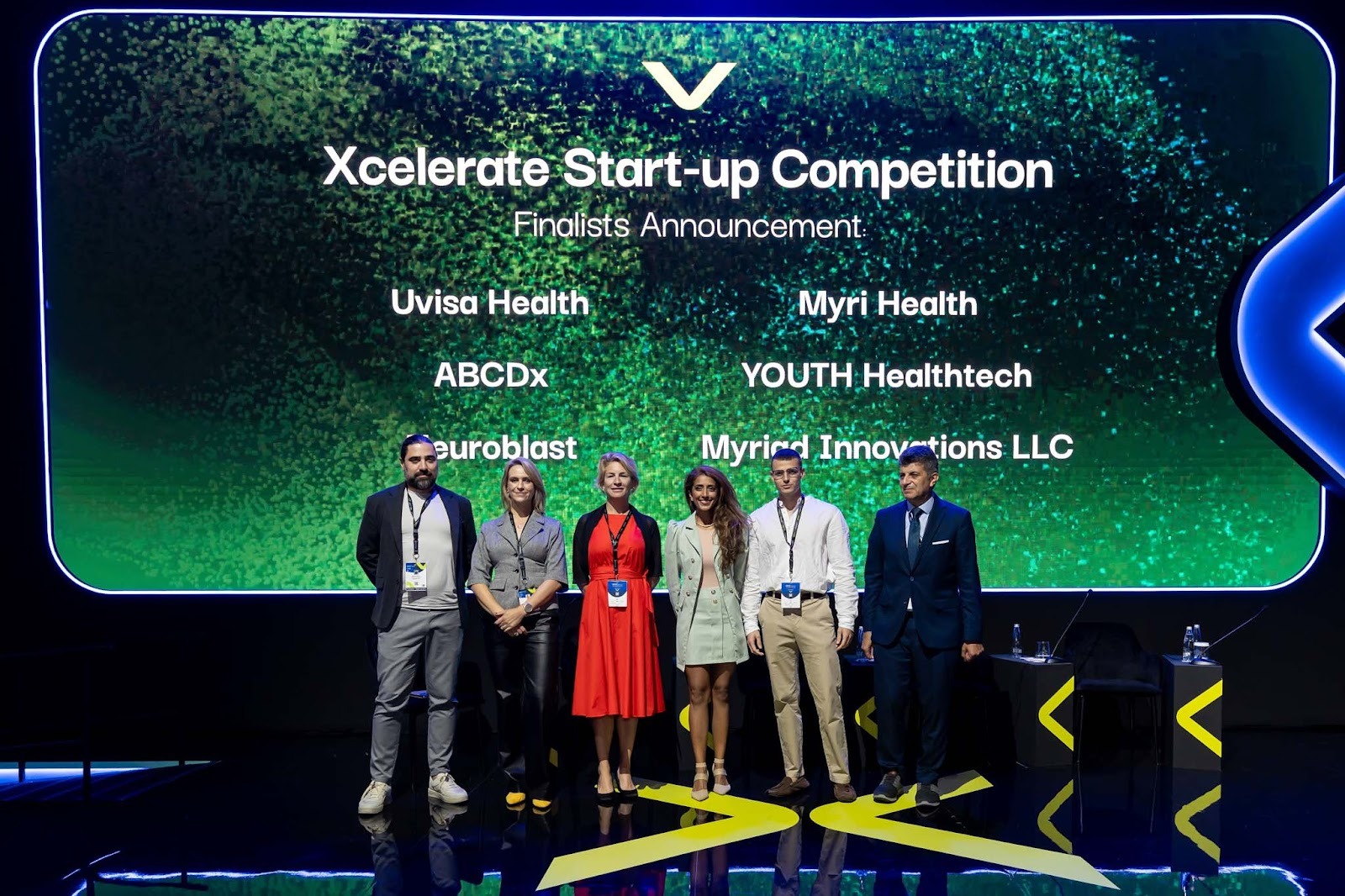
At WHX Tech, Myri participated in the Xcelerate Startup Pitch Competition and was named among the Top 12 startups. That recognition carried weight, not because it was a competition, but because it signaled something deeper. Healthcare leaders are ready to move beyond fragmented maternal solutions.
Maternal health cannot be addressed through disconnected apps or reactive systems. A mother’s physiology changes continuously. Blood pressure trends, glucose patterns, sleep disruption, mental health shifts, family history, social stressors. These are not data points that exist for ten minutes inside a clinic. They evolve daily. If systems only see her during appointments, they miss the story unfolding between them.
The response from partners and health systems reinforced what we have known for years. Continuous visibility is not a luxury in maternal care. It is a necessity.

What Myri Brings to Maternal Care
Myri is often described as a platform, but at its core, it is maternal infrastructure. It supports mothers and the institutions responsible for their care by creating continuity where gaps traditionally exist.
The platform integrates remote monitoring, risk trend identification, postpartum mental health tracking, and multilingual support so mothers are not navigating complex health systems alone. At the same time, provider dashboards create structured visibility between visits, allowing clinicians to recognize patterns earlier and intervene appropriately within their own governance frameworks.
The interest at WHX Tech reflected a growing regional understanding that prevention must be measurable. Health systems across MENA are exploring how to reduce avoidable complications, improve follow up, and strengthen postpartum continuity. Myri’s approach aligns with that direction because it focuses on surfacing risk trends before they escalate, not reacting once they have.
Cultural Relevance Is Not Optional
Digital health cannot simply be deployed across regions without adaptation. Maternal care in the MENA region is deeply shaped by family structures, language diversity, faith based considerations, and government led healthcare systems.
At WHX Tech, conversations repeatedly returned to this reality. Solutions must respect cultural context while maintaining clinical rigor. Multilingual accessibility is not a feature. It is a bridge. Family involvement in decision making is not an obstacle. It is a reality that must be acknowledged. National healthcare strategies are not peripheral. They define how technology integrates within care delivery models.
Myri’s expansion conversations across the region focused on alignment. Alignment with hospital systems. Alignment with national maternal health initiatives. Alignment with public health priorities that recognize maternal outcomes as foundational to broader population health.
Closing Maternal Health Gaps with Data
The conversations in Dubai kept circling back to one uncomfortable truth. Maternal health systems are often structured to respond to emergencies, not to recognize patterns. We wait for numbers to cross thresholds. We wait for symptoms to intensify. We wait for a mother to tell us something feels wrong. By then, the window for prevention has already narrowed.
The conversations in Dubai echoed what was recently discussed in Dr. Patel’s interview with HIMSS TV, where she spoke with Rachel McArthur about closing maternal health gaps through data, remote monitoring, and accessible digital infrastructure.
Our position is simple and evidence driven. Most maternal complications do not arrive without warning. They accumulate. Blood pressure trends upward over weeks. Glucose variability shifts gradually. Mood changes are subtle before they are severe. Sleep disruption compounds physical strain. None of these signals are invisible. They are just rarely connected in a way that gives clinicians continuous context.
The logic behind Myri’s approach is not to replace providers or complicate workflows. It is to restore continuity. When data is captured consistently and reviewed responsibly, patterns become visible earlier. When language barriers are removed, mothers are more likely to engage honestly. When monitoring extends beyond discharge, postpartum risk does not go unnoticed.
Watch the full interview here:
The MENA Momentum
Across the Middle East, healthcare transformation is not theoretical. Governments are investing in digital infrastructure. Health systems are exploring remote patient monitoring. Policymakers are emphasizing preventive screening and measurable outcomes.
Maternal health must be integrated into that transformation. Postpartum risk does not disappear after discharge. Many complications occur after a mother leaves the hospital, when monitoring often decreases and support systems fragment. Technology can strengthen that transition by providing structured visibility without disrupting clinical governance.
WHX Tech 2025 reflected a region that understands this urgency. The interest in maternal infrastructure, in longitudinal data visibility, and in culturally grounded digital engagement signals a shift. Maternal care is being recognized not as a niche specialty but as a core component of public health resilience.
Moving Forward with Intention
Being named in the Top 12 at Xcelerate is meaningful. Engaging with partners across the Gulf is meaningful. But the true measure of progress will be implementation. It will be seen in strengthened postpartum monitoring, earlier identification of hypertensive risk, improved mental health screening, and measurable improvements in maternal outcomes.
When health systems commit to prevention and continuity, outcomes change. When maternal care is treated as infrastructure rather than an afterthought, families benefit for generations.
WHX Tech 2025 confirmed that the MENA region is ready to lead in this space. Myri remains committed to building systems that support mothers consistently, respectfully, and with clinical depth that extends far beyond a single appointment.

WomenTech Network announced the winners for the Women in Tech Global Awards 2025 celebrating more than 150,000 women, minorities, and allies in tech.
Dec 4, 2025 – Myri Health has been named a winner at the Women in Tech Global Awards 2025. The event is hosted by WomenTech Network, one of the largest communities for women in technology with more than 13,000 ambassadors across 179 countries. This year, 1,760 contestants from 128 countries were part of the awards across 27 categories.
A moment of recognition for a much larger mission
Myri Health was honored for building a maternal care system that brings continuity, safety, and support to mothers and the care teams who serve them.
Across the world, far too many women still face preventable risks during pregnancy and the year after birth. Many do not get the guidance they need on time. Providers often see only parts of their story. Mothers carry the weight of navigating symptoms, questions, and fears on their own.
Myri is working to change this by creating a connected experience where mothers feel supported every day, and where care teams can act early when something needs attention.
This award acknowledges that maternal care deserves better, and that solutions built with empathy and science can move the world in that direction.
A word from Dr. Pinkey Patel, Founder and CEO, Myri Health
"This recognition means a lot because it shines a light on a space that is often overlooked. Mothers deserve care that stays with them and providers deserve the tools to support them early. Myri was created to bridge that gap. It is an honor to be part of a global community of women who are building with purpose and shaping the future of health in ways that truly matter."
— Dr. Pinkey Patel
About Myri Health
Myri Health helps mothers get through pregnancy and postpartum with support that doesn’t disappear after delivery. We combine education, symptom and recovery tracking, and early risk checks, then connect the dots with providers, health plans, and public health partners so concerns get seen and acted on sooner.
Safer pregnancies. Stronger recoveries. Fewer people falling through the cracks.
About WomenTech Network
WomenTech Network is one of the world's leading communities for women in tech with more than +13 000 Global Ambassadors representing 179 countries. +150 000 tech leaders have collaborated with the network to date in order to cultivate a diverse global network that reaches 4.7 million people. WomenTech Network strives to empower women in tech through leadership development, professional growth, and mentorship programs. WomenTech Network hosts regular career networking events and a global tech conference for members to connect with like-minded professionals and learn about job opportunities at leading companies that value diversity.
About Women in Tech Global Awards
The Women in Tech Global Awards recognize women and organizations making significant contributions to the technology industry through leadership, innovation, and diversity initiatives. Hosted by the WomenTech Network, the awards celebrate individuals and teams driving change and creating opportunities for the next generation of women in tech.
.png)
At Myri Health, we’ve always said equity is not an add-on, it’s the architecture.
It means every woman, at every stage of life, deserves care that is safe, dignified, and complete. No shortcuts. No exceptions.
We began with maternal health because that’s where the cracks in our system claim the most lives. In the U.S., maternal deaths have more than doubled since 2000, and Black women remain three times more likely to die from pregnancy-related causes than white women. Those statistics are not just numbers: they’re stories of families, futures, and communities carrying losses that never should have happened.
That’s why we built technology to bridge those gaps and now, we’re expanding that same infrastructure to support women through preconception, pregnancy, postpartum, menopause, and healthy aging. Because when women are well, families thrive, workplaces stabilize, and economies grow.
As Hillary Clinton once said, “If you really want to know how strong a country’s health system is, look at the well-being of its mothers.”
We couldn’t agree more.
Why CGI Matters
For 20 years, the Clinton Global Initiative (CGI) has brought together leaders who don’t just talk about change, they commit to it.
CGI turns ambitious ideas into measurable, accountable, life-changing action. Since 2005, its members have launched over 4,000 “Commitments to Action,” impacting the lives of more than 435 million people in 180 countries.
This year marked CGI’s 20th anniversary, and the focus was clear: action over ideology, outcomes over rhetoric.
Myri Health Joins the Clinton Greenhouse Cohort

(L-R): Avneet Kohli – Communication Coach & Founder, Drape Yourself in Confidence Maeve Curtin – Global Health Policy & Advocacy Leader Dr. Pinkey Patel – Founder & CEO, Myri Health
Deeksha Ahuja – Founder, Encubay
In 2025, Myri Health (Google for Startups ’24 / Techstars ’23) was selected as one of just 20 companies worldwide to join the Clinton Global Initiative Greenhouse Cohort.
The program recognizes early-stage innovators with proof of impact,connecting them with policymakers, public health leaders, and investors to accelerate scalable change.
Being part of CGI’s Greenhouse means more than recognition.
It’s a responsibility to turn evidence into action, technology into trust, and data into better health outcomes for mothers and families everywhere.
Inside the Health Equity Working Group

(L-R): Liz Dozier – Founder & CEO, Chicago Beyond Dr. Pinkey Patel – Founder & CEO, Myri Health Alexandra Zarecky – Director of Strategic Initiatives, Chicago Beyond
During CGI week, we had the honor of joining the Health Equity Working Group, at the table on Enabling Equitable and Accessible Maternal Care, facilitated by Joy Burkhard of the Policy Center for Maternal Mental Health.
The conversations were candid and urgent.
We examined one of the hardest truths: most maternal deaths are preventable, yet they’re rising. Together with leaders across health systems, nonprofits, and technology, we explored how redesigning the architecture of care, from payment models to digital access, could improve affordability, accountability, and outcomes for mothers everywhere.
This wasn’t a conference. It was a roll-up-your-sleeves, pen-to-paper environment, where founders, clinicians, policymakers, and global health advocates worked side-by-side to drive measurable change.
Our Commitments to Action
At Myri, our CGI commitments are clear, practical, and urgent:
- Scale innovation in maternal care nationwide using culturally competent, trusted digital models that meet women where they are.
- Prove that equity isn’t just ethical. It’s economical, through payment and reimbursement models that reward prevention, not reaction.
- Expand our AI-driven maternal infrastructure across the full continuum of women’s health, turning predictive data into real-time support and early intervention.
- Partner with health systems and payers to embed equity into their operations, demonstrating that inclusive design drives both better outcomes and lower costs.
Because access without trust is not access.
Because mental health is not optional. It’s foundational.
And because until every woman is held by a system that recognizes her worth, we haven’t achieved equity.

Looking Ahead: From Commitments to Outcomes
Our work at CGI was about implementation.
We left New York with renewed resolve: to build technology and partnerships that turn risk into action, and equity into access.
As we continue to scale Myri Health’s maternal infrastructure across the U.S. and globally, our focus remains on one simple truth:
Change is slow, until it’s not.
We’re proud to stand among global leaders who refuse to accept the status quo — and to keep proving that when care is connected, data is actionable, and equity is embedded by design, everyone wins.
About Myri Health
Myri Health is a maternal infrastructure technology company using AI to predict, prevent, and personalize care from pregnancy through postpartum and beyond.
Built on clinical rigor and lived experience, Myri connects families, providers, and health systems through equitable, data-driven support.
Learn more at www.myrihealth.com
Myri Health has been named Winner – FemTech & Women’s Health and honored with the Audience Choice Award at the 4th Annual ATA Telehealth Innovators Challenge, hosted during ATA Nexus 2025.
Last week at ATA Nexus 2025 in New Orleans, we came in focused.
Maternal health needs more than awareness. It needs real infrastructure.
And then this happened:
🏆 Winner – FemTech & Women’s Health
🏆 Winner – Audience Choice

Myri Health has been named Winner – FemTech & Women’s Health and honored with the Audience Choice Award at the 4th Annual ATA Telehealth Innovators Challenge, hosted during ATA Nexus 2025.
Yes, we celebrated. But more than that—it felt like the industry is finally starting to get it:
Maternal health isn’t niche anymore. It’s core infrastructure.
And when you don’t invest in it? The ripple effect hits everyone.
The System’s Still Fragmented. We’re Not.

At the 4th Annual ATA Telehealth Innovators Challenge, Myri Health’s founder and CEO, Dr. Pinkey Patel, took the stage alongside fellow digital health leaders to speak on a panel addressing what innovation means in healthcare.
At Nexus, we sat down with health systems, payers, founders, and policy leads. Everyone’s talking about transformation, but let’s be honest—most solutions still operate in silos.
Screenings happen in one place. Education lives somewhere else. Care teams don’t always talk to each other. And moms? They get left trying to connect the dots.
That’s exactly what Myri was built to fix.
We’re not here to replace care teams—we’re here to make their lives easier.
To make sure nothing (and no one) falls through the cracks.
That means:
- Real-time maternal risk detection
- Smart nudges before issues escalate
- Targeted education when it matters most
- Clear communication between OBs, nurses, and care managers
Convenience is nice. But coordination is what moves the needle.
We Didn’t Start With Dashboards. We Started With Moms.
What kicked off as a postpartum recovery tool during the pandemic is now something much bigger.
Today, Myri is a maternal health infrastructure platform—designed to plug into systems, close care gaps, and deliver real outcomes.
Here’s what’s under the hood:
- AI that flags early signs before they turn into emergencies
- Personalized guidance tailored to each mom’s physiology and history
- Built-in EHR integration—no extra logins, no workarounds
- Plug-and-play setup for systems, payers, and public health programs
- Equity-first design so rural and underserved moms aren’t left out
We didn’t build tech for tech’s sake. We built it to work—across clinics, coverage models, and communities.
This win isn't just ours
Recognition at ATA was powerful. But the bigger win? The conversations we had in the room.
The mindset is shifting.
People aren’t just listening—they’re looking for solutions that fit:
→ No more one-off pilots
→ No more fragmented tools
→ No more waiting until it’s too late
What we heard loud and clear:
The market is ready. The urgency is here. And maternal care finally has a seat at the table.
We’re Not Just Closing Loops. We’re Closing the Gap.
This crisis didn’t happen overnight. And it won’t get fixed with patches and point solutions.
But with the right tools—and the right partners—we can build something different.
Smarter care. Seamless systems. Support that actually shows up when and where moms need it.
Because better outcomes don’t happen by chance. They happen by design.
And, that’s exactly what we’re building.
Let’s do this—for the moms in it now. And, the ones coming next.

When care ends too soon, complications begin too early. That’s the reality for millions of birthing parents navigating postpartum recovery with barely a safety net. Nearly one in three U.S. mothers miss their six-week check-up (CDC, 2023). The recent HITLAB usability review of Myri Health offers a powerful validation: not just of an app, but of a long-overdue shift in digital maternal care.
The system is fragmented, dismissive, and too late.
Myri exists to change that.
Gaps that Begin Before Birth: Real Crisis in Maternal Support

Pregnancy complications often go unnoticed until they escalate: hypertension, gestational diabetes, preeclampsia, mental health issues. Many birthing parents never get enough time with their provider to be heard, much less monitored closely.
One six-week postpartum visit is the norm in the U.S., and it’s rarely enough. As a result to this ignorance, too many mothers fall through the gaps, facing preventable health issues that ripple into their families and futures.
HITLAB's report surfaces what we already see on the ground: better outcomes begin with early detection, continuous support, and proactive care.
Infrastructure for Maternal Care That Lasts
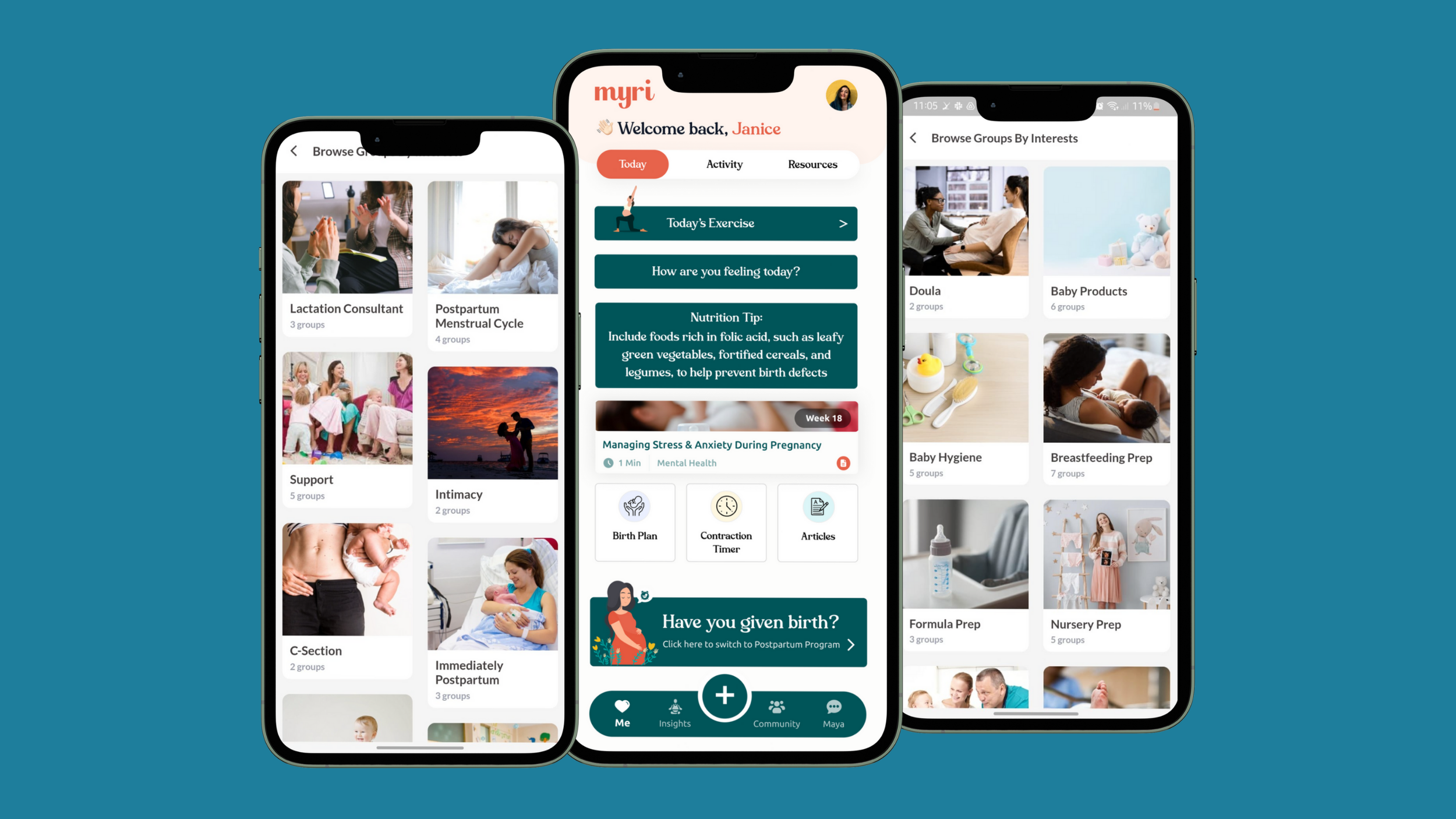
Myri is a maternal-health infrastructure platform, one that integrates predictive pregnancy monitoring, personalized recovery, and timely intervention from early pregnancy through postpartum.
Instead of episodic care, Myri provides a continuous layer of digital support:
- AI-driven health-risk screening to flag complications early—before they escalate (“AI postpartum support” long-tail keyword).
- Integrated physical-recovery plans like pelvic-floor and core programs, often ignored in traditional care.
- Nutrition support through PlatePal, which detects food items via image and offers personalized calorie guidance.
- Monitoring tools for key health indicators: bleeding, glucose levels, blood pressure, wound healing, and more.
- Data visualization and insight generation for both users and care providers to make sense of trends.
- 24/7 AI voice chat that listens, guides, and connects—when human support isn’t available.
- Evidence-based education and community support that adapts to where each mother is in her journey.
What It Means for Stakeholders
For Mothers – A safe place to track, learn, heal, and ask. Without judgment, jargon, or endless Google searches.
For Employers – Healthier moms return to work sooner, feel more supported, and require fewer long-term interventions.
For Health Plans/Payers – Fewer readmissions, earlier diagnosis of complications, and scalable cost savings through prevention: NO patchwork care.
For Governments & Public Health Systems – A platform that can be deployed at scale to address maternal mortality, improve equity, and deliver on the promise of care that doesn’t stop at delivery.
A Validated Path Forward
HITLAB’s expert review confirmed what we’ve always set out to build: a trusted, accessible, and effective maternal care platform for maternal health. Their evaluation praised Myri’s:
- Clean, intuitive design and structure.
- Reliability and ease of use across user types, even on low-bandwidth connections.
- Personalized health insights powered by real-time data.
- Tools that address postpartum needs often ignored in clinical settings.
From tracking blood-sugar trends to supporting scar management, we meet women where they are. With care that’s smart, compassionate, and timely.
From the Myri Team
We built Myri to be the care system that should’ve existed all along.
The HITLAB review confirms what mothers, providers, and public health leaders have been telling us: the current maternal-care model leaves too many behind. It’s reactive, fragmented, and stops when support is needed the most.
Myri is changing that.
By combining AI-powered insights, continuous monitoring, recovery support, and global accessibility, Myri is laying the foundation for a better standard of care: one that meets every woman where she is, before and after birth.
Ready to experience proactive maternal care?
Book a demo to see continuous maternal care in action.
.avif)
A new study reveals maternal mental health has declined sharply since 2016: especially for single moms and low-income families.
A 2025 cross-sectional study published in JAMA and covered by the American Hospital Association confirms what many moms have felt but couldn’t always name: maternal mental health has sharply declined over the past seven years.
Nearly 200,000 mothers. Children from newborn to 17. And what this study confirms is something most moms already know in their bones:
Maternal mental health is collapsing.
And not just postpartum. Not just for new moms. This is long-haul motherhood. This is seven years of slow unraveling. From 2016 to 2023, self-reported mental health in mothers dropped hard, across all demographics.
And here’s the brutal truth: it’s not just one type of mom. Mental health declined across every subgroup: wealthy, working-class, college-educated, high school grads. But the steepest drop? It was among single mothers, moms with lower education, and those whose children are publicly insured. The ones with the least margin. The least backup. The least room to fall apart.
%201%20(1).avif)
This isn’t baby blues or bad days. It’s the compounding weight of motherhood without backup.
It’s about moms trying to hold it together while the world says, “You’re strong. You’ll bounce back.” It’s about 3 a.m. sobbing in the bathroom with no one to call.
Burnout isn’t a phase. It’s become the baseline.
More Than a Screening!
Myri doesn’t wait for the crash. We intervene early.
We offer maternal mental health screenings not once, not just at six weeks, but throughout the full journey. Pregnancy. Postpartum. Early parenting. And beyond.
If a mom has a family history of mental illness or she’s signaling stress, we don’t brush it aside. We flag it. We reach out. We offer actual, usable support, and not a dusty pamphlet.
But clinical screening alone isn’t enough. We knew that from the beginning.
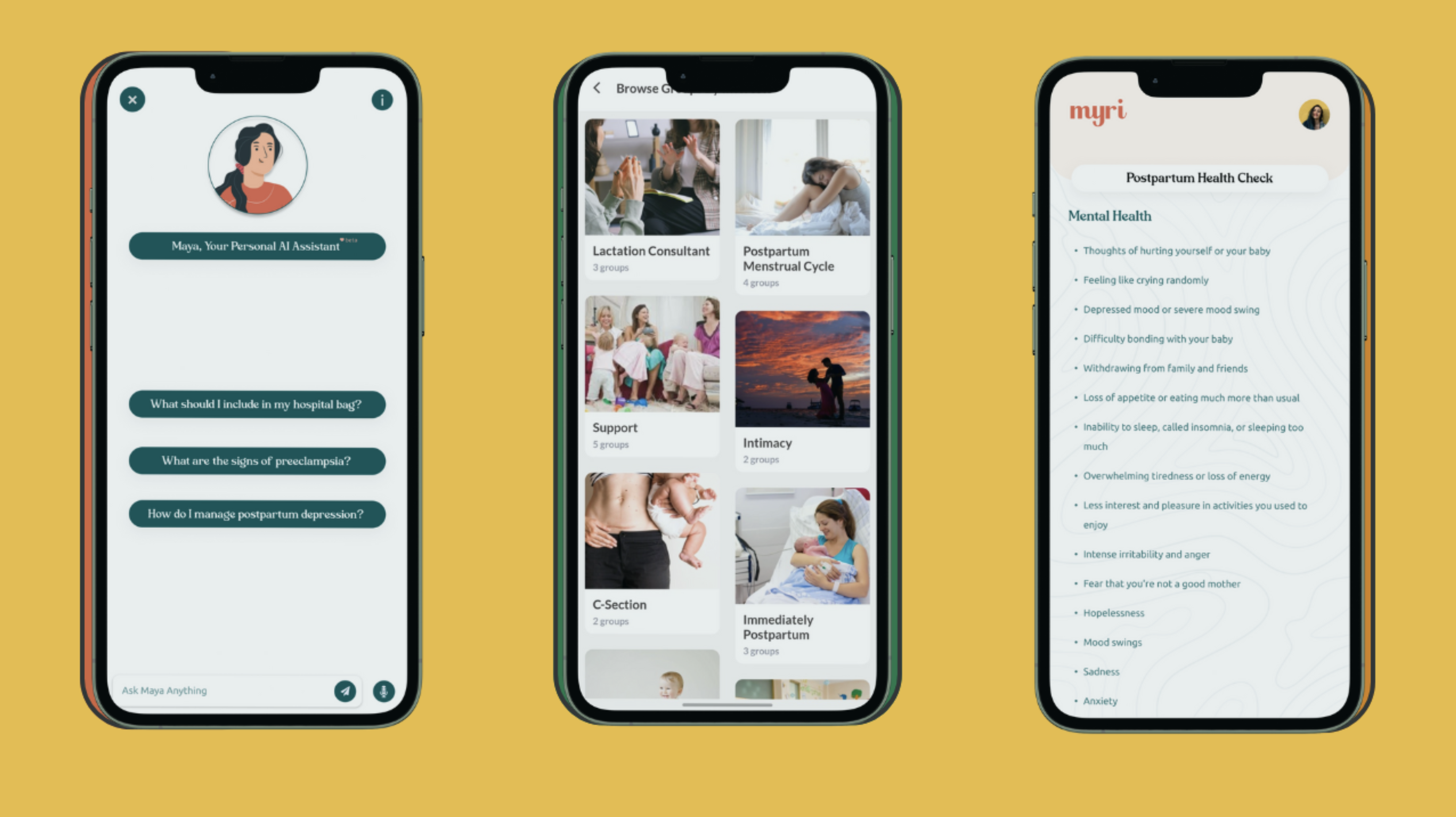
We don’t “just” provide care. We provide community.
And not the curated, shiny kind you scroll past on social media. The kind where moms sit down and say, “I’m exhausted,” and hear someone else say, “Me too.”
Small, peer-led circles. Trained facilitators. Real talk. No judgment. No performance. Just space to be human.
The Data Agrees: Peer Support Saves Lives
“Peer-led emotional support significantly reduces postpartum depression and anxiety.”
— Journal of Affective Disorders (source)
This isn’t fluff. This is evidence-backed maternal care.
When moms feel heard, they heal. When they feel connected, they cope.
That’s why Myri’s peer support model is built into every layer of our platform. Connection is the intervention.
“High-risk moms receiving peer mentorship were half as likely to develop postpartum depression.”
— Journal of Primary Care & Community Health
If You’re a Mom Reading This
You are not weak. You’re not broken. You are doing something superhuman in systems designed to forget you.
And with Myri, you don’t have to do it alone.
We see you. We support you. We’re already here, waiting to meet you where you are.
If You’re a Leader, a Health System, or a Decision Maker
This study is an alarm for all of us, and should be treated like one.
It’s time to fund models that center maternal well-being.
To build policy around lived experience, not outdated metrics.
To recognize maternal mental health as the frontline of public health.
Because moms aren’t okay.
And pretending they are, only delays the fix.
If You’re a Leader, a Health System, or a Decision Maker
This study is an alarm for all of us, and should be treated like one.
It’s time to fund models that center maternal well-being.
To build policy around lived experience, not outdated metrics.
To recognize maternal mental health as the frontline of public health.
Because moms aren’t okay.
And pretending they are, only delays the fix.
The System Is the Symptom
If the AHA/JAMA study tells us anything, it’s this: maternal mental health isn’t an individual crisis, but a system-level failure.
We need care models that don’t just diagnose distress, but prevent it.
We need funding for platforms like Myri, that meet moms before the breakdown.
We need to treat a mother’s mental health like her vital signs, because it is.

March is National Nutrition Month in the US—a reminder to think before you eat and fuel your body right!
Food does more than fill you up when you’re pregnant or running on fumes postpartum. It’s shaping your baby’s brain, building their immune system, and helping your body keep up with all the behind-the-scenes work—growing, healing, producing, repairing.
This is the part no one talks about enough: what you eat now can influence birth outcomes, your recovery, your energy, and even your mental health. And no, it doesn’t have to be complicated or perfect.
We're breaking it down—what matters on your plate during pregnancy and after birth, and why it's worth paying attention to.
Why Food Really Matters During Pregnancy and Postpartum
Eating during pregnancy isn’t just about satisfying cravings or avoiding heartburn. It’s one of the most powerful ways you can influence your baby’s lifelong health. Your nutrition literally becomes their building blocks—and the quality of what you eat programs aspects of your baby’s metabolism, brain development, immune system, and even their future risk of chronic disease.
And postpartum? Your body’s recovering from a major physiological event. It needs raw materials to repair tissue, regulate hormones, support mental health, and—if you’re breastfeeding—fuel milk production that’s tailored for your baby’s needs.
Here’s what to eat, and exactly why it matters:
Veggies: Fiber + Folate = Critical Development Support
- Why it matters: Leafy greens, carrots, broccoli—all packed with folate, which supports neural tube development (that’s brain and spine), especially early in pregnancy. Folate also helps prevent anemia in moms.
- Fiber supports digestion, reduces constipation (a common issue during pregnancy), and helps stabilize blood sugar—important for avoiding gestational diabetes.
Think of veggies as your frontline defense for developmental support and daily gut sanity.
Protein: The Building Blocks of Baby (and You)
- Why it matters: Protein breaks down into amino acids, which build every cell in your baby’s body—from organs to skin to enzymes.
- It’s also essential for placental development, which controls nutrient transfer to the baby.
- In the third trimester especially, protein needs go up to support rapid growth and maternal tissue expansion (think: uterus, blood volume, and breast tissue).
You’re not just feeding yourself. You’re literally constructing a human being—and protein is the scaffolding.
Whole Grains: Steady Fuel for You, Steady Growth for Baby
- Why it matters: Unlike refined carbs, whole grains break down slowly, giving you sustained energy and fewer sugar spikes. That’s key for avoiding gestational diabetes and mood swings.
- They’re also rich in B vitamins, which support fetal brain development and help regulate your metabolism.
Slow-burn carbs = better blood sugar control and a more stable mood during a very hormone-heavy time.
Healthy Fats: Brain Food for Baby, Hormone Support for You
- Why it matters: The third trimester is a critical time for your baby’s brain and nervous system development, and fats—especially omega-3s like DHA—are non-negotiable for that process.
- Fats also help with the absorption of fat-soluble vitamins (A, D, E, K), stabilize hormones, and are key in supporting maternal mental health postpartum.
A baby's brain is ~60% fat—what you eat helps shape how that brain builds.
Fruits: Antioxidants, Fiber, and Controlled Sugar
- Why it matters: Fruits like berries, oranges, and apples deliver antioxidants, fiber, and vitamin C to support immune health, iron absorption, and skin integrity (hello, stretching belly).
- Whole fruits also offer natural sugars packaged with fiber, which helps regulate how sugar enters your bloodstream—unlike juice, which can spike blood sugar quickly.
Fruits are nature’s multivitamin—skip the juice, eat the fiber.
Water: The Unsung Hero of Pregnancy and Recovery
- Why it matters: Your blood volume increases by up to 50% during pregnancy. Water keeps your circulatory system running efficiently, supports amniotic fluid levels, and helps prevent headaches, swelling, and constipation.
- Postpartum, hydration is essential for healing tissue, regulating temperature, and—if breastfeeding—keeping up milk supply.
Hydration is how nutrients move, waste clears, and healing happens.
Myri’s Plate Pal Is Your Food Fairy Godmother
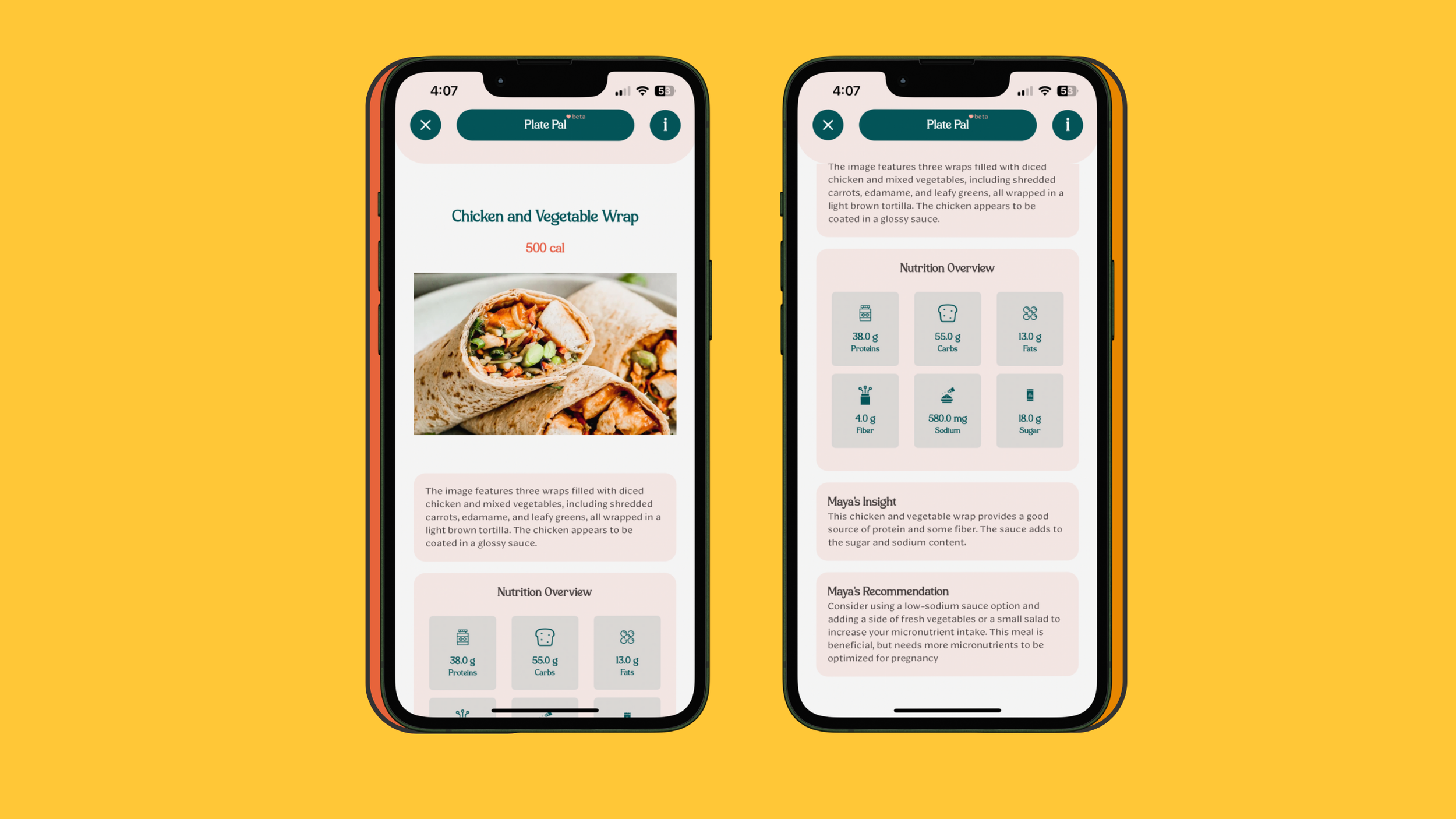
Want to see it in action? and watch the magic happen. Try Plate Pal now.
Just snap a quick photo of your meal, and Plate Pal does the heavy lifting. Had a chicken quinoa bowl with roasted veggies? It’ll break it down for you—protein, carbs, vitamins, all of it.
Swapped kale for spinach? Added some extra rice? No problem. You can tweak it, and Plate Pal recalculates everything—from fiber to calories—without the drama. Then Maya, our AI assistant who somehow knows everything, steps in with gentle nudges: “You’re on point with the protein—let’s just add some greens tomorrow, cool?”
It’s always about having the right kind of support, right when you need it.
The Takeaway!
So, this March, let’s celebrate the superpower of food. Let’s kick GD to the curb, lower those risks, and raise a generation of healthy babies (and moms). Myri’s Plate Pal makes it happen—one bite at a time. See more ways we’ve got you covered at Myri app.
Go eat something good. You’ve got this.
Hugs,
Myri
March arrives with grand speeches, social media tributes, and token gestures celebrating women. International Women's Day. Women's History Month. Countless brands draping their logos in pink, promising support. But by April, the noise dies down. The hashtags fade. And women—especially mothers—are left exactly where they were: underappreciated, overburdened, and struggling in a system that was never built for them.
This is a flawed reward structure—a single day of recognition in exchange for a lifetime of sacrifice. And it’s not just unfair. It’s deceitful.
The Invisible Labor No One Talks About
If there’s one role society loves to romanticize but refuses to support, it’s motherhood.
We hear it all the time: "Moms are superheroes."
But superheroes don’t do unpaid labor. Superheroes don’t get ignored when they ask for help.
Mothers hold up the economy in ways no one wants to acknowledge. They create life, raise children, and sacrifice their own well-being to ensure their families thrive. But when it comes to maternity care, postpartum recovery, mental health support, and workplace policies, the system fails them at every turn.
- 80% of mothers experience the "baby blues", yet maternal mental health remains a footnote in healthcare.
- 1 in 3 women face birth trauma, yet we call them "lucky" for having a healthy baby.
- Childcare costs more than rent in many places, yet mothers are expected to "figure it out."
And when they burn out? Society tells them to “self-care” their way out of exhaustion—while still carrying the full weight of parenting, household duties, and professional life.
%201%20(1).avif)
The Myth of “Having It All”
Women are told they can have it all—career, family, independence. But the truth is, they are expected to do it all. The burden of unpaid labor still falls squarely on their shoulders.
- When a mother leaves work early to pick up a sick child, she’s seen as unreliable.
- When a father does the same, he’s celebrated as a great dad.
- When a mother prioritizes her health, she’s “selfish.”
- When a man does, it’s “self-care.”
This is survival at the cost of sanity.
We Need a New System, Not a New Slogan
We don’t need another Women's Day campaign telling us how "strong" we are. Strength isn’t the issue— lack of support is.
- Better maternal healthcare. Not just during pregnancy, but through postpartum and beyond.
- Mental health support that actually meets mothers where they are. Not just a pamphlet at the six-week checkup.
- Workplaces that don’t punish mothers for being mothers. Flexible work, paid leave, and affordable childcare should not be luxuries.
Even Gal Gadot, with access to world-class healthcare, almost missed a life-threatening postpartum complication—Cerebral Venous Thrombosis (CVT). What started as severe headaches could have turned fatal had she not pushed for answers. If this can happen to her, imagine the millions of mothers without the resources or voice to advocate for themselves. (Full story here.)
The Support Moms Should Have Had All Along
Unpopular opinion—motherhood should not be this difficult.
It should not mean waiting weeks for answers, scrolling through forums at 3 AM, or being told, “That’s just how it is.”
Moms don’t need another "you got this" pep talk. We need real support, real answers, and real care.
And that’s exactly why Myri exists.
No More Guessing. No More Gaps in Care.
Postpartum recovery is NOT a one-size-fits-all checklist. Myri gives you real, expert-backed guidance tailored to YOUR body, YOUR healing, and YOUR timeline. (Learn more about postpartum recovery.)
Motherhood doesn’t “end” at six weeks. So why does maternal care disappear after that 6th-week checkup? If you’re still in pain, exhausted, or feeling off, Myri helps you track your recovery, flag concerns, and get solutions—before it spirals.
Your birth plan should be more than a suggestion. Myri helps you create a personalized, medically informed plan that actually gets followed. Because you deserve a say in your own delivery.
( Read why a birth plan matters.)
Getting care shouldn’t feel impossible. You shouldn’t have to fight for basic support. Myri connects you with specialists, tracks your symptoms, and makes sure you’re not overlooked.
(See how Myri care coordination is saving lives.)

Because If Moms Actually Got the Care They Deserved, Myri Wouldn’t Need to Exist.
But here we are—fixing what should have been there all along.
Motherhood is already hard. Getting help shouldn’t be.
Happy Women’s Day, We Guess?
So here we are—another Women’s Day, another round of flowery tributes, another year of pretending that’s enough.
Tomorrow, the hashtags will fade, the pink-themed campaigns will wrap up, and the world will go back to business as usual. Moms will still struggle to get proper pregnancy & postpartum care. Maternal mental health will still be a footnote in healthcare. Childcare will still cost more than rent.
But hey—at least we got a discount on self-care products, right? Happy Women’s Day. 🎉
(Or, you know… we could actually change something.)
Do We Want Our Daughters to Suffer the Same Fate?
Think about the world our daughters will grow up in. Will they still be fighting for basic rights, for respect, for care?
Or will they finally live in a world where women aren’t an afterthought—but a priority?
Change starts here. Change starts with us.
.webp)
.webp)
Just a daily reminder:
Once you have kids please take care of your pelvic floor.
Seriously,
from,
A girl with a fractured back.
- Britanny Mahomes
Welcoming a new baby is a life-changing event, bringing joy and a series of new experiences. Along with this, however, your body has been on its own journey, especially your pelvic floor, which has worked hard to support you throughout pregnancy and childbirth. You know the muscle you can’t see, but does some heavy lifting (no pun intended!). Now, it needs some care and attention. The pelvic floor muscles, which support vital organs like the bladder, bowel, and uterus, can become weakened during pregnancy and childbirth. Focusing on pelvic floor health is crucial for a smooth postpartum recovery and overall well-being.
Women stumble upon this muscle after often experiencing pain, leaking (that leak in fitness class or sneeze), pain with intercourse, back pain - but honestly, it’s way easier to know this info before and gently recover than chase haphazard workouts to fit into a mold, to later find out that there’s damage done. Here, we are gonna walk through some gentle exercises and practical tips to help you restore strength and function to your pelvic floor, starting with diaphragmatic breathing.
Understanding the pelvic floor
There is a possibility that you might not have heard of this, but the pelvic floor is a group of muscles forming a supportive sling at the base of your pelvis. These muscles play a critical role in bladder and bowel control and sexual function. After childbirth, many women experience issues such as urinary incontinence, pelvic pain, or even pelvic organ prolapse. Taking steps to strengthen these muscles can prevent or alleviate these problems, enhancing the overall quality of life. Think of it as a hammock! It holds all the essential organs, like we mentioned, including the uterus.
The gentle start: diaphragmatic breathing
Diaphragmatic breathing is a simple yet powerful way to begin healing and strengthening your pelvic floor. This type of breathing engages the diaphragm and promotes relaxation and gentle activation of the pelvic floor muscles. This is a power move that does more than what is at face value.
How to practice diaphragmatic breathing?
Diaphragmatic breathing, also known as deep breathing or belly breathing, is a technique that can help improve your breathing efficiency and strengthen your pelvic floor muscles. Follow these steps to practice diaphragmatic breathing effectively:
- Get comfortable:
- Position: Lie on your back with your knees bent and feet flat on the floor. Alternatively, sit in a chair with your back well-supported. This move can be done in many positions, including standing or sitting cross-legged.
- Relax: Make sure your neck, shoulders, and body are relaxed. You can use pillows to support your knees or head if needed.
- Hands placement:
- Chest hand: Place one hand on your chest.
- Belly hand: Place the other hand on your belly, just below your ribcage. This will help you feel the movement of your breath and ensure you're breathing deeply into your diaphragm rather than your chest.
- Deep inhale:
- Through your nose: Slowly inhale deeply through your nose.
- Belly movement: Allow your belly to rise as you fill your lungs with air. Your chest should remain relatively still. Imagine your diaphragm moving down as your lungs expand.
- Slow exhale:
- Through your mouth: Exhale slowly and fully through your mouth. You might purse your lips slightly as if you were blowing through a straw.
- Belly falls: Let your belly fall naturally and gently draw your navel towards your spine. This action helps engage your pelvic floor muscles. Your chest should still remain relatively still.
- Engage the pelvic floor:
- During exhale: As you exhale and draw your navel towards your spine, consciously engage your pelvic floor muscles. Think of gently lifting and tightening the muscles you would use to stop the flow of urine.
- Repeat:
- Consistency: Practice this breathing technique for 5-10 minutes, 2-3 times a day. As you become more comfortable, try integrating this breathing into other exercises and daily routines, such as yoga, walking, or even sitting at your desk.
- Progression:
- Standing position: Once you feel comfortable with diaphragmatic breathing lying down or sitting, try practicing it in a standing position to integrate it into more dynamic activities.
- Daily activities: Incorporate diaphragmatic breathing into your daily activities, such as while driving, during meetings, or before bedtime to help reduce stress and improve overall breathing patterns.
Tips for effective practice
Focus on your breath: Pay close attention to the movement of your breath and the rise and fall of your belly.
- Stay relaxed: Keep your shoulders and neck relaxed throughout the exercise.
- Be patient: If you find it difficult at first, don’t get discouraged. Diaphragmatic breathing can take time to master.
- Use visuals: Imagine a balloon in your belly that inflates as you inhale and deflates as you exhale.
Benefits of diaphragmatic breathing
Enhances oxygen flow: Improves oxygenation throughout your body, aiding in healing.
- Reduces stress: Promotes relaxation, helping you cope with the stresses of new motherhood.
- Supports pelvic floor: Encourages gentle engagement of pelvic floor muscles, aiding in recovery and strengthening.
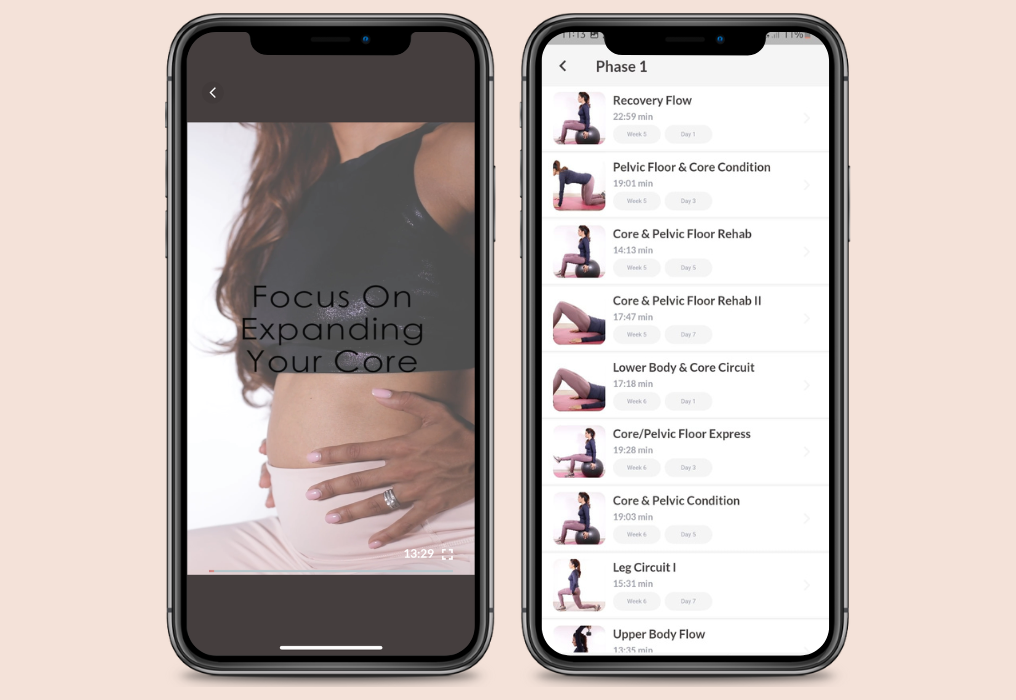
Targeted pelvic floor exercises
Once you've established a diaphragmatic breathing practice, it is okay to move on to more focused pelvic floor exercises. These focused exercises help restore strength and function, reducing the risk of complications like incontinence and prolapse.
Kegel exercise
.webp)
How to perform kegel exercise?
- Identify muscles: Imagine stopping the flow of urine to locate your pelvic floor muscles.
- Get comfortable: Sit, stand, or lie down in a comfortable position.
- Contract and hold: Tighten your pelvic floor muscles and hold for 5 seconds.
- Release and relax: Relax the muscles for 5 seconds.
- Repeat: Aim for 10 repetitions, 3 times a day.
Bridge pose
.webp)
How to perform bridge pose?
- Lie down: Lie on your back with knees bent and feet flat on the floor, hip-width apart.
- Lift hips: Press feet into the floor and lift hips towards the ceiling, creating a straight line from shoulders to knees.
- Engage pelvic floor: Squeeze pelvic floor muscles as you lift.
- Hold and release: Hold briefly, then lower hips back to the floor.
- Repeat: Aim for 10-15 repetitions.
Cat-Cow stretch
%20(1).webp)
How to perform cat-cow stretch?
- Start on all fours: Position yourself on hands and knees, wrists under shoulders, and knees under hips.
- Arch back (Cow): Inhale, arch your back, let your belly drop, and lift your head and tailbone.
- Round back (Cat): Exhale, round your back, pull your navel in, and tuck your chin.
- Flow between poses: Move slowly, matching movements with breath.
- Repeat: Continue for 1-2 minutes.
Squats

How to perform squats?
- Stand tall: Stand with feet hip-width apart, toes slightly outward.
- Lower body: Bend knees and lower body as if sitting into a chair, keeping back straight and chest lifted.
- Engage pelvic floor: Squeeze pelvic floor muscles as you lower.
- Rise up: Straighten legs to stand up.
- Repeat: Aim for 10-15 repetitions, focusing on form.
Additional tips for pelvic floor health
Beyond exercises, small lifestyle changes can make a big difference during postpartum recovery.
Stay hydrated
Drink plenty of water to keep your bladder healthy and reduce the risk of urinary tract infections. If you are pregnant, this is so important already as you want to ensure you are not only hydrating for your, but also the baby.
Maintain a healthy diet
A diet rich in fiber prevents constipation, which strains pelvic floor muscles. Include fruits, vegetables, whole grains, and lean proteins.
Practice good posture
Good posture supports pelvic floor muscles. Keep your back straight and avoid slouching.
Listen to your body
Each woman's recovery journey is unique. Pay attention to your body and avoid overexertion. If you experience pain, stop and consult a healthcare professional.
How Myri Health can help?
Strong pelvic floor muscles are key to a smooth recovery and overall well-being. Myri Health offers step-by-step guides and resources to help you care for your pelvic floor. We understand the challenges of postpartum recovery and are here to support you with practical advice and expert guidance. Instead of feeling lost postpartum and waiting for your ‘6 week clearance’ appointment where you are ‘cleared for activity,’ Myri instead designs your unique postpartum recovery plan that you start right when you go home. It consistently takes your data and refines your unique gentle care plan - yes, even at week one, you can start by a 3-5 minute short, science backed, effective breathing exercises that not only slowly strengthens your deep core muscles, but your pelvic floor as well! Not only that, it manages and improves your diastasis recti (abdominal separation).
Download today and remember, it is never too late to recover appropriately.
_11zon.webp)
If Arab Health 2025 proved anything, it’s this: maternal health is no longer an afterthought—it’s the future of healthcare.
For too long, maternal care has been treated as secondary, an afterthought in health systems that prioritize everything else first. But this year, the conversation shifted. The urgency, the demand, the recognition—it was all there. And Myri Health was at the center of it.
When we launched Myri, we weren’t just creating a solution; we were building a movement. Because moms deserve more. More than checklists. More than fragmented care. More than a system that fails to meet them where they are. They need continuous, personalized support—something that understands them, anticipates their needs, and walks with them through every step of pregnancy and postpartum.
At Arab Health, we saw this vision resonate across continents. We met with hospital executives, policymakers, and global investors, all eager to explore Myri’s impact in their own systems. They weren’t just interested in innovation; they were looking for real, implementable change. Because the reality is: moms make up 50 percent of the population and birth 100 percent of the future—the least we can do is build care that actually cares.
Myri at the Center of Change
Healthcare has been operating in silos for too long, leaving moms to fall through the cracks. Myri is changing that. We’re not just another healthtech company—we’re the infrastructure maternal care has been missing.
At Arab Health, we engaged with some of the most influential healthcare leaders in the world—stakeholders eager to implement a smarter, more connected maternal health system. The consensus was clear: maternal healthcare isn’t just overdue for disruption; it’s essential for the future of global health.
And Myri is leading that transformation.
Dr. Pinkey Patel on the EmpowerHER Panel: Breaking Barriers in Women’s Health
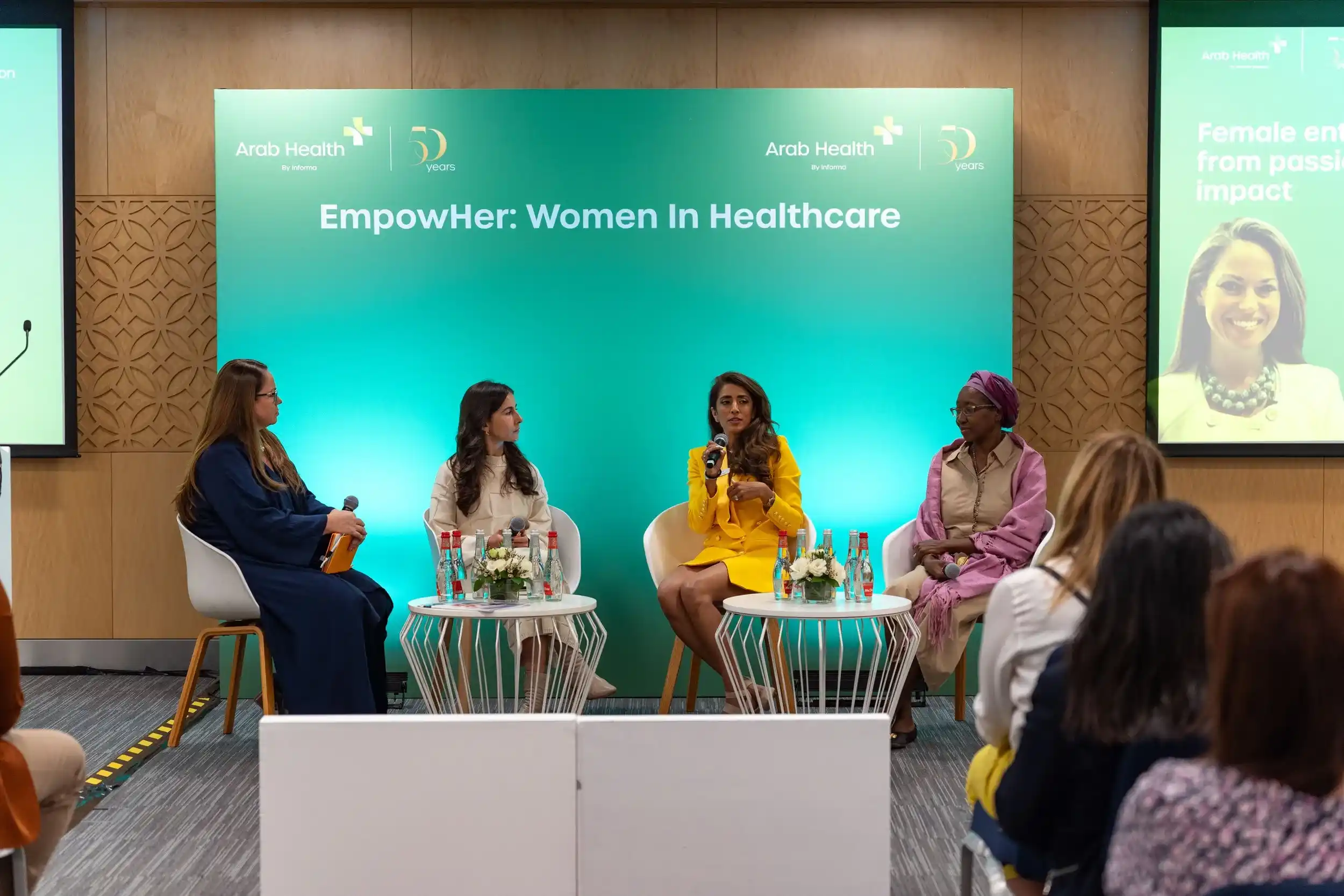
One of the most powerful moments of the conference was the EmpowerHER panel, where our founder and CEO, Dr. Pinkey Patel, joined a dynamic conversation on what it really takes to build meaningful solutions as a woman in healthcare.
Sitting alongside industry leaders Madji Sock (Co-Founder and President at Haskè Ventures), Maya Ghosn Bichara (Operating Partner at Bridge Builders Collaborative), and moderator Susan Amat, PhD (Director of Entrepreneurship Initiatives at the University of Miami Herbert Business School), Dr. Patel spoke candidly about the realities of being a female founder in healthtech.
Women aren’t just patients in healthcare—we are the architects of its future. Yet, funding for women’s health remains an afterthought. Leadership opportunities for female founders continue to be harder to access. And maternal care is still treated as optional. It’s not. It never was.
This wasn’t just another panel on women in leadership. It was an open, unfiltered conversation about the systemic barriers in healthcare and the work that remains to be done.
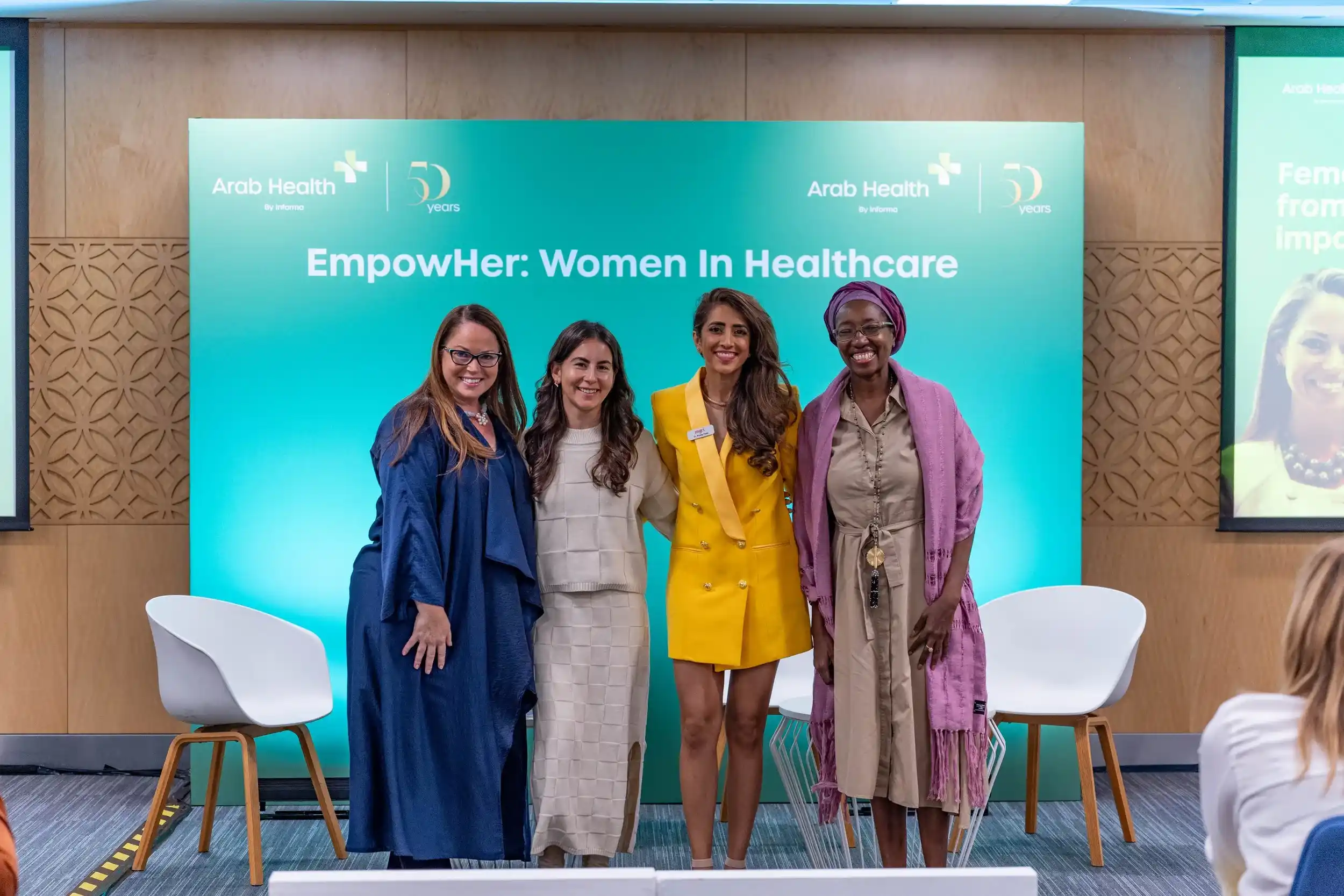
Innov8 Start-Up Competition: Proving Maternal Health Is the Future of Healthcare

Being named a Top 5 Finalist in the Innov8 Start-Up Competition was a proof of what we’ve been saying all along.
Maternal health isn’t secondary. This trillion-dollar industry can’t be ignored any longer. Investors, insurers, and healthcare leaders are finally recognizing that maternal health isn’t just about impact—it’s an untapped market with massive growth potential.
Standing on that stage as the only female-led company sent a clear message. The judges—seasoned investors and healthcare experts—asked the tough questions, and we delivered the answers:
• Why Myri?
Because we’re not just supporting moms—we’re enabling entire systems to do better.
• How does Myri close gaps?
By preventing complications, personalizing care, and ensuring no mother navigates this journey alone.
• Why now?
Because the world is finally ready to invest in what should have been standard decades ago.
Maternal health is the future of healthcare. Arab Health made that clear.
We’re Not Here to Join the Conversation. We’re Here to Lead It.
Arab Health wasn’t just another conference for us—it was proof of what we’ve known all along:
• Maternal health is at the center of global healthcare transformation.
• Hospitals and healthcare systems are desperate for a smarter, more connected approach to pregnancy and postpartum care.
• Investors are realizing that maternal health isn’t just an ethical investment—it’s an economic one.
We left Arab Health with new partnerships, bigger conversations, and a clear path forward for global expansion. The momentum is real. The demand is urgent. The industry is catching up to what we’ve always known:
Maternal health is the future of healthcare. And, we’re the ones building it.
.webp)
A Beginner's Guide to Building Yours

Imagine Sarah, a first-time mom-to-be, sitting at her kitchen table surrounded by pregnancy books, phone full of pregnancy Apps and scattered notes. She's read and watched documentaries, learned stories from other mothers and realizes that she wants a certain type of birth, not just a certain type, but she has other details she wants around the labor and delivery experience and the first moments with the baby. In the middle of this overwhelming sea of advice and options, she yearns for clarity and confidence.
Sound familiar? A lot of moms-to-be, like Sarah, find themselves overwhelmed by the task of preparing for labor and delivery. From figuring out pain relief to setting the right mood in the delivery room, making a birth plan can feel like untouched territory. But don’t sweat it! With a bit of guidance and prep, you can tackle making this essential plan with confidence.
The power of birth plan
Your birth plan isn't just a piece of paper; it's your voice during labor and delivery. It serves as a roadmap, ensuring your healthcare team and supporting partners understand your hopes and desires for the birth experience. While labor can be unpredictable, having a plan gives you a sense of control amidst the unknown.
A step-by-step guide to crafting your birth plan
1. Educate Yourself: Start by diving into resources about labor and delivery. Explore pain relief options—from natural methods like breathing techniques and hydrotherapy to medical interventions like epidurals. Understanding your choices empowers you to make informed decisions that align with your preferences. You don’t know what you don't know and educating yourself with your options is key.
2. Define Your Preferences: Take time to jot down your wishes for labor and delivery:
- Labor Environment: Do you envision a calm space with soft music and dim lighting?
- Pain Management: Are you interested in exploring natural methods or open to medical pain relief options? Do you know your options?
- Support Team: Who would you like by your side during labor? Whether it's your partner, a doula, or a trusted friend, clarify your support network.
- Labor Positions: Research positions that promote comfort and encourage progress during childbirth. You don’t have to push in the typical ‘back on the bed’ position.
3. Partner with Your Healthcare Provider: Schedule a prenatal appointment to discuss your birth plan with your healthcare provider. They can offer insights, address concerns, and ensure your plan aligns with your medical needs and the capabilities of your birthing facility.
4. Prepare for the Unexpected: While crafting your birth plan, consider potential curveballs. Labor can take unexpected turns, so maintain flexibility. Include preferences for emergency scenarios or unplanned interventions, such as cesarean sections, to prepare for any situation. Understand the possibility of episiotomies, failed inductions, postpartum hemorrhage and more.
5. Share Your Vision: Once finalized, share copies of your birth plan with your healthcare provider, labor and delivery team, and support network. Review your plan during prenatal visits to ensure everyone understands your wishes and feels confident in supporting you.
Your birth plan, your story
I think being a mother and giving birth are the most beautiful things that can happen to a woman.
~ Gal Gadot
Your birth plan should reflect your unique journey into motherhood. It's a tool to advocate for your needs and preferences during one of life's most transformative experiences. By investing time in creating your birth plan, you're not just preparing for labor—you're crafting an experience for yourself that honors your values and aspirations as you welcome a baby into the world.
Discover your guide to personalized pregnancy care
We understand how important it is to feel prepared and supported throughout your pregnancy journey. Myri is designed to be your pregnancy and postpartum buddy with evidence based resources, creating a comprehensive and personalized birth plan tailored to your specific needs.
Our app assists moms in creating the right birth plan based on their specific needs. Instead of documenting everything separately and drowning in a pool of paper, you can have the necessary information at one place and in a format that's easy to share with your healthcare team and loved ones involved in your childbirth journey.

Ready to welcome your little one
Creating the birth plan is a meaningful step towards preparing for labor and delivery. By educating yourself, defining your preferences, and collaborating with your healthcare team, you can navigate this journey with clarity and confidence. Embrace the opportunity to shape your birth experience according to your wishes and needs, supported by the resources and community at Myri Health.
For more insights and resources on pregnancy and postpartum care, you can explore Myri Health. Download our app today for free and join a community dedicated to empowering moms every step of the way—from pregnancy to parenthood.
.png)
Motherhood changes us in ways we can’t even imagine. It’s beautiful, raw, exhausting, and sometimes, terrifying. As moms, we often put ourselves last dismissing our own symptoms as “normal” or something that will pass. But when we heard about Gal Gadot’s experience with cerebral venous thrombosis (CVT) after giving birth, it reminded us how important it is for us to take care of ourselves because being a mom doesn’t mean ignoring your own health.
Her story hit close to home. It’s a reality check that even when we’re busy caring for our little ones, our own health matters too and that preventive care and early intervention can save lives.

Even Wonder Woman Isn’t Invincible (What does that mean for the rest of moms?).
At eight months pregnant, Gal Gadot started experiencing excruciating headaches, the kind that make it impossible to function. She knew something felt off, but like so many women, she wasn’t immediately aware of how serious it could be. When the pain didn’t go away, she underwent an MRI and what doctors found was terrifying.
She was diagnosed with cerebral venous thrombosis (CVT), a rare but life-threatening condition where a blood clot forms in the brain. If left untreated, it can lead to stroke or permanent damage. Gal needed emergency surgery to remove the clot, something that could have been fatal if not caught in time.
Her story is proof of something we talk about all the time at Myri: serious complications can happen during pregnancy, and too often, moms aren’t given the information they need to recognize the warning signs. Gal herself admitted she had no idea pregnancy increased the risk of CVT, especially for women over 30. And that’s the problem.
If even Wonder Woman wasn’t spared, what does that mean for the rest of us? It means we need to change the conversation around maternal health. It means we need better education, earlier detection, and a system that actually prioritizes moms, not just babies. Maternal health matters, and knowing the signs can save lives.
Symptoms a Mom Should Never Ignore
Our body gives signals when something isn’t right and we should not ignore them. While pregnancy and postpartum come with plenty of changes, some symptoms should never be brushed off as “just part of motherhood.”
If any of the following occur, immediate medical evaluation is essential:
🔴 Severe or Persistent Headaches – Could be a sign of high blood pressure, preeclampsia, or a blood clot (CVT).
🔴 Sudden Swelling in Your Face, Hands, or Legs – This isn’t just “pregnancy bloating.” Swelling with high blood pressure can indicate preeclampsia.
🔴 Blurred Vision, Seeing Spots, or Sensitivity to Light – These could be neurological symptoms related to preeclampsia or a blood clot in the brain.
🔴 Shortness of Breath or Chest Pain – A red flag for blood clots, heart issues, or postpartum cardiomyopathy.
🔴 Heavy Bleeding That Doesn’t Slow Down – Bright red bleeding, passing large clots, or feeling dizzy could mean postpartum hemorrhage, a leading cause of maternal death.
🔴 Leg Pain, Redness, or Swelling in One Leg – Could indicate deep vein thrombosis (DVT), which can lead to a life-threatening pulmonary embolism if untreated.
🔴 Extreme Fatigue, Weakness, or Feeling “Off” – More than just being tired, this could be a sign of anemia, heart problems, or even an undiagnosed postpartum complication.
🔴 Intense Sadness, Hopelessness, or Thoughts of Self-Harm – Postpartum depression is real.
So many moms hesitate to call their doctor because they don’t want to seem like they’re overreacting. But listen, you're not overreacting. You are your best advocate, and it’s always better to get checked out than to wait and risk a serious complication. If something doesn’t feel right, trust your gut and reach out.
“Second, awareness matters. I had no idea that 3 in 100,000 pregnant women in the 30s+ age group are diagnosed with CVT (develop a blood clot in the brain).
It’s so important to identify early because it’s treatable, while rare, it’s a possibility, and knowing it exists is the first step to addressing it.”
— Gal Gadot
Pregnancy and Postpartum: When Normal Isn’t Always Normal
As much as pregnancy and postpartum are celebrated, they’re also times of immense physical and emotional change. And sometimes, those changes signal that something isn’t right. Complications like CVT, preeclampsia, postpartum hemorrhage, and postpartum cardiomyopathy don’t always come with obvious symptoms. That’s why it’s critical for moms to know what to look out for.
A few common conditions that can arise during pregnancy or postpartum:
Cerebral Venous Thrombosis (CVT)
- What it is: A blood clot in the veins of the brain, which can disrupt blood flow and cause swelling or stroke.
- Symptoms:
- Severe or persistent headache
- Nausea or vomiting
- Blurred or double vision
- Weakness or numbness in one side of the body
Preeclampsia
- What it is: High blood pressure that can develop during or after pregnancy, often causing organ damage if untreated.
- Symptoms:
- Severe headaches
- Swelling, especially in the face or hands
- Vision changes, like seeing spots
- Shortness of breath
Postpartum Hemorrhage (PPH)
- What it is: Heavy bleeding after delivery, which can happen within hours, days, or weeks postpartum.
- Symptoms:
- Bright red bleeding that doesn’t slow down
- Feeling dizzy or faint
- Weakness or fatigue
Postpartum Depression (PPD)
- What it is: A mental health condition that affects emotional well-being after childbirth.
- Symptoms:
- Intense sadness or hopelessness
- Difficulty bonding with your baby
- Feeling overwhelmed or like you’re “not enough”
Why Moms Wait to Get Help
We don’t talk about this enough, but moms delay seeking care because:
- They’re told it’s normal: How often have you heard, “It’s just part of being a mom”?
- They’re overwhelmed: Caring for a newborn doesn’t leave much room for self-care.
- They feel dismissed: When moms finally do speak up, they’re sometimes brushed off by healthcare providers.
The result? Many moms suffer in silence, unsure if their symptoms are serious or if they’re just overreacting.
Now That You Know the Why, Here’s the How!
If you’re a mom, you already understand the importance of proactive care, now let’s talk about how to stay ahead of complications.
Moms shouldn’t have to navigate pregnancy and postpartum health challenges alone. That’s why Myri is built to support both moms and providers, ensuring the right care happens at the right time. With advanced tools for symptom tracking, care coordination, and guided support, Myri empowers moms to make informed decisions and helps providers intervene before complications arise.
Here’s how Myri makes it happen:
✅ Symptom Tracking: Log headaches, swelling, or fatigue, and identify patterns early so you can take action before symptoms escalate.
✅ Clear, Straightforward Education: No fluff, no medical jargon, just reliable information to help you recognize warning signs and make confident decisions.
✅ Guided Support: Go to your appointments prepared. Myri provides key questions to ask your doctor so you get the answers and care you need.
✅ Care Coordination: Bridging the gap between moms and providers, Myri ensures that health concerns don’t fall through the cracks, leading to timely interventions and better outcomes.
✅ A Community That Gets It: You’re not alone. Connect with other moms who understand your challenges because tough journeys feel a little lighter with support.
Gettin the right support is the key before a concern turns into a crisis.
The Bottom Line
Gal Gadot’s experience is a wake-up call, maternal health needs to be proactive. Pregnancy and postpartum come with real risks, and with the right care, education, and tools, those risks can be prevented from turning into emergencies.
No mom should have to fight to be heard or feel like she’s expected to “push through” when something isn’t right. Myri is always available for the support, knowledge, and guidance moms deserve.
💛 And if you need answers, Myri and our AI support are here because moms should not have to figure this out alone.
.jpg)
(CAN WE GET AN AMEN?!)
No Judgment here, Mama. We Have All Been There And Done That. Let Us Share Some Mistakes We Learned, So You Don’t Have To!
In a world where mom shaming is a VERY real thing, we are NOT about that. Fed is best, what works for one does not work for the other, and frankly, we’re grateful we are able to provide for our kids (in whichever way) in a world where thousands are not. If you do breastfeed, here are a few tips, tricks, and warnings! Being a mom is not a walk in the park, or a jog, or a sprint…or a marathon, it’s the never-ending track, we just want to help you keep going sans mastitis.
We think it’s safe to say that breastfeeding is one of the most challenging parts of motherhood for many women. It is often this expectation that since it is so natural, that it will also be that natural. Not even close.
The most common complaint from women during the breastfeeding period is they were not prepared for the physical and mental process of breastfeeding. Let me explain.
The actual time that will be committed to learning how to breastfeeding, actually breastfeeding each time, pumping (if you decide to add this), establishing and maintaining your supply is longer and harder than any mom assumes during pregnancy.
New mothers have the tendency to do a few things that can make their breastfeeding journey more difficult, and ain’t nobody got time for that, so let’s talk.
Here are a few ways to avoid making breastfeeding harder on yourself.
COMMON MISTAKE #1
Sitting back, hoping the baby latches themselves. Don’t do this! Be an active participant in your baby’s first few breastfeeds. Hold your own breast in a c-shape and guide your breast into baby’s mouth, direct your baby. For a proper “latch” have the nipple pointed to the roof the baby’s mouth, fully encompassing your entire nipple and bottom areola. This is where you rally your lactation consultants and doulas. Make the most of your time with them and schedule more time if needed. Check your insurance! This may be a covered benefit!
COMMON MISTAKE #2
Not knowing the warning signs of hunger. FYI: the last sign of hunger is crying. There are a few key indications that the baby is getting hungry: rooting is one of them. This is when the baby is searching for something to suck on. They are awake, alert and aware.
COMMON MISTAKE #3
Being impatient. This is so much easier said than done, especially with the hormone fluctuations. In fact, babies feed on average 10-12 times in the first few days of life. If these feeds aren’t going as well as you would like, you can imagine how impatient you might become..FAST. Try to know that you and your baby are learning this dance together. It takes time and it does get better! Repeat. After. Us. BREATHE! It takes two to tango…and to breastfeed!
COMMON MISTAKE #4
Not asking for help. Take advantage of the lactation consultants, nurses and additional help you get while in the hospital. Ask questions, have them review your latch, your break of suction, your nipples, your colostrum supply. Definitely encourage your partner to assist you during breastfeeds by holding the babe’s head and adjusting your pillows, getting you water, and bringing you food. With time, you will become better with the whole process. Chances are, you will be exhausted in the hospital, so prepare while you’re pregnant and research lactation consultants that can come to you. After you are home, the situation at home is not like the hospital (adjusting hospital beds help ladies, but they don’t come home with us) and this is often key in getting a good routine started.
COMMON MISTAKE #5
Telling yourself “you don’t have enough milk.” You won’t have massive ounces of milk in the beginning. Your milk hasn’t come in yet! Colostrum is what comes first. This is highly nutritious and calorie-dense. Do not belittle it those tiny drops, and remember, the babe’s stomach is also very small initially. Within a few days, this will transition to milk. You are NOT defective, and if you feel your supply is not sufficient, seek help, do NOT self-deprecate, none of us are created the same.
COMMON MISTAKE #6
Giving up early. Think about the pregnancy, chances are it wasn’t rainbows and sunshine or overnight, so breastfeeding also takes time, keep on keeping on! This is way before a feeding schedule is established and well before many have a good grasp on milk supply and baby’s weight gain.
COMMON MISTAKE #7
Not focusing on nutrition, enough. If your baby is getting their SOLE nutrition from you, wouldn’t it make sense that YOUR DIET is of the highest importance? Too many women focus on cutting calories instead of taking care of themselves. We get it. You are tired of extra rolls when you sit there and feed, or things jiggle in places like never before. Honestly, if you want to be successful and want your baby to be truly nourished, please don’t cut calories too soon. Your body will naturally find it’s correct weight if you focus on eating real food, as unprocessed as possible. You don’t need to be perfect, but you do need to aim to eat well. Thanks to the magic of real food, eating with this mentality will help your body naturally adjust on its own.
Okay, that’s great, but what if I still can’t breastfeed?
We know that there are those who truly cannot breastfeed — whether it be because of a medical issue, because of adoption or other factors. Formula always gets this bad rep, but it is not. In fact, it deserves its own blog post and will come soon.
Remember this, no amount of milk should cause you to sacrifice your mental health and/or relationships. There will always be an alternative opinion in parenting and motherhood. In the meantime, do what is best for you and your family. We trust you, after all, you did create a human. In the meantime, keep pushing through momma. Cheering you on!
Smart Sleep Coach by Pampers
Check out the Smart Sleep Coach by Pampers, designed by pediatric sleep experts, this app guide you step by step to get your baby (and you) sleeping better!
The Smart Sleep Coach app is a revolutionary tool for parents looking to improve their baby's sleep. One of the standout features of this sleep coach is its ability to create an automated, personalized sleep schedule for your baby. This is done by using data from your baby's sleep patterns, as well as information about their age and development.
In addition to the personalized sleep schedule, the Smart Sleep Coach also offers customized sleep plans based on your baby's specific needs. This is especially useful for parents who are struggling to get their baby to sleep through the night, or who are looking for ways to improve their baby's sleep quality.
But the benefits of the Smart Sleep Coach don't stop there. The app also provides a wealth of information about sleep and child development, all presented in an easy-to-understand way. This includes tips for improving sleep habits, information about different sleep stages, aIn addition to its innovative features and wealth of information, the Pampers Smart Sleep Coach has also proven to be extremely effective for thousands of families. With a 5-star rating from its users, it is clear that the app has helped many parents improve their baby's sleep.
The Pampers Smart Sleep Coach has also proven to be extremely effective for thousands of families. With a 5-star rating from its users, it is clear that the app has helped many parents improve their baby's sleep.
Whether you are a new parent trying to establish healthy sleep habits from the start, or an experienced parent looking for ways to improve your baby's sleep, the Smart Sleep Coach is a valuable resource. Its personalized approach and easy-to-understand information make it a standout choice for anyone looking to improve their baby's sleep.
If you are struggling with your baby's sleep, we highly recommend giving the Pampers Smart Sleep Coach a try. Its proven track record and satisfied users make it a smart choice for any parent looking to give their baby the best possible start in life.
.png)
DR. NARMDA KUMAR
Meet our FIRST Mama of the Month, Narmda Kumar! Here at TSB, we want to develop a community of supportive, inclusive and strong mamas. Each month we will be featuring a different mama with an unique story. Keep reading to learn all about this May’s Mama, Narmda.
“Hi, My name is Narmda Kumar Patel and I am a Chiropractor, Mamma to a 2.5 year old son Kiaan and a 1 year old daughter Aria, Wife to a Pharmacist, dog mom to Harrison (our 110 lb lab mix) and a Breast Cancer survivor. I love to travel the world every chance that I get, exercise, read and organize!”
Describe your first pregnancy experience. What did you enjoy and not enjoy?
I LOVED being pregnant! I know a lot of women can not say the same, but my first pregnancy was so easy. I barely had any symptoms, I didn’t gain any weight (only 25 lbs) and I felt gorgeous! Ha! They say when you are pregnant with a boy you skin glows, and my definitely did 🙂 The thing I didn’t enjoy was my feet swelling around 35 weeks. I worked until I gave birth and the swelling made it SO hard to put on my shoes and work.
What did you least expect during pregnancy?
The unknown! I had no idea the restrictions about food, the number of doctor appointments and how much your body changes!! My breasts were so sore the entire time and grew 3x their normal size. I also didn’t know you couldn’t sleep in certain directions (for example, it’s favorable to sleep on the left for blood flow) and how out of breathe you get doing such little tasks. I had to modify all my workouts (I am lucky that I am a chiro so I know how to modify) , but wish I had some help in regards to what exercises would help me post pregnancy and during rather than having to do my research!
What do you wish you knew about the pregnancy, but did not?
I wish I knew how hard it would be to give up alcohol, lol. I know that sounds so lame, but when you don’t have kids, your entire social life revolves around eating out and drinking and since I couldn’t I didn’t realize how hard it would be. I also wish I knew how many symptoms your body could experience but they all mean nothing and the minute you give birth they will go away. For example, hip soreness. I had the worst round ligament pain towards the end of my pregnancy and I kept thinking I injured my hips. No one tells you about the possible symptoms you will experience until you get them and mention them to your OB. I wish they gave you a list of most common pregnancy symptoms so you knew nothing was wrong and that it would go away with time.
What were your greatest challenges during your postpartum period?
I didn’t get to really experience a first postpartum since I, unfortunately, was diagnosed with triple negative breast cancer a month after my son was born. The emotions were a roller coaster, not once did I think I was going to die. But, I kept asking myself how I would take care of a new baby and take care of myself. It was the most emotional aspect to date and I still get emotional thinking about that period of my life.
Do you ever experience mom guilt? What causes this and how do you remedy it (because we get it, it never really goes away).
YES! ALL THE TIME. I have a great partner that encourages me to take time away and do my self care. But, regardless of where I go or what I am doing, I always have it in the back of my head that I should be home taking care of my littles. I think for me it’s caused because I am so overbearing when it comes to my kids. I think I am the only person that can give them what they need when they need it. I always talk myself out of it and realize that they are kids they are humans and grandparents, their father and our friends know what to do as well. I keep telling myself if I take time away from them I will be a better mom because of it and that helps that mom guilt go away. At least for the time being, that is.
Give us three pieces of advice you would wish to share to other moms, it can be regarding pregnancy or postpartum!
1. You will have SO many symptoms when you are pregnant (pains, aches, nausea, cramping, you name it ) its is ALL normal!
2. Postpartum is so hard. Lean on your husband, your parents anyone that wants to help. Because you will need it. You have to let your body heal and that takes time
3. Being pregnant is so magical as cliché as this is going to sound – embrace it. Enjoy that bump, wear the tight clothes to show it off and just have fun. We are growing a human and it is so amazing what our bodies can do.
What was the biggest lesson you learned between having your second child and your first?
1 kid is SO easy and 2 kids is a game changer. Besides my diagnosis and everything we had to deal with, Kiaan was and still is the easiest kid. Little did we know after having 2 you have literally no time for anything. Since our kids are so close in age at every second either one needs us or the other. I didn’t realize how hard it would be to give up the time with my first because clearly the younger one needs their mom more. It is a learning curve for all. My biggest advice is keeping telling yourself it will get easier, because it does. 🙂
Give us three pieces of advice you would wish to share to other moms of multiples!
1. It will get easier, just take it day by day.
2. Take time for yourself, whether it is waking up early, or doing stuff after they go to sleep. It is so necessary. Multiple kids take out all your energy but save some for yourself because it will make you a better mamma.
3. Take time to play/read and just be present with each kid separately. It took me almost a year to learn this! I would always do things with both kids at the same time. But kids know when you are spending time with just them. Being present is key to helping each kid understand that they are important.
Your story is truly inspiring, can you describe your experience with battling cancer all while adjusting to a newborn baby and life?
It was terrible. It was the hardest, most emotional most challenging part of my life. I thought being a new mom would be hard but having cancer and everything that came with it turned my perfect world upside down. I was lucky because Kiaan was an easy baby. He was sleeping 12 hours at 2 months old, he was adjusting to any changes we brought on him like a champ. I put my main focus on his schedule and his needs which made me forget what I was dealing with. I leaned on grandparents SO much, they helped us during the day at night whenever I needed them and that made it so much easier.
Ask anyone and they will tell you that breastfeeding is challenging. You not only were able to do it but had to abruptly wean due to the new medication. Describe your experience with establishing supply, then immediately weaning.
Breastfeeding was SO amazing and came to my body so naturally – from the 9 weeks I was able to do it. I enjoyed it for the bond, the ease and the supply. I read a lot before I had Kiaan on what to do to establish supply etc and made lactation bites that I started eating 3 days postpartum. The right nutrients help build your supply. There are so many great foods out there that are proven to boost milk supply and they definitely work. With Aria (since I was only able to breastfeed from one breast – I did it for 7 weeks) I did the same to establish milk supply and it worked!
Weaning is literally the most painful thing ever. Worse than giving birth, lol. I had to use Tylenol around the clock for 3 days, cabbage leaves and a very tight sports bra. It was so painful but had to be done. It took 3 days to stop all the milk and I hope no other mamma has to do this as abruptly as I had to!
We know that when it comes to the body, you have been active since you were young (an
avid yogi!). How did movement and exercise mentally help you through this trying time?
OMG, so much! I love exercising and my favorite is of course yoga! It helped me escape my reality and focus on my body. We all know movement is life and adding an increase in blood flow and oxygen and it leaves you feeling like a new person. I gave birth to both of my kids unmedicated with very short labors. I attribute that to doing yoga and exercise throughout my entire pregnancy. Chemotherapy takes a crazy toll on your body but doing yoga during this time helped my body heal and keep it in good health since it was going through so much.
What advice do you have to give other mothers who go through trying times while transitioning to motherhood?
Just remember this, it will pass. Nothing stays forever, but you’re being a mom will. I kept my focus on being a new mom and enjoying everything Kiaan was doing and that helped me keep my focus on the positive. Motherhood is hard, life obstacles are hard. But keep a positive outlook and being present will help you transition through anything. After all, aren’t all moms superheroes – we can get through anything!
It just so happens that we interviewed you the month of May, when you seemed to have crossed a large milestone, your LAST radiation session was on May 9th! Describe how that felt, knowing the journey you endured.
May 9th is my Cancer-versary. I will be 2 years cancer free this month and I still can’t believe what I went through. Being done with ALL treatments related to Cancer was so surreal. This day brings back the best and worst memories of my first year of motherhood. I was lucky to be done with cancer, a lot of breast cancer patients can’t say the same because they have to continue some sort of treatments for life. For me, to be done was a way of telling myself it has passed and I can now move on. The fact that I am 2 years cancer free this month and that I have 2 kids is something I am SO proud of. I had planned out my life in a way that I would have had 2 kids by now and I didn’t let Cancer change those plans. It was an obstacle of life and I am so happy to be a survivor.
How do you balance work, being a wife and a mom?
Oh man, I struggle with this every day. Being a mom is amazing and being a wife is wonderful. Each day when I get up I make a mental note of all the things I want to do so I can fulfill each of those roles. I don’t let one role trump the other because they are all important. When I crave out time for each of roles, mother, wife and Chiro – it leaves them all balanced and fulfilled. If I don’t feel like I gave it my all to one of them, I make sure to make it up the next day. It is always a work in progress!
What is your form of self-care? We all know, we need it!
My favorite form of self care is working out. All I need is 30 minutes each day to myself to do some yoga. Once I do yoga, my day is instantly better and I am a happier mom and wife. My husband knows from experience to always give me my 30 minutes. I am a creature of habit so I have this terrible way of dealing with adapting. If I am supposed to work out every day at 9am and it doesn’t go as planned I don’t adapt very easily. I am learning that being a mother of 2 things will always change and you just have to do with the flow 🙂
We LOVE Narmda’s story, she is hardworking, resilient and an inspiration to all of us! To learn more about her battle with cancer, being a mother of two and wife head to her blog!
Have a mama you love? To send in a feature consideration please #TSBMama and #MamaoftheMonth on Instagram or DM us!
.png)
Thank you, Momma!
A token of gratitude, from us to you.
Mother’s Day is around the corner and we want to show our fellow mamas some love so we’ve paired with some of our favorite products for mamas and babies to create a giveaway worth $700 in retail value!! Keep reading to see what we’ve got in store and read the rules below!
Rules for the Giveaway:
1. Follow The SnapBack x all participating partners on Instagram.
@Lovebubbsi
@lark_adventurewear
@freshlymoms
@kneadnod
@Blankies_by_b
@graffiti.collective
@TheSnapBack_
2. Like and comment on this post and The SnapBack’s most recent giveaway post on Instagram.
3. Tag a momma in the comments below. (Each tag counts as an entry, but one tag per comment please!)
Giveaway open to U.S. only and closed on 5/13 at 5 PM EST. Good luck!
Partners:
Bubbsi is a line of clean, coconut oil products that makes skincare fun for kids. Our naturally nourishing formulas contain high levels of organic coconut oil, are all over 95% naturally derived and EU compliant, and best of all, are luxuriously moisturizing! They come in soft squeezy silicone bottles that transform your daily rituals into playtime. Best of all, they are refillable! Natural skincare that works, but feels like play.
Item: Coconut Oil Balm for bath + body + bum (8oz, $24)
Lark Adventurewear is the first ever baby activewear apparel! Lark is functional, fashionable, environmentally friendly, and totally safe for your little one’s sensitive skin. We make baby clothes so parents and babies can stay active and explore the world around them in comfort. Made in the USA, eco-friendly and chemical free.
Item: Gift card towards purchase on the online store ($50.00)
Freshly Moms makes organic nutrient-rich snacks, meal-kits, and teas that support a new mother during postpartum recovery and breastfeeding. Every single ingredient they use has been overthought and included to support a new mother’s health. They responsibly source ingredients with the highest integrity and never add any refined sugars, preservatives or artificial flavors. Their recipes are based on ancient wisdom, and have been nutritionally verified for their benefits.
Item: Gift card towards purchase on the online store (Value $75.00)
Knead Nod boxes are for people who believe in the importance of gifting & gratitude. They believe that there is power in gratitude and we want to help others show their appreciation in a memorable and sincere way. They gifts are arranged by hand and include locally sourced products from Oklahoma artisans and small shops from around the U.S.
Item: The Gift Box includes: Prairie Dust Blue Yonder MIt & Sea Clay Soap, Made Market Co Wooden Safety Match Bottle, Bisby Gold Flight Buenos Aires Soy 4 oz Candle & Rose Soap Petals (Value $80.00)
Graffiti Collective is a new gender-free, vegan skincare brand inspired the urban art scene. They thoughtfully formulated with powerful plant-based actives and safe science to create products that do what they say they will do. Their formulas are made for every skin type, are allergy tested and do not contain parabens, sulfates, phthalates or harsh chemicals. Their products are 100% recyclable and made in the US.
At Graffiti Collective, they believe legit skincare can be as expressive and empowering as art. Embrace Your Face!
Item: The Street Rose facial mask. This is their “everything” mask – it brightens, tightens, softens & smoothes. This clay mask paints on smooth and is loaded with powerful raw ingredients to give you the softest, brightest skin. (Value $45.00)
Blankies by B makes trendy, customized baby sleep mats, nap mats, crib play mats, snuggle pillow, pack and play mat, blankets in all sizes, and kids toy bags. Each item is handmade just the way you want it. These make great baby shower gifts and newborn gifts. Blankies by B was created from love for children and continues to grow everyday due to love for making baby goods.
Item: (2) toddler sized ultra-soft blankets and (2) large toy mats. (Value $190.00)
The Snapback is a one on one consultation service catered to developing a community and providing women pre and postnatal support which include birth planning, pregnancy, conception and postpartum services. Designed to educate, empower and help develop thriving moms and babies.
Item: 40% off ANY consultation service. (Value up to $320.00)We hope to build a community that supports small businesses, great products/services and all things for thriving moms and babies. The giveaway will be active from May 9th- May 13th via Instagram.
We hope as TSB grows, we are able to continue shedding light, providing resources and supporting thriving moms and babies.
.jpg)
Navigating C-Section Scar Care
Birth is this amazing, complex journey that may have souvenirs than you unknowingly opted-in for after nine months. C-section scars are evidence of your babes entry into this world.
Scars can impact one’s social, emotional and physical wellbeing. They are reminders that something happened in our lives – good, bad, major or minor. Scars talk, sometimes with clear communication of their needs but often as a distant echo. For mothers with C-sections, they know that beyond the work they need to do for their new baby, a longer recovery lies ahead of them due to the incision and stitches. However, little information is given to these moms regarding the scarring from C-sections and the potential long term side effects. In fact, the scar tissue from C-sections and other abdominal surgeries can spread approximately two years post surgery, with the ability to bind tissues and organs together, creating dysfunction and discomfort.
Mamas generally do not get a user’s guide sent home with them about their postpartum body, let alone the incision they now have.
The prevalence of C-sections in the U.S is now 32% (source: CDC), and most mothers are taught little about how to care for their body after delivery, much less their incision site. OB-GYNs often clear moms to return to activity after 6-8 weeks, and we assume all is well if the incision is closed and well healed — not necessarily! Majority of women have chronic scar pain related to their cesarean surgery, resulting in difficulty and pain with daily activities including childcare. It’s major surgery, so why don’t we get rehab resources?
What Happens During a C-Section and After?
The baby is born and moms are generally reassured that their tummies will be perfectly flat and heal nicely once repaired (gravity is much more kind to your abdominal contents when you’re flat on your back.) You will have a cute “bikini line” scar and it will be like you were never pregnant, right?
Boom, you’re good to go! Just don’t lift anything for 6-8 weeks and you’re all set — which isn’t so easy if you have another kid who hangs on you like a zoo animal.
Let’s break down the procedure a little so you can understand the layers of repair.
First, an incision is made in your skin. The rectus sheath (this is the fascia that blends all your abs together at the center of your belly) is pulled apart, then incisions are made in the peritoneum (the lining of your abdominal cavity) and the uterus. The baby and placenta are delivered and then the uterus, rectus sheath and skin are sutured back together again. This video is a great, simple resource.
Why Should I Care About My Scar?
In general, scars are your body’s way of forming a bandage, and you want a scar to do two things: heal well and most importantly, be mobile. Women don’t typically associate a scar with mobility.
Normal tissue in our bodies is aligned in a nice uniform direction. However, when scar tissue forms, it is kind of like when your toddler plays with their crayons and tosses them all over the floor.
Here’s another simple analogy: pretend that you have several layers of waxed paper and someone put a curling iron down through it. All the layers sort of blend and melt together. The tissues from your skin down to your uterus, although may seem sealed closed, do not lay in the same fashion as before, just like this.
The scar tissue is laid down in haphazard directions, just like the wax or crayons.
Whenever an incision has been made, a scar may form as part of the healing process. According to the American Academy of Dermatology, during the healing process, a temporary scab forms to close the edges of the incision together, and then the body creates scar tissue from collagen (a tough fibrous protein), which takes the place of the scab.
It is important to note that scar tissue is not only what you can see on the surface, but it can extend into deeper layers below the skin.
Scar tissue is composed of the same protein as the tissue it replaces, however, the fiber direction and pattern of the collagen is different! This is the kicker. The collagen fibers in normal tissue go in all different varying directions, while the collagen fibers in scar tissue are formed in a linear single direction.
Scar tissue is fibrous tissue that replaces normal tissue after an injury. It’s made of the same stuff as the tissue it replaces—collagen. However, the quality of the collagen is inferior to the tissue it replaces. The tissue is usually not as elastic as the original tissue. It’s important to bear in mind that the scar that you can see is actually only the tip of the iceberg as most scars extend deeper into the body than the bit of scar that is outwardly visible.
Why would this direction of collagen fibers matter?
This scar tissue can cause adhesions to the abdominals, pelvic floor and surrounding muscles. This can cause many more problems, beyond cosmetic. When the scar tissue impacts the muscles around it, it can cause issues with the deeper core muscles firing correctly, and can cause issues with incontinence. It also leads to back pain and pain with sexual intercourse. This irregular pattern of collagen fibers that the scar is comprised of can create a wide variety of problems for new mothers including (but not limited to):
- Low back pain from compromised/weakened abdominal muscles. The key here is to work your core musculature through core training with us prior to labor and delivery, as this can not be an issue.
- Myofascial trigger points in abdominal muscles that can refer pain to the urethra and clitoris.
- Pain/sensitivity at and around the scar.
- Issues with lower digestion such as irritable bowel syndrome or constipation. This occurs because of the tightening created by the scar tissue pulls within the abdominal cavity and thus affects the organs.
- Reduced mobility and elasticity; making bending forward and lifting uncomfortable.
- Superficial nerve irritation surrounding the area of the scar.
- Urinary urgency and frequency.
- Feeling like that area is being pulled/tugged on, when standing up straight and reaching overhead, which can affect your posture.
- A common complaint after a C-section is the sensitivity of the scar itself. For instance, it may hurt to lean over to pick up baby or may cause pain with lifting or other positional changes. Standing up straight may be painful as well as reaching over the head.
- The scar may cause a slight postural change, a sort of “pulling forward” that along with a decrease in the support of the back from the abdominal muscles could result in back pain. Guess what helps with this? Diaphragmatic breathing, again.
So often I find that moms think that once they have a C-section scar, it is what it is and there is not much they can do about it.
The good news is this, collagen is the building block for tissues and scar. This collagen is influenced by tension and can be re-organized to be more aligned and mobile. because it reorganizes in this fashion, doesn’t mean you are stuck with it, forever.
Scars are beautiful, they are a mark of your journey with your child but they need to TLC too, don’t forget to pay attention to them!
.jpg)
Motherhood brings on changes in your body and new experiences in your life, with breastfeeding being at the forefront. Breastfeeding has wonderful health benefits for the baby, but what does it really entail? How does breastfeeding affect your child’s dental health? What other oral factors can influence how well your baby can breastfeed? Read below as our guest blogger and dentist, Dr. Priya Patel, breaks it down!
It is commonly misconstrued that breast milk causes dental caries. Breast milk alone does not cause dental caries, and there are various studies supporting this thought. Breast milk contains lactoferrin, a protein, that has been found to help prevent the growth of bacteria that causes tooth decay. Various studies have not provided conclusive evidence that babies that are breastfed throughout the night, fed on demand or have been breastfed for a prolonged amount of time have a higher incidence of dental caries than babies who have not. However, there is overwhelming research that indicates that milk along with sugars contained in other foods are the main source of dental caries. Moreover, it has been found that breastfeeding helps reduce the incidence of baby bottle teeth. This is tooth decay that commonly occurs when a baby is put to sleep with a bottle containing milk or formula. The sugar pools in the baby’s mouth overnight and causes decay, primarily in the upper teeth.
So, does this mean you should stop breastfeeding once your child has teeth? No, not if you are not ready yet! There are many steps you can take to practice good oral hygiene habits and prevent tooth decay. These steps include wiping your baby’s gums with a warm washcloth even if no teeth are present, brushing teeth twice a day with an extremely small amount of fluoride toothpaste to prevent decay, and minimizing the amount of sticky, sugary foods your child eats. Finally, scheduling your child’s first dental visit, around the age of one, is important for caries prevention and detection.
It is known that breastfeeding has effects on oral health, but there are also factors of your baby’s oral anatomy that can affect your ability to nurse. Moreover, breastfeeding can potentially influence the growth and alignment of your child’s jaw and teeth.
Breastfeeding, for however natural the process is supposed to be, can be quite difficult, especially for new moms! The most common issue mother’s encounter is the child’s inability to latch properly, thus resulting in less expressed milk. Sometimes the cause of these issues may be due to a tongue tie or lip tie in the baby’s mouth.
Tongue tie, or anklyoglossia, is the abnormal attachment of the tongue to the floor of the oral cavity. Maxillary lip tie is the abnormal attachment of the upper lip to the gingiva. Both these conditions are typically caused by short, thick frenums and can be resolved by a procedure called frenectomy. Both tongue and lip tie can cause feeding issues – the baby is unable to latch or has a shallow latch thus leading to less expressed milk. This leads to frustration on both the mother and baby.
In these instances it is important to consult proper specialists to rule out any other factors that may be causing difficulties in nursing. Frenectomies are a widely debated topic with an array of risks and benefits. It is important to get a proper diagnosis and be well informed before deciding how to proceed. Speaking with lactation consultants, pediatric dentists, pediatricians and surgeons can be very helpful and important. Many times, minor lip and tongue tie issues may not be the sole cause for latching difficulties.
If you are able to overcome these challenges and nurse effectively, it can become a wonderful experience for you to bond with your baby. Besides the health benefits of nursing, some studies have shown that babies who nursed have good jaw growth due to use of the orofacial muscles. Moreover, they have lower chances of teeth misalignment issues, like open bite and crossbite. With that being said, this does not mean your child won’t need braces! Other factors such as oral habits ( i.e. pacifier use, thumbsucking) and genetics also play a role in teeth alignment.
These benefits alone are not reasons to breastfeed your child. Many times, new moms, in the stress of trying to breastfeed neglect themselves. As always, it is important you take care of yourself, that includes your physical and mental wellbeing. The decision to breastfeed or not should be made with consideration for what is best for mother and baby, not in fear of the effects on the child’s dental health. Having the proper information and reaching out to specialists can allow you to make a proper informed decision on your and your baby’s health.
Have a dental question? Head to @priya.p.dmd!
What other topics would you like us to cover? DM us!
.jpg)
Hey Mamas! It’s 2020 and what better way to kick off the year than talking about your pearly whites and maintaining your dentist appointment? Okay, so maybe a few of us could do without a trip to the dentist, BUT did you know how important dental care during pregnancy is? Well, guest blogger, Dr. Priya Patel is about to break it DOWN.
Dr. Priya Patel, an east coast native, graduated from Boston University with an undergraduate degree in human physiology and went on to earn her masters and dental degree from Rutgers School of Dental Medicine. She also completed a year of General Practice Residency at Hackensack University Medical Center.
Dr. Patel has always loved the city of Chicago, and a few years ago made it her new home with her family. She is a compassionate and approachable dentist. She firmly believes that communication and education are important when treating patients. She is looking forward to being part of the community and cannot wait to be your new “neighborhood” family dentist!
In her free time, Dr. Patel enjoys spending time with her husband and young children, traveling, and exploring Chicago.
Pregnancy is an exciting and challenging time in a woman’s life. Transformations are not only happening within your body – but changes are also occurring in your life to prepare for motherhood! During this time, it is not uncommon for moms to be to overlook another aspect of their health, dental health! Very frequently, pregnant and postpartum women place their dental health to the side while they prioritize the health of their growing baby. However, taking care of your oral health is just as paramount!
Pregnant women are at a greater risk for an array of oral conditions. This is primarily due to hormonal changes within the body, which result in manifestations in the oral cavity. This, along with poor oral hygiene can increase the likelihood of these oral health conditions. However, good oral habits and regular visits to the dentist can keep this under control. Here are some things to look out for and what you can do to help manage it.
Gingivitis is the inflammation of your gums. There is a heightened response to bacteria and dental plaque during pregnancy, thus leading to sensitive, swollen and bleeding gums. Periodontitis is a more severe form of gingivitis that involves receding gums and bone loss. If left uncontrolled, this can lead to infections and tooth loss. Diligent oral hygiene habits, which includes brushing at least twice a day with toothpaste containing fluoride, using mouthwash or salt water rinse, and flossing can help keep this under control.
Pregnancy tumors are growths on the gingiva that are red and raspberry-like in appearance. This happens in a small percentage of pregnant women and is due to the very intense inflammatory reaction to the bacteria and plaque in your mouth. They are benign but can get large, bleed and be uncomfortable. They typically manifest in the second trimester and subside, but in some rare cases needed to be excised by your dentist.
Dental caries and tooth erosion have an increased probability of appearing during pregnancy. The main factors for this is the acidic environment of the oral cavity due vomiting from morning sickness, high intake of sugary foods and beverages and poor hygiene. Besides good hygiene habits, it is very important to keep your periodic dental visits so your dentist can do exams and look out for any of these lesions.
Don’t be alarmed by all the conditions mentioned above! The key to managing this is proper hygiene habits and dental visits! This can be very overwhelming when you have a large list of other things you have to do, like your prenatal visits, blood tests, taking your vitamins, eating healthy etc. But dental health is integral to your pregnancy and should not be forgotten.
Sometimes women are hesitant to keep their periodic dental visits for fear of undergoing unnecessary procedures that may potentially harm the fetus. There is an incredible amount of information concerning what you can do and not do while pregnant. Let’s break it down and dispel any myths!
Firstly, preventative and restorative care is safe during pregnancy. Caries and other infections are diagnosed not only with a clinical exam but also by radiographs. If indicated, radiographs can play a crucial role in the diagnosis of oral conditions and are safe during pregnancy with proper shielding.
If any dental treatment is recommended by your dentist, generally the second trimester is the safest time to complete it. Local anesthetics is generally safe during pregnancy and can be administered for necessary dental work. Any elective or cosmetic work should be postponed until after pregnancy.
Even if diagnosed later in your pregnancy, any recommended dental work should be treated in a timely manner as advised by your dentist. Untreated oral pathologies or infections can pose a risk to you and your baby. Having a healthy mouth is important postpartum as well, since caries causing bacteria can be passed from you to your baby via saliva. Does this mean you can’t kiss your baby? Of course not! Having this knowledge hopefully empowers you to not just prioritize your baby’s needs but your own. Having a healthy body, mind and mouth will enable you to feel your best as you move forward into motherhood.
Have a dental question? Head to @priya.p.dmd!
What other topics would you like us to cover? DM us!
.png)
Make The Leap!
How To Introduce Foods To Your Infant From An Allergist’s Desk.
Contributed by Dr. Manisha Relan, MD FAAP FAAAAI FACAAI
Dr. Manisha Relan is a pediatric allergist and clinical immunologist at a private practice in central New York, where she sees both children and adults for asthma, allergic rhinitis/conjunctivitis, eczema, food allergy, bee allergy, medication allergy, hives, angioedema, and clinical immunology. She earned a Bachelors in Nutrition and Food Sciences with Honors from Wayne State University where she also went to medical school. She trained in Pediatrics at the University of Rochester in Rochester, NY followed by a year as a NICU hospitalist, and then Allergy/Immunology fellowship at SUNY Buffalo. She loves learning and teaching. She is in charge of the anaphylaxis training at her practice and passionate about women’s health, food allergies, rhinitis, and immunotherapy. She maintains a personal professional Instagram account @pedsallergymd where you can follow and reach out to her with questions.
In today’s modern world, peanut allergy (and food allergy in general) is on the rise. It is unclear exactly why this is the case. From 1997 to 2008 the rate of peanut allergy tripled. Chances of naturally outgrowing a peanut allergy is presently 20% by late teens.
A landmark year in the field of Allergy and Immunology was 2015. Dr. Gideon Lack and others published their Learning Early About Peanut allergy (LEAP) trial which revolutionized how and when to introduce allergenic foods into an infant’s diet. They evaluated more than 600 infants 4 to 11 months of age and showed those most at high risk of a peanut allergy were unlikely to develop one if they started peanut in their diet early in infancy versus waiting 5 years. A follow-up study published in 2016 proved the preventative effects lasted even after peanuts were not regularly eaten in the diet for a year (between year 5 to year 6).
It is not uncommon to be anxious about how to feed your child. The rules seem to be constantly changing. Before 2015, it was advised to wait until 12 months for dairy, 2 years for egg, and 3+ years for peanuts. Everyone around you will have an opinion; some offer their thoughts without being asked. But, what are the actual facts?
Based on the current data available, start introducing solid foods between 4 to 6 months of age, when your infant demonstrates they are interested in trying food and capable of doing so (ie, able to hold their head upright, loss of tongue thrust). If you are unsure, ask your child’s doctor about other cues.
After your infant has tried 2-3 foods and tolerated them well, consider peanut introduction. The food product should not pose a choking risk. Examples of safe forms of peanut include: peanut-flavored puffs; smooth peanut butter thinned with water; smooth peanut butter, peanut flour, or peanut powder mixed with pureed fruits/veggies.
Start with a small amount when your child is healthy (no fevers, sicknesses) and consider avoiding nap time or late evenings. Be able to monitor your infant for a reaction. If doing well, increase the quantity to get at least 2 teaspoons. Next, make sure peanut is a regular part of their diet. This means offering it 3 times a week. Go slow and introduce one new allergenic food at a time.
Personally, I recommend tree nuts (especially almond, cashew, walnut), wheat, eggs, dairy, and seafood, depending on the family’s preference. Some families are vegan whereas others may have a different food allergy or intolerance in a sibling/parent.
The exception to the above, and when it may be necessary to consider seeing a pediatric allergist first, is if your infant has moderate to severe eczema or if they already have a food allergy (typically egg). In these cases, your allergist is likely to recommend skin testing first. Skin prick testing is like a scratch of the top layer of skin, typically with a plastic tip. Results are available in 15 minutes and more sensitive than blood testing. Guidance is provided thereafter. If you still have questions, please reach out to your doctor!
.png)
Meet our sixth Mama of the Month, Milena Djankovic! Here at TSB, we want to develop a community of supportive, inclusive and strong mamas. Each month, we will be featuring a different mama with a unique story. Keep reading to learn all about this January’s Mama, Milena.
From being a mama of two to entrepreneurship, Milena is a #Bosslady who founded one of our favorite companies, Rocker Mama. Catering to all things motherhood keep reading to learn about Milena’s journey as mompreneur!
Tell us a little bit about yourself. Kids? Hobbies?
I have two kids – Vuk, 4, and Elena, 2. I’m usually either working or spending time with the kids – when I do get some time to myself it’s usually spent meditating or taking a run. I find that best helps relax me when I’m stressed out or need to clear my head.
Describe your pregnancy experience. What did you enjoy and not enjoy?
I absolutely loved being pregnant! I know some may find it hard to believe, but I thoroughly enjoyed almost every moment of both of my pregnancies! I think the hard part comes after having the baby – adjusting to the lack of sleep, constant feedings, rarely any time to ourselves, etc The first few months after giving birth were the hardest for me with my first, but looking back, it really did go by so fast and now my son will be 5 in Feb! Time flies and the hard moments do pass!
What did you least expect during your pregnancy?
I think the hardest part about my pregnancy (with my first) was thinking that when you enter the 37th week you’re technically considered full term and that the baby can come any day. I went into labor at 41+ weeks. Let’s just say 37-41 weeks felt longer than the entire 37! ☺
What do you wish you knew about pregnancy, but did not?
I was fortunate enough to have a very informed and educated sister-in-law who shared all her pregnancy and infant books with me. I was able to get her advice and input on all of my questions and concerns (gosh, I had so many that I felt bad for her at the time!) She really put me at ease on so many things that I was truly able to relax and enjoy my pregnancies. That said, looking back the one thing I wish I knew is when your “water breaks” it doesn’t stop there – any movement, let alone a laugh or sneeze, will make you feel like you’ve peed yourself. Over and over!
What were your greatest challenges during your postpartum period?
The greatest challenge for me was having a colicky newborn. Our son was up at all hours of the night demanding to be nursed and rocked. I was in constant comforting mode and it took its toll on my mental and physical health. I nursed and rocked hours on end while gazing at the same four walls of our nursery. That’s where my idea and inspiration to develop a portable rocker stemmed from.
You took your pregnancy experiences and developed a business! How did Rocker Mama start?
The initial motivation stemmed from a personal pain point. Our son was very colicky and demanded to be nursed and rocked almost every hour on the hour, especially during the first three months of his life. I was convinced there had to be something on the market that would allow me to leave my nursery and comfort him on the go. I was absolutely shocked to see that nothing existed! One of the most natural motherly instincts is to rock our babies. For me, it was not only the soothing benefits, but I also cherished the bonding time with my son. Despite the exhaustion, the mess and milk-soaked shirts, the moment my son’s head rested on my chest as he fell sound asleep from the gentle swaying motion I was providing, it made me feel like a super mom. The more I rocked, the more I became interested in this seemingly simple motion’s ability to comfort and heal. So, I recruited my husband Mladen and our journey to invent the first-ever portable rocker began. Believing other parents and caregivers could benefit from the invention, especially highly active parents, those living in small spaces, and those that traveled frequently – we decided to turn the concept into a company.
What is your advice for mamas juggling kids and entrepreneurship?
Don’t give up! It sounds cliché, but I really think even if you devote one hour a day to pursuing your goals, you’ll get so much farther than you think! And make time for yourself! We oftentimes get consumed with the kids, family, work, household responsibilities that we neglect our own mental health and as a result, everything starts to suffer!
Give us three pieces of advice you would wish to share with other moms, it can be regarding pregnancy or postpartum!
- Don’t be so tough on yourself and don’t set unrealistic expectations. You don’t have to get everything done in one day.
- Every baby is different. What works for someone else’s baby may not work for yours and that’s okay! Same goes for body -go easy on yourself! Pregnancy and labor really take a toll on our bodies -eat the cake and don’t feel so guilty about it. Motherhood is hard enough!
- Your baby will eventually sleep through the night, I promise.
What was the biggest lesson you learned in parenthood?
The biggest lesson I learned is that difficult times, like lack of sleep, do pass! Kids grow before our eyes and all of the sudden they are these big toddlers with big personalities. I wish I spent less time complaining about how tired I am and learned to enjoy even the difficult moments because that’s what makes motherhood so special and so rewarding!
We LOVE Milena’s story, she is hardworking, resilient and an inspiration to all of us! To learn more about her portable rocker business, being a mother of two and wife head to her Instagram @Milena_Djanko and @rocker.mama!
Have a mama you love? To send in a feature consideration, please #TSBMama and #MamaoftheMonth on Instagram or DM us!
.png)
Meet our fifth Mama of the Month, Michelle Velez! Here at TSB, we want to develop a community of supportive, inclusive and strong mamas. Each month we will be featuring a different mama with a unique story. Keep reading to learn all about this December’s Mama, Michelle.
From her journey as a news anchor to coping with molar pregnancy and being diagnosed with a rare form of cancer, to everything in between, keep reading to learn more about Michelle!
Michelle is a local news anchor for the NBC station in Las Vegas. She is married with two small children aged two and four. She has been in the business for more than 15 years, working in Las Vegas for almost a decade. She got her on-air start in Yuma, Arizona and didn’t just get much needed experience in the small starter market, she also met the man she would later marry! Normally Michelle would be described as a hard working career momma with a crazy 3 am wake-up call just trying to balance work and mom life.
Unfortunately this past October, all that changed when Michelle was diagnosed with a rare form of cancer caused by a pregnancy. The cancer developed from an often unheard of rarity called a molar pregnancy. Michelle’s happened when the baby never formed but instead of miscarrying like it should – the placenta continued to grow and developed invasive tissue. In most cases that tissue is cleared out surgically and the pregnancy hormone is monitored until it gets back to zero. However, In some very rare cases it develops into a rare form of cancer and in Michelle’s case, spread to other organs. By the time it was caught, which was only a matter of weeks, she was diagnosed with stage 4 Gestational Trophoblastic Neoplasia that has spread to her uterus, spleen, liver and all over her lungs. She started aggressive chemotherapy treatments 4 days later. The good news is this type of cancer is treatable with an excellent prognosis, but the treatment is harsh.
So now Michelle’s life as a woman, wife, mother and journalist has all shifted while she takes on this new battle. She is in the middle of chemotherapy treatments and is now trying to navigate fighting cancer while still being mom. It has not been easy, but with her deep faith and incredible support system she is making it through. Michelle has also found tremendous comfort and support by choosing to share her entire journey on her instagram account – which has unexpectedly connected her with hundreds of women from around the world also affected by her same condition. It has also put a spotlight and brought awareness to molar pregnancies which is something Michelle believes every woman of child bearing age should know about. You can follow her journey on Instagram @MichelleNews3LV.
Something about Michelle people may not know, Is she is half Nicaraguan, and a quarter Lebanese. It’s an interesting mix with a rich history, great food, and my favorite part – amazing music! She can belly dance and Latin dance and was a Zumba instructor for almost ten years before she had kids.
As a mother of two, were you anticipating having a third child?
We went back and forth about having a third baby but ultimately agreed we did want one more. We decided not to actively try, but just stop preventing and see what happened. We were thrilled to find out we were expecting baby number three.
A molar pregnancy occurs in 1 out of every 1,000 pregnancies and causes tissue growth in the uterus but very few individuals know about it, how did you know something was wrong?
We found out at six weeks that the pregnancy wasn’t viable when we did and ultrasound and there was nothing in the sac. At that point, my doctor and I decided we would let my body miscarry naturally and made plans to come back in four weeks. I knew something wasn’t right when my body started to show more signs of pregnancy. I was extremely fatigued, then started having food aversions and nausea. I should have been having a miscarriage, but instead I was feeling more pregnant. It just didn’t make sense, but I was also having vaginal bleeding, so I thought maybe all this was part of the process. When the nausea became so bad I could no longer function, I went back to my doctor and the moment they pulled up my ultrasound – my doctor knew it was a molar pregnancy. As a high-risk perinatal specialist, he is familiar with molar pregnancies, so he could see it on the screen. Molar pregnancies resemble a grape-like cluster inside the uterus and are very visible on ultrasounds. I saw it too, but of course, had no idea what it was.
Upon being diagnosed with stage 4 choriocarcinoma (cancer that follows molar pregnancies and is extremely rare), how long did it take for the gravity of the condition to truly be processed?
My diagnosis happened fast and furious. I found out about cancer only three weeks after learning my miscarriage was actually a molar pregnancy and about two months after finding out we were pregnant. Of course, like most people, I had never heard of a molar pregnancy – let alone the type of cancer it could cause. I started chemo four days after finding out I had cancer and was also very sick in the hospital at the same time, so I never really had a moment to process what was happening to me. It wasn’t until I was two weeks into chemo that the reality I was battling cancer really started to sink in.
You have two little ones at home, how did you share the news with them?
My children are two and four years old so explaining cancer to them is not easy. My four-year-old son already knew I was wasn’t feeling well, so when I got diagnosed, we decided to keep it simple. We told him a really mean germ was making mommy feel yucky, but the medicine was going to make mommy better. I was very specific about the words we chose to use. Instead of “sick” we say “not feeling good” and when my hair fell out we said the medicine was going to make mommy’s hair “get short” – instead of “fall out”. We didn’t want to scare them by making a big deal out of it and it seems to be working. When I’m having a bad day and need to stay in bed we just say mommy is sleeping and they don’t ask a lot of questions. I do believe their age has a lot to do with it. They are just not quite old enough to really comprehend the magnitude of what’s happening and I’m very grateful for that.
As a news anchor, media entities are often reporting on and sharing stories of tribulations, how did you make the choice to start sharing your journey?
I made a public post announcing my diagnosis on all social media platforms and in a company-wide email, exactly one week after finding out. That’s how long it took us to let close family and friends know I had cancer. I kept the pregnancy and miscarriage private, but I knew I would not be able to keep cancer a secret. The molar pregnancy was making me very sick, so I had been already missed a lot work. It was obvious something was wrong and I knew I would need to provide and explanation. My initial post was only ever intended to inform viewers and my co-workers what was going on. That same night I posted the announcement, I collapsed in my bathroom and had to be transported by ambulance. While being treated in the hospital for severe anemia, my story was picked up by a writer for Yahoo news and then went viral. At first I was really overwhelmed by it all, but I quickly realized not only was sharing my story therapeutic for me, it was also bringing awareness to a rarity not enough people know about. It gave my cancer journey a purpose that made sense to me.
As you continue to forge forward in your battle, what keeps you going?
Finding out you have cancer is hard to put into words. For me, terrifying and unbelievable describe it best. The first thing I said to my doctor through loud breathless sobs is “I have two young babies!! I have to be here for them!!!”. She promptly said that was exactly why we needed to start treatment immediately. At the time it all seemed so hopeless, but once you have time to process the diagnosis, it’s a little easier to think. However, there are still plenty of dark days. There will be moments where you are perfectly fine and then it hits you and you have a complete breakdown. Some days you just feel like giving up and its those times that I look at my kids and my husband and my mother and remember why I have to keep fighting. They need me and they need me to be well. My family is my reason to keep going every single day.
Your strength is indescribable, but cancer isn’t Michelle, tell us a few things you love to do with the kids?
When I’m not fighting cancer I’m just a regular working mom trying to do it all. I have the kids in the afternoons and on weekends because of my husbands schedule so keeping them entertained is part of the daily challenge. One thing we love to do is take walks to the family dog park. Usually its me juggling two toddlers in a very large double stroller with two eager dogs pulling us along. Every time we go it never fails, I always get at least one “WOW! You have your hands full!” We also love riding bikes and playing soccer. My husband is an athlete and our son is quickly becoming one as well. We play soccer, baseball, hockey, golf – you name it. It is not unusual to have balls flying past my head at any given moment.
If you could advise mothers in similar situations one thing, what would it be?
I find myself wondering on a regular basis what cancer would be like if I didn’t have two little kids. The physical effects from the chemo alone are so intense some days you can barely move and you just need to stay in bed. Your doctors tell you to rest when you need to and listen to your body. Of course, you know thats impossible because you have two small children who are completely dependent on you for everything. My advice to any mother going through something like this is to let people help you. You cannot do this alone so when people offer help TAKE IT!! A lot of times we moms will politely thank those who offer help, knowing very well we won’t actually accept it. This time I told myself I would not do that. If they offer and I need something, I ask and I don’t feel bad about it. The only part I’ve struggled with is being separated from the kids for long periods of time. We’ve had to let family out of state take them a few times when I’ve been sick in the hospital, and as a mom that is hard. I’m getting better with it. I’m learning to let go of trying to do it all and accept that help because of my body literally, physically can not right now. It may not be easy, but my kids need a healthy mom and I can’t rest and recover if I’m chasing them around. It’s also better for them not to see me when things get bad. So I have to make hard choices, which to be honest is really harder for me than them. They love going to visit their cousins and are usually too busy having fun to even talk to us!
What’s next for Michelle and where can we stay tuned with your updates?
Once I get through my treatments which will be finished mid-January, I plan to start my recovery and make up for as much lost time as possible with my family. The goal is to get back to life as we knew it before cancer, but with a lot more appreciation for every blessing we have. As always I plan to be open and transparent about life after cancer. You can follow my journey on Instagram @MichelleNews3LV, and on Facebook at Michelle Velez News3.
.png)
Meet our fourth Mama of the Month, Amy Bernhard! Here at TSB, we want to develop a community of supportive, inclusive and strong mamas. Each month we will be featuring a different mama with a unique story. Keep reading to learn all about this October’s Mama, Amy.
Wife, Mom, Speaker, Mentor
Helping women build online businesses without sacrificing what matters most.
Tell us a little bit about yourself. Profession? Kids? Hobbies?
My name is Amy Bernhard. I got my bachelor’s degree from LSU and worked as a dental hygienist for four years. After four years of practicing, I felt a tug on my heart that I’m supposed to be doing something completely different. I felt a strong desire to coach women with their health, fitness, and business goals. I quit my “safe” career to pursue life as an entrepreneur in 2014. I’ve been working from home now for 6.5 years. I can honestly say that quitting my “safe” career was one of the best decisions I’ve ever made.
I have a step-son who is 8 years old and a little girl who is almost 2 years old. Although she’s almost two, I still feel like a brand new mom. I guess because each stage is “new” for me. I didn’t grow up around kids. I didn’t babysit. So, being a mom has been a HUGE life transition for me.
When I’m not helping women or working, I like to journal, read a good book, nap, or eat sushi. Yes, those are my four hobbies in no particular order. Because naps change your perspective on life.
Describe your pregnancy experience. What did you enjoy and not enjoy?
My pregnancy experience? Well, I found out I was pregnant when my husband and I had only been dating for 6 months. We eloped on our 8 month anniversary and I became a step-mom that same day. My life transitioned QUICKLY. Since I was so overwhelmed with all of the responsibilities and emotions of being a new stepmom, I really didn’t get to enjoy my pregnancy. It makes me sad to say this, but when I look back on my pregnancy, all I can think of is how anxious and fearful I was. It was so unexpected that it wasn’t something I felt even a LITTLE excited about.
What did you least expect during your pregnancy?
I didn’t realize how big my boobs would get. I didn’t realize how hard breastfeeding would be. Let’s be honest… Facebook and breastfeeding ads make breastfeeding look so easy. I thought I would be able to walk around and just BF at the same time. Nope. I could never get comfortable. The latching was impossible. I had severe Postpartum anxiety so I couldn’t stop food. Well, fun fact, when you don’t eat, you don’t produce milk. So, breastfeeding was short-lived.
What do you wish you knew about pregnancy, but did not?
I wish I knew that no matter how hard you workout during your pregnancy, you will gain fat and cellulite. I never struggled much with cellulite until I got pregnant. When you are pregnant, your body produces relaxin. Relaxin is a hormone that helps relax ligaments in the pelvis and the tissues of the cervix to prepare for childbirth. But relaxin also causes diminished collagen production. The less collagen in your skin, the more the fat stored in your body is able to push through the loosened tissues adding to cellulite!! I wish I knew that your body will product cellulite no matter what!
What were your greatest challenges during your postpartum period?
My greatest challenge was comparison and struggling to stomach food. I have always struggled with anxiety my whole life. But after having my daughter, my anxiety was at an all-time high. I struggled to be in social settings. I struggled to leave her. I couldn’t sleep at night because I was afraid she would stop breathing. It was debilitating anxiety that is hard to describe unless you went through it for yourself. Since I couldn’t eat for the first 4-5 months, that’s when I gained the most fat. My metabolism tanked and instead of seeing results, I regressed physically.
Give us three pieces of advice you would wish to share with other moms, it can be regarding pregnancy or postpartum!
If I could give my old self some advice, I would tell myself to ask for help. When someone asks if they can do anything for you, take the help.
Stop trying to get to the gym right away to get your body back. I would put my mental health first and foremost before my physical appearance.
Fed is best. If your mental health is going downhill because you are struggling with breastfeeding, it’s most important to get your baby fed and to have a mentally healthy momma before anything else.
What was the biggest lesson you learned in parenthood?
Right when you think you are finding your groove and understanding your child, they change. Some days you feel like you know what you are doing and are winning at life. Other days you feel like you shouldn’t be a parent at all because you feel like you just suck as a mom. Parenthood has helped me to not judge other mom’s because we are all just doing the best we can and to survive. It’s also taught me to roll with the punches.
How do you “balance” your career while taking care of your family?
As hard as this was for me in the beginning, I’ve learned that I can’t be a great mom, a great businesswoman, a great wife, and a great coach by myself, with a clean house, neatly folded laundry, and a fresh blowout. I outsource the things that don’t bring me energy, joy, or income.
What does the term “mompreneur” mean to you?
This means that instead of me cutting our grass like I used to do which usually takes me an hour and a half. We pay for a lawn care service to cut our grass for $35. I justify this because I know that I can make triple of what I pay him in that hour it would take me to cut my own grass.
I have a housekeeper that comes once a week for 3 hours.
I absolutely HATE Christmas shopping and gift wrapping. So, I have an assistant that helps me with online shopping and will wrap my gifts for the holidays.
I have a nanny that helps me with my toddler three days a week so that I can focus on work without distractions.
Because I work from home, I have set “working hours” which is from 9:30am-4:30pm. I do not work before or after these working hours. When I’m with my children, I want to be fully present without distractions.
Since I’ve started outsourcing things that suck the energy from me, I’ve been able to grow my business in a much shorter time than when I was doing everything myself. It’s also helped me to feel like I’m a better mother because when we use the unique gifts that our creator has given us, it fills our emotional cup. Each day, I give it 100% and I truly feel like I’m fulfilling my purpose. When I feel fulfilled, I am a better mother to my children.
What does the term “mompreneur” mean to you?
This means a person who wears many hats. She has a purpose outside of being a mom, but everything she does is to help better the life and the future for her children.
How has fitness/wellness served you during your pregnancy and postpartum?
. I am finally falling in love with the process again. Lately, I’ve found a new love for fitness. Before I had my daughter, I used to work out to get results. Now that I’m a mom, I work out for my mental health. I work out, because I want to feel stronger and more, energized to keep up with my children. I’m no longer working out for results, but to simply feel more confident with the day to day activities. It’s my “me” time.
What is your form of self-care?
100% napping
How do you deal with mom guilt?
This is something I still struggle with. I dealt with mom guilt just this morning as I dropped my daughter off at school and she was screaming when I left. It was so hard to walk away from her when she just wants to stay with me. I felt extremely anxious when I got in the car. As I drove off, I began to cry. I felt like I wasn’t a good mom for walking away from my daughter and leaving her at school while she was crying for me. But when I got home, I opened my journal and just began to talk to God. I wrote out all of my worries, my guilt, my fears, my insecurities, and cast it all on Him. Journaling as being the most powerful and effective outlet for me as a mom and to heal from mom guilt.
Do you feel there is room for improvement in pregnancy and postpartum information and care in North America?
Yes. This is an understatement.
We’re grateful for mamas like Amy that share their struggles and successes with us! Eager to learn more? Be sure to check her out on Instagram! Have a mama you love? DM us on Instagram.
.jpg)
Five tips to make capturing your little one easier from photographers Chad and Brie aka @ChadandBriePhotography!
Congratulations! You are about to welcome a new member to the family! That means it is time for some adorable newborn photos. Well guess what?! We LOVE photographing newborns! Newborn photography can be incredibly challenging but also rewarding with the right amount of patience and preparation. To help make this day successful, we’ve made a list of 5 things to consider to get the very best out of your upcoming newborn session.
LET’S GET STARTED!
1. TIME
Until newborns reach the age of about 14 days, they sleep soundly allowing for their poses to be easily adjusted. The absolute BEST time is between 3-7 days after their arrival. Somewhere around the 8th day they discover the joy of stretching! Once that happens…those curly poses turn into Michael Jackson dance moves. Unless baby has a white glove, that may not be what you are looking to capture. After day 14, it becomes very difficult to get the baby into that deep sleep that comes so easily earlier on. Additionally, some newborns can develop newborn acne around this time. This however can be easily edited out if needed.
2. LOCATION
Most of our newborn photography sessions are done in your home. We want everyone, especially baby, to be as comfortable as possible. The biggest thing we are looking for is a room with a lot of natural light. The more natural light, the better! We try to avoid using flash and lights on the little ones as they can be particularly sensitive to light in these early days. Ideally, the room should be spacious with no distracting elements in the background.
3. TEMPERATURE
One of the more important tips for a successful newborn photo session is keeping the baby warm. We suggest adjusting the temperature inside your house to be a little warmer than usual. The warmer, the better! Give the baby a long and warm bath about an hour before your session. Swaddle the baby in soft fabrics. It also helps to have a space heater nearby during the photo shoot. The warmer temperature relaxes and soothes the baby and will hopefully help your newborn stay asleep and happy throughout the entire process.
4. FEEDING & BABY PREP
Along with a warm bath, it helps to keep the baby awake by interacting with him/her for about 2 hours prior to the session.
Newborns sometimes will need feeding breaks during the photo session. In these moments, we want mom to take her time to so that the newborn is completely calm and happy. This can be a great moment to capture between mommy and baby. You can also feed him/her before the start of the session so they will be ready to sleep. Warm milk equals a happy, soon to be sleepy baby!
Loosen the diaper a little before we arrive if you would like cute naked baby photos. This will eliminate any annoying diaper lines and the need for retouching later.
Keep extra wipes and diapers nearby for quick clean-ups. Naked babies with full bellies tend to be like ticking time bombs ready to explode. Be prepared for when they go off. Dad, keep it together during this time.
5. WARDROBE & PROPS
Try to keep your clothing simple, without busy patterns and logos. Soft, neutral fabrics are flattering and don’t distract from what the baby is or isn’t wearing.
Dress the baby in comfortable clothes or swaddle in soft warm fabric. Try to use fabrics that are easy to unwrap and avoid pulling layers over the head if possible.
Feel free to bring any props like hats, toys, blankets etc… they can be a great addition to the story?
FINAL NOTE :
Yes, your new baby is the star of the photo session, but that doesn’t mean mom, dad and the rest of the family can’t jump in too. We love capturing candid moments between everyone and we encourage you to enjoy and embrace this moment. If you have any questions about your upcoming session, just ask! We are always here to help. ~ Chad & Brie
We’re so grateful for Chad and Brie’s tips and tricks! Be sure to check them out at https://chadandbrie.com/
.png)
We’re so grateful for you.
Hey Mamas,
We can’t even begin to express the level of gratitude we have for all the support you’ve shown us since we launched our app! The downloads have exceeded expectations and we’re truly starting to believe, affordable-accessible resources for postpartum moms and babies can be a reality.
To show how grateful we are, its giveaway time! We’ve partnered with some of our favorite mama-baby friendly products to bring you $470 worth of quality care!
Giveaway Guidelines:
Follow all our giveaway partners on Instagram.
Creating the cleanest, organic foods specifically for new moms with responsibly sourced quality ingredients.
With an extensive assortment of maternity and nursing bras, Cake has your every need covered – from t-shirt, contour to lace, soft-cup to moulded, sports, comfort to sleep nursing bras. Highly engineered and produced in a wide range of colors, we design for every stage of your journey
Enjoy your home again – all of it. Now you can rock in your bed, on the couch, at the table or even in your backyard. Rock anywhere, anytime.
All natural products for moms, babies and kids!
The Snapback to provide women in pregnancy and postpartum with a safe community, simple resources and evidence-based methods to implement and restore a sense of self, both physically and more importantly, mentally. Our hope is to make simple, preventative and efficient Snapback techniques to revolutionize the way women recover.
We’re grateful for you! Like and comment below telling us what you’re grateful for and tag a friend!
Winner’s will be announced on October 31st via IG story and comments!
.webp)
Sure, you’ve got the hospital bag. But what about your vag bag? Here are some things to ease your recovery.
Ladies, I know the hype is all about what to put in the hospital bag. I mean, it’s exciting to pack a hospital bag for your labor. All those months you spent baking a babe and here you are packing a bag up to go meet him or her! The cutest going home outfit, first-day outfit, the monogrammed swaddle and softest blanket. You’ve probably got it all. Let’s not forget about packing your goods: slippers, lip balm, hair tie, extra-long cord for your phone so you can shoot out mad photos to your family.
First-time mamas take their time planning their hospital bag, second-time mamas (ahem, me this time), seem to take 1/28th of that time – ha! You’ve probably checked the blogs, crossed-checked your mom friends lists and overpacked.
It is obvious why the hospital bag gets all the light! But after you give birth, there is something else that needs care and that is your core and vagina. What I recommend is packing a small vag bag for the hospital, BUT also having one ready at home for you. This is when it gets tricky and you want to be prepared after the hospital rush is over. Having a little happy vag bag (if you will) at home, is the best way to make sure you’re ready to heal after birthing a human out.
You will come home with that fresh baby that looks like an IG model, but you will be sleep-deprived, swollen, looking 6 months pregnant and bleeding. Instead of scorching the internet and going hot and heavy on the online purchases (that are probably all expedited in shipping), here is a list of a few items you may want to have ready for your vag bag. You will want to shove ice packs in your massive underwear and squirt some soothing mixture on your hoo-ha.
- Adult diapers, pads and underwear: You will need something to help absorb blood (or a more fancy term is lochia). This is for right after birth, until to almost 6 weeks. Remember, the bleeding is heavier in the beginning (days 0-7) and the most promising (and often loved by ladies) is the Depend Silhouette for Women. They are soft and less bulky than your other adult diapers. A tip – buy about 2 packs of 12 adult diapers for the first week! Around day 7-10, adult diapers are a bit over the top because your bleeding slows (who-hoo!). Time to move onto the heavy flow pad. You will quickly run out of the giant pads from the hospital. You also may not love them. Stock up on your favorite or Always Maxi (overnight extra heavy flow with wings). Tip – buy two packs of 20! These guys are not as bulky and the wings help out for any extra leakage. The hospital may have even given you some disposable underwear (take some extra if you can), but these Mesh Knit Postpartum Disposable Underwear are great to have after coming home. Weeks 2-4, you will wear regular pads (whichever you prefer!) and weeks 3-6, you will move onto panty liners! Your body is healing, congrat-a-freaking-lations. We will make it.
- Peri Bottle: Let’s all give a shout out to Frida for making this long needed item, Frida Mom Peri Bottle. This is truly a game changer. I remember using the regular peri bottles last time and wondering how on earth I was going to squirt the water to my lady parts. This guy has an angled tube that is made to work upside down so you can squeeze the warm water onto yourself while sitting on the toilet. Take this guy to the hospital too! The point of a peri bottle is to fill it with warm water and wash away dried blood, poop and pee. Basically, less wiping for on a sensitive area for you. Mix some warm water and Alcohol Free Witch Hazel for some relief! Witch hazel is a natural astringent that has been used for years. It is used for inflammation and bleeding..even hemorrhoids! Which are a thing for mamas. How does it work? Tannins are found in with hazel which help slow down bleeding because they constrict blood vessels. This is also what you use on padsicles!
- Ice Packs/Padsicles: When we strain or sprain something, don’t we use ice packs? Well, the same makes sense for the ole’ vag-o. Pushing out a baby is a form of trauma and requires recovery. Your hooha is going to be swollen, ladies. Even if you had a C-Section, the ice can alleviate any soreness in the pelvic region. Think about it, you may have pushed for a while before you had a C-Section! You can make some padsicles, throw them on the adult diaper. When you have the adult diaper, you don’t have to worry about the padsicle melting and making a mess in the sheets. When the padsicle melts, you can throw the pad out and replace it (while reusing the same adult diaper). You can even opt for Reusable Perineal Ice Packs.
- Sitz Baths/Soak: A sitz bath basically cleanses and comforts your lady parts while you soak in a warm, shallow bath. It can also help with pain and itching! You can pretty much do this two ways. The hospital may send you home with a device you can setup and neatly cover your toilet with. Here is a sitz bath from Yunga Tart you can buy that does the job and is highly popular. An easier way, and one that I personally did myself was using my tub. Just remember to make sure it is clean and sterile! You can grab some Epsom Salt and throw in some essential oils like lavendar and Alcohol Free Witch Hazel to help with soothing and cleaning. I personally like to buy the premixed soaks like the Birth Song Botanicals Herb Sitz Bath. You will be sleep deprived and this mama cannot remember every detail in that postpartum fog! I prefer the dump and sit method, ha!
- Perineal Spray and Wipes: A spray is great for topical relief after you cleanse with a peri bottle. My personal favorite is the Herbal Perineal Spray by Earth Mama. The hospital will most likely give you some Dermoplast Pain Relieving Spray, but you will run out of it and this is a highly rated option! Lastly, wiping down there may make you..cringe. An option is getting the Preparation H Flushable Medicated Wipes with Aloe and Witch Hazel.
There you have it. A quick and dirty to make your postpartum experience a bit less “heated.” As a second-time mama, I can assure you I learned a few things my first time around and definitely hope this clears up some confusion as to what you need! Mom life is hard in the beginning and beyond the cute newborn homecoming outfit, you also come home with a hooha on fire that too, requires recovery!
.png)
Meet our third Mama of the Month, Sonia Bahalani aka as @pelvicpaindoc! Here at TSB, we want to develop a community of supportive, inclusive and strong mamas. Each month we will be featuring a different mama with a unique story. Keep reading to learn all about this month’s Mama, Sonia.
After completing her residency in OB/GYN at New York Presbyterian/Weill Cornell Medical Center, Dr. Sonia Bahlani pursued a fellowship in the urology department working with pioneers in pelvic pain. Training in both areas gives her a unique, comprehensive foundation and has allowed her to treat women with a variety of urologic and gynecologic pelvic pain syndromes. Through her training, Dr. Bahlani is able to take a holistic view of common women’s health issues. She takes a compassionate, patient-centric approach and listens to her patients to gain a deep understanding of their challenges.
In her efforts to bring the topics of pelvic pain and women’s sexual health out from behind closed doors and find real, proven solutions for those in pain, Dr. Bahlani continues to be involved in research and has presented at numerous conferences, as well as being published in top national and international journals.
Describe your first pregnancy experience. What did you enjoy and not enjoy?
My first pregnancy ended in a miscarriage. My second pregnancy also ended in a miscarriage. My third pregnancy gave me my beautiful son Liam. Truthfully, he was the rainbow after the storm so there wasn’t a single part of my pregnancy with him that I didn’t enjoy. No, just kidding. That’s a lie. I didn’t enjoy when I got PUPPS with the itchiest rash I’ve ever gotten in my life and literally begged to be delivered, to which he decided to arrive an entire week after his due date. Fashionably late just like mommy I guess.
What did you least expect during your pregnancies?
I least expected to feel so connected to something I had never met yet.
What do you wish you knew about the pregnancy, but did not?
That’s a tough one because I am an OB_GYN by training. I wish I knew how real the first and really third-trimester exhaustion one. I’ve always heard of women saying they were “so tired” but I didn’t realize that it literally meant that they felt like they got hit by a truck and couldn’t move because that’s what it felt like to me.
What were your greatest challenges during your postpartum period?
Gosh well, I was the first one out of my friends to get pregnant and have a baby. So with that, I felt a lot of loneliness and isolation. I’m a type-A kind of person (as you may or may not be able to tell) so I put a lot of pressure and weight on nursing. Not understanding that there are some things that you can’t just do “perfectly” that it can be messy and hard, and something I would have little control over especially in the beginning.
Give us three pieces of advice you would wish to share with other moms, it can be regarding anything pregnancy or postpartum!
- You’re not alone. In anything you feel or do post-partum or during pregnancy. Guaranteed you’re not the first and only person to experience what you are going through. So lean on others. Don’t try to be a hero.
- Parenting is hard. Like really hard. Bigger kids, bigger problems. Try to be cognizant of the fact that we are all learning in this process. But it is one of the most fun and rewarding parts of life.
- Let it go. Let it go. Listen to Elsa. She’s right. You have to let a lot of s *** go. In order to keep your sanity. Your family’s sanity and to live a life where you are consistently dynamic and learning. Progress> perfection always!
- What was the biggest lesson you learned between having your second child and your first?
That my type A-ness wont rear any better of a child. That being the best “mom” is not defined by how closely my kids followed “nap time schedules” or met milestones. That enjoying them in that very moment was the best thing that I could do both for them and for myself.
Given your lengthy educational commitment, how did you decide on the “best” time to have kids? Did you feel the typical pressures that come with a medical profession?
I waited until I finished my training to have kids. I felt a pressure within myself. Especially after having two miscarriages. I blamed myself. I wondered if my focus on my career that effected my journey to motherhood. Ultimately, everything in life comes with a price. Im thankful today for having two healthy boys you have made me more than just a mother.
How do you “balance” your career while taking care of your family and two boys?
Balance. Heck no. I mean to me balance is not something we find. Its something we create. I’m constantly juggling and messing up. Im constantly changing what I prioritize because “balance” is all about mindset. Its more about how I feel about myself, rather than the boxes I check. Not really about what Im doing but more about how Im doing it. I try to consistently check in with where I am now, and where I want to be, and make sure that the areas of my life that often need more attention, receive that extra nourishing.
After completing your OB/GYN residency, what made you pursue an unconventional (but,much needed) path to become a pelvic pain specialist?
Fate. I always joke that I didn’t choose my career, it chose me. The truth is that it did. I finished my residency at NYP-Cornell exhausted. Jaded. Burnt out. I questioned my role in medicine. Thankfully, I was a great resident (all that type A ness paid off in this sense) so one of my old chiefs said: “hey I know this urologist who works with pelvic pain patients”. She said, “ I don’t think he’s looking for a fellow though.” And I responded, “yet.” We met, we shared the same vision of patient-centered rather than problem-centered care. I did my fellowship under him and then stayed on as his partner for almost 6 years in academics until I decided to start my own practice.
As you strive to enable women to spend less time in pain and gain the tools they need to live their lives to the fullest, tell us about your experience postpartum. Did you personally experience pelvic pain?
This is a great question. So the answer quite simply is no, not like my patients do. However, I always like to try everything I recommend. So I went to see and understand how physical therapy can be beneficial for patients with pelvic pain. Well, she examined me and low and behold I have “trigger points” you see this term mentioned all over my Instagram and posts so look it up. Basically they were latent so sure I guess I had a form of pelvic floor issues I never knew about. But truthfully, Im invested in this issue because its my lifes work. I spent hours researching, writing papers and taking care of patients who suffer. Who wouldn’t be personally invested in this?
Do you ever experience mom guilt? What causes this and how do you remedy it (because,we get it, it never really goes away.)
ALL. THE. TIME. In fact, I think its healthy. If something matters to you, you are going to think and worry about it. It means, it matters. I remedy it by reminding myself that “I am enough.” By looking and spending time with my beautiful boys and watching them grow. And by leaning on my amazing support system of my husband, parents, family and friends, because truthfully, it takes “a village.”
Do you feel there is room for improvement in pregnancy and postpartum information and care in North America?
Oh my gosh yes. Don’t we all. We are failing ourselves by not providing mothers the resources they need. There are a wealth of untapped resources that we as a community have to rely on. This is partly my goal with which I started my social media presence. This goes beyond simply 6,12,18 weeks of maternity leave. It involves a wealth of knowledge and support that we lack. We must do more. NOW.
You can find more information about her on her website and on social media @pelvicpaiddoc. We are honored to have the opportunity to have featured Dr. Bahalani!
.jpg)
10 Mompreneurs we love.
It’s no secret that being a mother is the most rewarding and challenging career in the world. There is no guidebook to parenting, and there is a lack of resources surrounding women’s health, and that is changing, because other women, who like all of us, are mother’s with dreams, aspirations and businesses! In honor of #internationalwomensday, we’ve rounded up ten of our favorite mompreneurs making a difference in the world. This post is not an ad or sponsored! The best way to be the change we want to see is to empower one another, so here’s to mamas everywhere, we see you.
1. Jamie O’Banion, Founder of BeautyBio
.webp)
Founded on the basis of “truth in beauty,” Jamie and her family developed BeautyBio, a brand dedicated to minimizing unnecessary chemicals and ingredients in skincare and beauty products for all! This mama of three took her vision and skills and built a business whose principles are all about keeping it real, and clean! Check it out here!
2. Chelsea Rosen Hirschhorn, Founder of FridaMom & FridaBaby

There is nothing more intimidating than all the grey areas of pregnancy and postpartum. Fom the packing lists to navigating adult diapers, stitches and everything in between. Chelsea has developed a line of mom and baby products and tools designed to take the fear out of labor and delivery by providing everything from postpartum kits to snotsuckers! Don’t miss out, check them out here!
3. Payal Kadakia-Pujji, Founder of ClassPass

Born from a love of moving to music, dancer and entrepreneur Payal Kadakia developed a service that connects folks to fitness and wellness classes they want to try without the fear of committing to something that doesn’t fit. It is a monthly membership to gyms, clubs and classes around the world. ClassPass bridged a gap so big, it became the decade’s first unicorn and secured D-series funding as one of the few minority owned businesses to do so, we’re celebrating this new mama, one class at a time! Which one will you try? Here’s the list!
4. Adena Teitelbaum, Pebble Parents

This mama took the postnatal experience and made it 360, with the drive to bridge the gap in women’s healthcare, Pebble provides an entire community and board of resources to parents post having children, designed to remove the ambiguity and encourage knowledge and empowerment, there’s no time like the present to get to know Pebble.
5. Karen Cahn, Founder of IFundWomen
Women and mother’s can be brilliant, brilliant in all aspects of life, and giving them the tools and community to succeed is the crux of IFundWomen. Designed to fund woman owned and operated ventures, single mom, Karen Cahn, has developed a world in which women are the catalyst for change and support. What better way to change the world we live in than invest in it? Find your newest project to support here.
6. Amy Sterner Nelson, Founder of The Riveter Co

For women, by women, The Riveter Co was started by a mother of four in efforts to provide women safe, inclusive, supportive and resourceful grounds for networking and community growth. Spearheading projects, conferences and building, there’s nothing quite like being a Riveter, help the fight for equality and check it out here!
7. Whitney Wolfe Herd, Founder of Bumble

Dating, business and making friends just got equal, we’re here for it. Whitney founded Bumble, originally a dating App whose key feature was allowing women to message first. It expanded it’s horizons to a business networking and community building platform, making it’s way around the world. Let’s all start empowering women to make the asks, pitch the ideas, and message first. What’s your type? Find out here!
8. Katherine Power, Founder of WhoWhatWear and Versed.

Mama, and founder of two companies, Katherine is all things entrepreneurial innovation. From fashion to clean, vegan, and skin friendly skincare, she’s empowering women from the inside out and the outside in, grab a new outfit, or lather on some love.
9. Jaime Schmidt, Founder of Schmidt’s Naturals
There is no better way to live than aluminum free! This mama is dedicated to providing clean resources to everyone, everywhere sans the B.O. Fighting body odor shouldn’t have medical implications. Schmidt’s originals are all about keeping clean ingredients that are body friendly. Find your perfect fit here.
10. Katrina Lake, Founder of StitchFix

The woman behind the perfect fit, and the perfect stitch! Stitch fix is a styling company dedicated to everyone in the family from the adults to the little humans who deserve to look just as dapper and beautiful. From thoughtful sourcing to incredible selection, StitchFix is your efficient solution to incredible children’s wear.
The best way to empower mompreneurs is to support their endeavors and advocate for one another. We’re here to improve women’s maternal and postpartum care, to support thriving moms and babies.
.jpg)
Dr. Haynes is a board-certified psychiatrist practicing in Austin at Reproductive Psychiatry Clinic of Austin. She helps women move toward mental wellness by using a whole-person approach including therapy, medications, engaging social supports and helping identify lifestyle modifications. Dr. Haynes received her undergraduate degree in psychology from Baylor University. She received her doctorate at University of North Texas Health Science Center and went on to residency at University of Texas Medical Branch where she served as assistant chief resident. She has worked in a number of psychiatric settings including inpatient where she founded and served as medical director for an exclusively women’s unit, outpatient at RPC, partial hospitalization, intensive outpatient, forensics and using telemedicine.
You made it through your pregnancy and delivery. Now you’re home and everyone is asking you how you’re doing. You smile and say, “Oh it’s so great!” When up to 85% of women experience the baby blues, being “great” is often not the case.
Baby blues can present in a number of ways. Symptoms include crying spells, fatigue, insomnia, sadness, irritability, poor concentration, irritability and impatience. These symptoms typically present around 4-5 days postpartum. If the birth of the baby was difficult or traumatic in some way, these symptoms may present earlier. Baby blues is thought to originate from the drop in your hormones. During pregnancy, your body and the placenta work together to increase hormones to keep you pregnant. These hormones increase fairly steadily throughout pregnancy and peak at delivery. Then, after delivery they drop dramatically over the course of about a day to your pre-pregnancy levels.

Our hormones and our mood have a very complicated relationship, one we do not fully understand yet. So, with such a dramatic drop in hormones after delivery, combined with sleepless nights and a big change in responsibilities, it is no surprise a majority of women experience the baby blues. They usually reside about 2 weeks postpartum and do not cause significant impairment. Most cases of baby blues are self-limited, meaning they resolve on their own with little, or even no intervention. While it can be difficult to get through the baby blues, most of the time it resolves on its own.
However, sometimes the symptoms do not resolve on their own. If symptoms persist past 2 weeks postpartum or appear outside the first 2 weeks, there is concern for postpartum depression. Postpartum depression is a constellation of symptoms which can include some of the following:
- Changes in sleep with difficulty falling asleep even when everyone else is asleep or sleeping more than normal
- Decreased interest in the things you previously liked to do or lack of interest in the baby
- Feelings of worthlessness or guilt
- Lack of energy or motivation, or motivation to care for the baby
- Changes in concentration
- Loss of pleasure, inability to feel joy
- Eating more or less than usual
- Worrying about harming the baby
- Thoughts about death, dying or suicide
These problems are sometimes difficult to distinguish from transition to motherhood. Of course, you’re sleeping less and you have a baby who wakes up at all hours of the night. Of course you’re tired, you’re up at all hours of the night! One thing to consider is “how difficult is it to get through each day?” If you notice it is very difficult to do the tasks of motherhood. Does it take significant energy to get up and take care of things? Do you feel joy at times? Do you feel like you’re connecting with your baby on any level?
If you’re noticing some of these symptoms, you may be experiencing postpartum depression. This usually occurs within the first year after childbirth and most symptoms present during the first 3-6 months. It is generally thought to occur in about 1 in 7 women. The UN reports 360,000 babies born a day, but why aren’t we seeing 50,000 women every day seeking help? If we think about the number of women who give birth and the number of women who seek treatment, there is a gross disparity. A lot of women delay or never seek treatment for fear of judgement or belief these symptoms are just part of being a mother.
Women deserve treatment. They deserve to enjoy motherhood. Postpartum depression can rob them of some of the joy of motherhood and leave them with feelings of guilt and inadequacy. This absolutely does not need to be the case.
If you’re recognizing some of these symptoms in yourself, what can you do? When you’re likely to only get one postpartum OBGYN visit, it can feel daunting to think about bringing this up. I hope you do! You can also talk to your baby’s pediatrician. They absolutely care about postpartum depression too. You know that saying? It’s a joke in my house. “If momma ain’t happy, ain’t nobody happy!” Well, it is kind of true. Thank goodness for the wisdom of our great-great grandmothers. They knew what it took us years to study. The evidence is really robust here: When mom suffers, others suffer too. When mom is experiencing postpartum depression, there can be an increased risk for behavioral problems in a child even years later, language delays and milestone delays, and increased risk for depression in the child.
There is absolutely high quality treatment for postpartum depression. If symptoms of baby blues last longer than about two weeks, there is concern for postpartum depression. The treatment options vary based on situation, but are largely based on lifestyle modifications like leaning on support and getting improved sleep, therapy and medications. If you’re struggling with symptoms of postpartum depression, please reach out to your doctor or someone you trust. There is always hope in feeling better and enjoying your new role.
You can keep up with Dr. Nichelle Haynes, on Instagram and tune into the The SnapBack for her takeover on Friday!
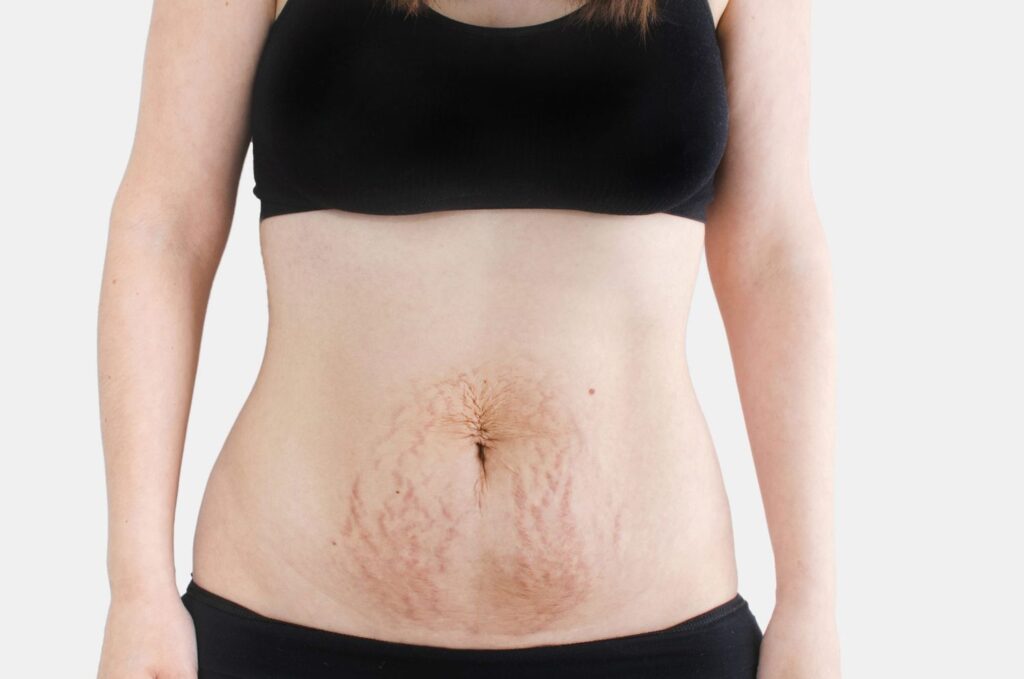
A Guide to Understanding Diastasis Recti
Despite being one of the most common conditions women endure in relation to pregnancy, not only are resources and information scarce but even the pronunciation is tough! Fear not, I will break down all things DR below in a simple and easy-to-understand format.
What is diastasis recti?
Ever made those Pillsbury biscuits? The ones that come in a cylinder roll? You know, the ones where you have to poke it in the middle and it pops? Imagine the entire center, vertical portion being the core unit, for the most part. The top being the diaphragm, the bottom being the pelvic floor and the sides being the transverse abdominis (this is a corset like muscle group that wraps around). The middle muscles are separated by the left and side and they are all rectus abdominis (your “6-pack” muscles). Obviously, there is more to the story, but overall – if you put too much pressure in the can (imagine poking the can at this point), it pops, right? This is similar to your core unit. If you put too much pressure in a can it, it pops. If you apply consistent intra-abdominal pressure to your core unit for a period of time, like pregnancy, you can end up with abdominal separation, just like dough separates.

The word “diastasis” means separation, and “recti” refers to the rectus abdominis muscle. When there is too much pressure applied to the core unit, this linea alba ends up getting weaker and thus, not able to do its job of keeping the two sides together! In short, diastasis recti (DR) is when the right and left sides of the rectus abdominis muscle (your “6-pack” muscles) move wider apart due to a thinning and weakening of a connective tissue called the linea alba. This holds the two sides together. A small separation is normal and expected, but a separation greater than about 2 finger-widths and greater is considered diastasis. Typically, it’s due to the fascia in the abdominal wall being too weak or tight in the wrong places.
Sometimes DR is confused with a hernia. However, DR is just a thinning and weakening of the linea alba tissue; whereas a hernia is when the internal contents (intestines or organs) actually protrude through a weak point in the abdominal cavity (or other cavity).
What causes this?
It all comes down to one thing: excess intra-abdominal pressure. In other words, think of your growing belly like an expanding balloon. As you blow air into the balloon, the pressure continues to build inside it. After a certain point, if you continue to force air into that balloon, it will eventually pop. Just like the biscuit can-analogy! This same general idea can be applied to your abdominal muscles. All your abdominal muscle layers are connected at the front midline of your body by the linea alba. Think of the linea alba tissue like “silly putty;” it’s strong, but flexible. If consistent and excessive outward pressure is placed on that tissue (like from a growing belly during pregnancy), then it eventually thins and stretches out so much that its consistency becomes more like cellophane, and it loses its ability to hold anything together. When this happens, your outermost muscle layer – rectus abdominis – begins to drift apart.
How can this affect me?
From an aesthetic perspective, DR leads to a “pooch” appearance in your belly. What you see are abdominal contents protruding through the separation caused by the thin and weakened linea alba aka “silly putty.”
There are other implications that are extremely important beyond the appearance For instance, DR may indicate a weak and ineffective core. This can lead to a several problems including constipation, low back pain, pelvic or hip pain, incontinence, bladder or rectal prolapse. It can also put you at greater risk for developing a hernia, which requires surgery to fix. So you see, correcting and preventing DR is beyond appearance, it’s to help you feel better, and prevent injury and other complications.
Why is this so common?
Well, for one, it is often not discussed in your typical appointment with your provider. Not all trainers are created equal and equipped to understanding how to prevent it to some degree nor do they understand the means to work towards resolving it. For instance, it can be brought on by doing crunches or other inappropriate core/ab exercises. If over the years, you’ve done a lot of crunches or abdominal exercises that are super intense that were taught in that traditional crunch style, this can lead to stress in the abdomen which puts stress toward the pelvic floor. Also, if you are not aware of what can exacerbate it or how to adapt simple techniques to prevent it, it is quite inevitable.
Why does it matter if I have diastasis recti?
Understanding why it matters can help you to see the purpose in why you should care, why others should care, why it is imperative for other fitness professionals and doctors to bring awareness and why this needs to be addressed. It’s not just about the abdominal separation itself. I know I already mentioned doing lots of crunches and how it can lead to putting unnecessary pressure on your pelvic floor, on your lower back, your lumbar spine and preventing you from creating an optimal fascial connection through your core and entire body.
Long story short, having diastasis recti (or a deep core that does not function optimally) can lead to aches and pains and issues within the body that you don’t need to be experiencing.
Take a few steps back and re-evaluate the foundation and ask yourself these questions as you’re going throughout your workouts:
- If there’s any incontinence, that is a strong indicator that this exercise is not appropriate for you.
- Does this cause me pain in my low back?
- Do I feel pressure on my pelvic floor?
- Do I feel like my abs are bulging out instead of zipping up?
These fundamentals apply to everybody, even if you don’t have separation.
I challenge you to begin to shift your mindset. It’s not just about preventing or healing diastasis recti. It’s about what it means for your entire body.
What factors make someone more susceptible to getting diastasis recti?
DR can occur in anyone at any time – men and women! Any factor that causes consistent and excessive intra-abdominal pressure can cause it. Imagine that balloon or can again! However, you can see why it’s so common during pregnancy due to the excess pressure that an expanding belly creates.
In fact, it’s important to note that every woman experiences at least some degree of DR during the third trimester of pregnancy. If managed properly during pregnancy and if the appropriate measures and rehab is performed post partum, it can resolve within a short time period after delivery. However, excessive intra-abdominal pressure and not performing the correct movements can cause the diastasis to remain in the postpartum period, and long beyond. Factors that increase a woman’s likelihood of getting it include:
- Forceful “bearing down” during strenuous activity (constipation, vomiting, etc)
- Weak deep core muscles
- Being pregnant with multiples
- Having a shorter torso (baby has less room to grow up and down, so it forces belly out more)
- Failure to rehab core and pelvic floor appropriately post partum (you don’t need to wait 6 weeks to adapt low impact breathing techniques)
- Rapid or excessive weight gain (the larger the belly, the more pressure)
- Performing improper core exercises during pregnancy
Can I prevent diastasis recti?
There can be some abdominal separation during pregnancy, but yes, it can be highly prevented to some degree! The reason I say that is because obviously all bodies are different. During pregnancy and postpartum, it is not 100% preventable, BUT you can work to prevent the severity of diastasis recti – which is, huge.
If you do nothing, the severity of the abdominal separation that you could get from having babies could be severe. The tissue could become extremely weak and your recovery could be much more challenging.
When you learn how to properly activate your deep core, and how to release/relax (especially during pregnancy), you can start waking up the fascial connections of your body. Pregnancy is the best time to learn about your core and engage it appropriately. Don’t tune your core out during this opportune time, in fact – pregnancy is an ideal time to activate these muscles.
Between biscuits and silly putty, it is safe to say we can see diastasis recti in our day to day lives…. (or im just craving biscuits?) Stay tuned for my second post next week on how to prevent Diastasis Recti.
.png)
A few of founder, Dr. Pinkey Patel’s favorite products
With both of my pregnancies, I have been hyper-aware about what I put on my body. Why? Well, decades of studies indicate that serious health issues (including, but not limited to asthma, cancer, and infertility) are on the rise and are due, in some part, to our ongoing exposure to toxic chemicals—whether it’s in the shower, on our commute, while we eat lunch at a local restaurant, or when we clean our kitchens at home. Also, the dynamic physiological changes that occur across the maternal-fetal-placental unit during pregnancy, influence the pharmacokinetic process of drug absorption, distribution, and elimination. This basically means drugs are absorbed and removed from your body at different rates in pregnancy.
There are more than 90,000 chemicals on the market today. Many don’t have any safety data. This is particularly true of those used in the skincare and beauty industry. What’s worse is that the Food and Drug Administration (the agency that regulates cosmetics in the United States) does not have as much oversight as we think, therefore allowing companies to use chemicals known to be possibly harmful in the products we put on our bodies and on our kids’ bodies, and to make their own judgments about safety.
The United States has not passed a major federal law to regulate the safety of ingredients used in personal care products since 1938.
The products I used this pregnancy are EU (European Union) compliant. Why do I care about this? Over the past two decades, the EU has banned more than 1,300 chemicals in the product formulas of personal care products and restricted the levels of over 250 more in such products. The United States has only partially banned a handful, to date.
At Beautycounter, they’ve banned the use of more than 1,500 questionable or harmful chemicals through theirs.
As mamas, as soon as we become pregnant, we begin to think about the little life that we are creating, that depends on us. This is a simple way to begin a healthier regimen for both you and growing your baby.
I have personally used the products below and fell in love with them – not just because they are lacking the chemicals and “bad stuff” that other major brands haven’t yet banned, but because these products feel good. Being almost 38 weeks pregnant, I have had my spin with these products and gladly recommend them as they were great!

BeautyCounter Cleansing Balm – I love this multi-tasking balm/cleanser because it’s not just for cleaning. I also use it as a moisturizing overnight mask! For makeup cleaning, just take a little amount (seriously, a little goes a LONG way) and let it break down oils/dirt. Then you take dampened cloth to wipe it away, then rinse. If I use it overnight, I simply just put a small amount on and let it sit overnight, then wash away in the shower the next AM!
BeautyCounter Eye Cream – Pregnancy is tiring, especially with a toddler – so rescue eye cream is my jam. This is perfect for the AM or PM! It has squalane (derived from olives) and betaine (derived from sugar beets).
Rahua Voluminous Shampoo & Rahua Voluminous Conditioner: I use this combo because the shampoo really feels like it cleans (no greasy feeling) and it contains antioxidants like beta carotene, vitamin C and E that can help keep the scalp hydrated. The conditioner doesn’t leave the hair greasy or too smooth. It has lavendar, eucalyptus, organic green tea, organic lemongrass and organic rosemary.
Kopari Aluminum-Free Deodorant: I have gone through my fair share of “clean” deodorants and trust me, not all work for everyone! At least for me, not many were effective! This is seriously one of the most refreshing (smells good) and effective formulations that I have used. It is aluminum free, goes on clear and naturally made with organic ingredients.
Babo Botanicals Daily Sheer Tinted SPF 30 Mineral Sunscreen: Summer pregnancy or not, sunscreen should be part of your regimen (even on cloudy days!). I opt for mineral sunscreens (this means they are made of ingredients like titanium dioxide and zinc oxide) versus chemical sunscreens. The issue with mineral sunscreen, however, is that those types of sunscreens leave a grey overcast or a white residue. This one is amazing since it offers a tinted formulation that goes on lightly! The price point is also hard to beat. A few bonuses are that it contains hyaluronic acid, argan and rosehip oils!
MyChelle Fruit Enzyme Cleanser – This is also another steal, price wise that fits my bill for pregnancy safe. It is also goes above and beyond the EWG (environmental workgroup) verification process. I use this in the AM and sometimes in the PM!
Meet our second Mama of the Month, Rakhee Mirchandani! Here at TSB, we want to develop a community of supportive, inclusive and strong mamas. Each month we will be featuring a different mama with a unique story. Keep reading to learn all about this July’s Mama, Raakhee.
Mama to Super Satya, editor in chief of Moneyish and self- proclaimed Oprah worshipper, Raakhee Mirchandani is a fierce mama that has taken her journey dealing with her daughter’s pediatric cancer, being an entrepreneur, an author and shared her experiences with us!
Describe your first pregnancy experience. What did you enjoy and not enjoy?
Being pregnant was a slog. I was hot, exhausted + puking on the subway on the regular. I had a seriously unrealistic version of what being pregnant would look like. Pregnancy glow? I was just drenched in sweat for 9 months! But I loved the little things that only I could feel, the kicks, the movement, the signs that she and I were already connected. Before there was the world, there was just us.
What do you wish you knew about the pregnancy, but did not?
I wish I knew how completely bullshit all those photos of women, two weeks postpartum, with flat tummies and blowouts were. I don’t have angelic pregnancy photos; I was swollen and exhausted. There were no flower crowns or a tiny little bump; I was gigantic! But I was also healthy and happy.
Two weeks after I had a baby I was laying in my bed, ice packs on my boobs in some hospital issued mesh underwear. And the furthest thing from my mind was an Instagram filter. I guess what I really wish I knew was that this journey – pregnancy, postpartum + motherhood – is incredibly personal and what works for your bestie or other women, well, it may not work for you.
What were your greatest challenges during your postpartum period?
It was really hard for me to feel like myself. I’m a super active, hyper-focused women who have been hustling since high school. So laying in bed, pumping and crying felt like my body and life had been invaded by an alien life force. My biggest challenge was that my expectations of myself were way too high. I guess they always have been. What I needed to do was be kinder to myself, my body and where I was in life at that time. It all came later, but I sure wish I had gotten to that realization a bit sooner, you know, before I was hysterical on the floor crying because I spilled a bottle of breast milk.
Give us three pieces of advice you would wish to share with other moms, it can be regarding pregnancy or postpartum!
1: Take a night off: Turn off the phone, unplug the pump + cozy up in sweats with a season of “Jane The Virgin”. No one is happy unless mama is happy, t”rust me. And mama needs to unplug every now and again and every stage of this wild ride.
2: Phone a friend: Facebook groups are really helpful, but they do not take the place of the women in your life who’ve done this before. So call a friend, your mama, a maasi or a favorite aunt. Talk through what’s going on and get their perspective. The Internet is a wonderful thing, but it doesn’t replace our network of women who’ve traveled these roads before us.
3: Take notes: Things will pop into your head and really weird times. Sometimes they will be strokes of genius, missives of love to your child, born from a moment you just shared. Write it down. Save it. Your kid will be so happy to read this years from now. I also started an email address for Satya and sent her notes while I was pregnant. (Other times, it might be a question you have for a doctor or something to add to your grocery list. You’ll be glad you wrote those down too. I promise.
What was your first thought when Satya was diagnosed?
“Instead of planning her first birthday party, I thought about her funeral. And I began to imagine a life without her. Satya, the cherub-cheeked little lady we had brought into the world 10 months ago, had just been diagnosed with cancer.
It was Stage 1, she was well under 18 months old and otherwise healthy. As if “otherwise healthy” mattered, the facts were that an MRI showed a tumor sitting between her kidney and aorta, dangerously close to her heart. Our hearts.
Satya’s name came to me in a dream. When I woke up there was only one word on my lips (Satya is Sanskrit for truth). I knew her middle name would be Devi (Sanskrit for goddess) after my grandmother. Our daughter would be Satya Devi Singh, translated it means Truth Goddess Lion. Good luck keeping this kid down, I thought, as I traced the letters over and over on my pregnant belly.”
Continue reading about Satya’s journey with pediatric cancer in Rakhee’s piece for the NY Daily News here.
How did you balance your career while taking care of Satya?
Nothing is ever in balance. Life is a weird disorganized dance and some days I’m a better mother than a journalist, other days I’m a better writer than mama. I’ve made peace with the idea that nothing is ever going to feel calm and balanced. Instead, I try and identify 3 moments of joy in my day – at work or at home, generally a combo of the two – and 3 things I’m grateful for each day. Taking the time to write them down daily has been a life-changing discipline that takes the success of a day beyond it feeling balanced. Was the day joyful? Did something wonderful happen?
Where did the idea for a children’s book come from?
This is from a Vogue piece where I answered this question: https://www.vogue.in/content/rakhee-mirchandani-superhero-book-daughter-cancer
Satya and I are the unofficial spokespeople for our local bookstore, we’re obsessed with it. But at some point, I was like, why aren’t there any books about Indian superheroes? Once I had the thought, it was hard to un-think it. I didn’t mention it to Satya because she hasn’t identified that as a problem in the world and I’m not trying to make problems for her. I set out to write it with an audience of one. I read it to Satya, and she loved it. She kept asking for it. The way she loved it made me think of the books that I loved as a kid growing up in New Jersey: the Ramona Quimby series, the Tinkle comics my aunt would mail me in boxes from India. I would devour those comics, because I was so excited by a cartoon where the names were familiar. I couldn’t help but wonder if it’s because I felt a little bit seen. And then it occurred to me that maybe someone who wasn’t Satya might like the book. What happens when our children open books where they see themselves? Where they don’t have to explain who they are and just exist in communities like everybody else, with their long braids and patkas [that Sikh men wear]? We don’t know.
If you could give parents with children that have an illness, condition or disease one piece of advice, what would it be?
Everyone copes differently, but for us, talking about our experience has really helped us cope.
Do you ever experience mom guilt? What causes this and how do you remedy it (because, we get it, it never really goes away.)
I constantly forget picture day and crazy hair day, have to miss class presentations and concerts. We pick Satya up from after-care at 5:30 p.m., well after most other kids have already gone home. And that’s going to keep happening. This life is for all of us: for me, for my husband Agan and for Satya. We work, we work out, we have lives outside of being her parents and that’s important to us.
So Agan and I keep reminding ourselves that when we are together – breakfast and dinner daily, weekends, etc – we need to present. We try and put our phones away, no mindless scrolling, no random Insta videos. I think really being engaged in the time we have together helps with the whole guilt thing.
From mom guilt to the harsh realities of pregnancy, Raakhee stays hustling and working hard to help other mothers and kids truly see themselves! Be sure to check out Moneyish and delve into their helpful finance content ( resources are our jam!) and to get you and your little a copy of Super Satya Saves the Day!
Have a mama you love? To send in a feature consideration please #TSBMama and #MamaoftheMonth on Instagram or DM us!

Preventing Diastasis Recti
Now that we know what Diastasis Recti is, it is important to understand that preventing this to some degree is far easier than correcting down the road when you no longer have just you to worry about. More often than not, mom’s will even exacerbate this condition postpartum without being aware, eventually putting them at a new ‘starting point’ of correction.
If you think you will have time to do all the things in the newborn stage, momma’s think again. This is often a season of survival mode, and sadly, we often put ourselves last. Instead, try to read my suggestions below to possibly prevent the degree of separation, so you know, you have time to worry about other things in this hood known as motherhood.
What You Can Do To Help Prevent Distasis Recti?
- Watch how you bend over: If you’re like most of us, you likely round forward to pick something up off the ground. Especially if you are a mom already and chasing a toddler or trying to clean up their toys. I know you know what I am talking about! But remember, bending over with a hunchback, is crunching. Train yourself to bend from your hips. In other words, bend your knees and send your hips backward — keeping your spine long — as you reach for the ground.
- Avoid “sucking in”: While you may be tempted to do this to make your belly look smaller, it can actually have the opposite effect. Constant “sucking in” shuts off your core unit aka your “can”, and creates a buildup of excess intra-abdominal pressure that can lead to DR and pelvic floor issues.
- Do not hold your breath: Breathing the correct way (The SnapBack technique) activates your core appropriately. Holding your breath, on the other hand, shuts off the needed engagement, which leads to a pressure buildup. Avoid breath holding during strenuous movements by focusing on “exhaling on the effort”. To make this easier, basically inhale during the easier portion of the movement (like lowering down into a squat or extending your arms before a bicep curl), and exhale on the more challenging part of the movement (like standing up from a squat, or curling your arms in a bicep curl.)
- Activate your “can”: The core “can” is referencing the deep core muscles of the diaphragm, transverse abdominis, and pelvic floor. These critical deep core muscles function as a “pump” to help avoid excess intra-abdominal pressure.
- Avoid crunch-like movements (forward and sideways): These movements place excessive pressure on that outer abdominal wall. Avoid traditional abdominal exercises like sit-ups, side-to-side bends, bicycles and oblique curls, to name a few.
- Sit up tall: Ladies..I hate to break it to ya, but slouching is crunching! If you can correct your posture and try to sit up tall at your desk (bottom of rib cage in line with top of hip bones), you’re not only relieving a great deal of pressure from your abdominal wall, but you’re also going to be working your core at the same time because your deep core muscles have to work harder to keep your body upright. What a great bang for your buck right? Stand up tall and kill a few birds with one stone!
- Avoid twisting movements: General rotation where your hips and shoulders stay aligned is fine, but any twisting movement with disassociation of hips and shoulders should be avoided (like bicycles or twisting yoga poses, as I said above).
- Avoid “bearing down” on the toilet: Among all the changes in pregnancy, there are also your little friends, called hormones, that change during pregnancy. For example, progesterone can often cause increased constipation, which may lead you to hold your breath and “bear down” on the toilet. This causes that pressure buildup, though. Help alleviate this by placing an 8-12” stool beneath your feet or you can buy the Squatty Potty. Basically, this puts your body in a more ideal, squat position when you are on the toilet. This position helps open up your colon to allow for easier waste excretion. If you never thought you would be excited for a little potty guidance, get ready, this is a real thing!
- Analyze your planks: As your belly grows, it places too much pressure on the outer abdominal wall when in a downward facing plank position. Therefore, as your belly gets bigger, you’ll need to begin to regress planks and any plank-like movement (push-ups, renegade rows). Always watch for that “coning” in your belly as a key sign you need to regress. It is safe to be more conservative! ! If you’re not sure if you should be doing a plank or not, best to avoid it. There are plenty of other ways to engage your core.
Even if you are not pregnant, you can still begin to incorporate some of these techniques to get in a better habit. Remember that it takes many repetitive movements before your body adapts, regularly! There’s no time like the present to start prevention, let’s start today, together.
.svg)


.svg)

